




Mahogany Pier Cabinets
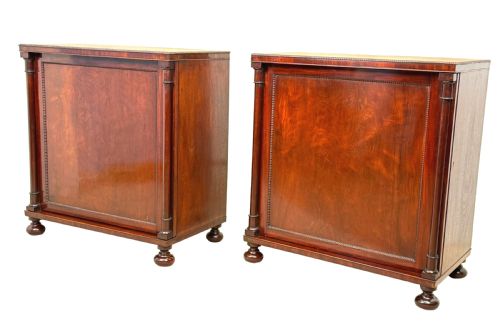
Mahogany pier cabinets are low display furniture designed to sit between tall windows, offering refined surfaces and glazed interiors for treasured possessions.
Mahogany Pier Cabinets
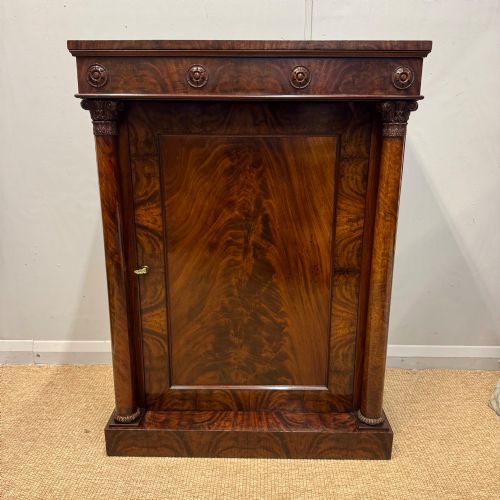
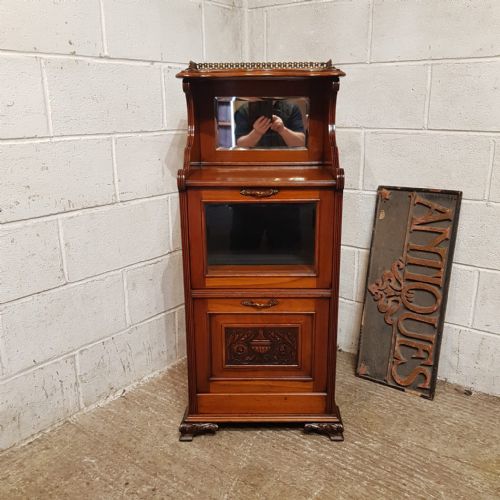
Mahogany pier cabinets combine useful timber framing with glass display areas, designed originally to occupy the narrow wall spaces between tall drawing-room windows. They emerge across the eighteenth and nineteenth centuries in forms ranging from slim narrow side cabinets to sophisticated inlaid display pieces.
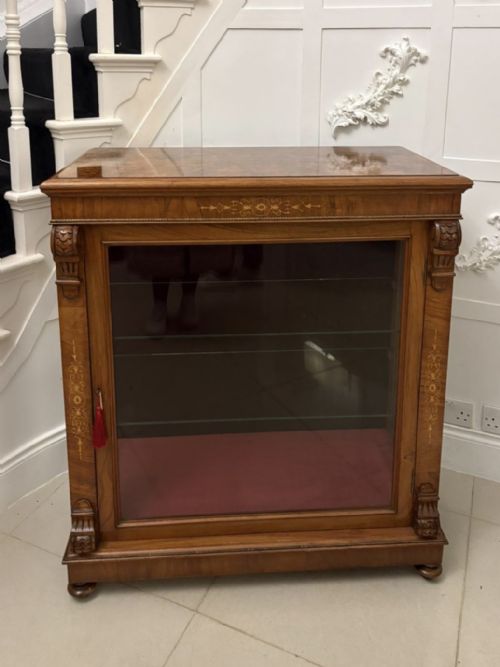
The versions most commonly met on this page date from the Victorian era and the nineteenth century, often featuring single glazed doors and rich timber figuring. Makers like Edwards & Roberts contributed to this tradition, producing cabinets that function equally well as standalone display furniture in modern interiors.
How they were made
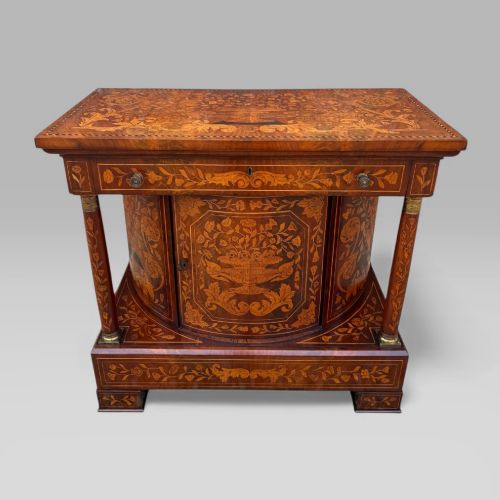
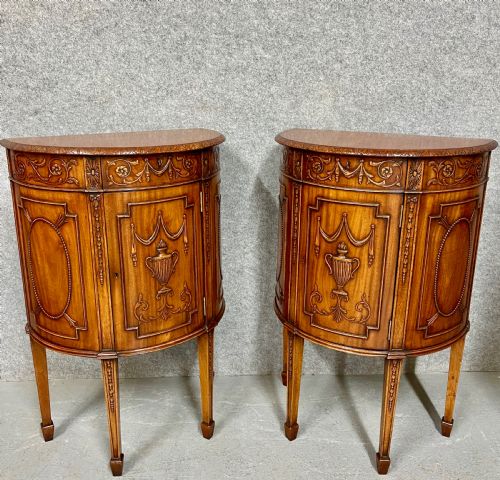
Cabinet makers utilised dense primary timbers like mahogany, often enhancing the polished surfaces with delicate boxwood inlay, fruitwood marquetry, and contrasting satinwood banding. These decorative elements require precise hand-cutting to fit flush within the dense grain of the main structure.
Glazing relies on clear glass panes secured within timber framework, whilst superior examples incorporate marble tops such as fossil marble. Brass mounts and hardware frequently provide structural reinforcement and visual contrast to the dark timber.
Listings feature mahogany pier cabinets spanning the eighteenth century through to the late Victorian period, incorporating brass, velvet, and marble elements.
What varies in quality
The distinction between standard and superior pieces rests upon the selection of timber figures and the precision of inlaid details. Cabinets boasting crisp marquetry and well-figured mahogany demonstrate a higher standard of cabinet-making skill.
Proportion and structural integration also dictate excellence, where doors hang true within their frames and decorative mounts align precisely with the underlying timber structure. The inclusion of original marble tops or fine brass work elevates the standing of an individual piece.
Edwards & Roberts
The Mahogany Pier Cabinets Glossary
- Pier cabinet
- A low cabinet designed specifically for placement against the wall space, or pier, between windows. These pieces traditionally held porcelain or decorative objects.
- Marquetry
- Decorative patterns formed by fitting together small pieces of coloured wood, fruitwood, and other materials into a veneer. This technique creates pictorial or geometric designs across the cabinet door.
- Satinwood
- A lustrous yellowish timber used widely for contrasting stringing and inlay work. Its bright tone highlights the darker mahogany ground.
- Demi-lune
- A half-moon shape characteristic of console tables and cabinets designed to stand flat against a wall. This profile softens the geometry of a room.
Mahogany Pier Cabinets: Frequently Asked Questions
What is a pier cabinet?
A pier cabinet is a low display piece built to occupy the wall space between tall windows in traditional drawing rooms. They provide enclosed shelving for delicate objects and books.
Today, these cabinets function well as accent furniture in living spaces, offering surface area and glazed display capacity without occupying excessive floor space.
How do I date a mahogany cabinet?
Dating relies on observing construction methods, timber selection, and decorative styles visible across the piece. Nineteenth-century examples often display machine-sawn internal secondary timbers alongside hand-finished veneers.
Stylistic cues such as Victorian inlay work or Georgian proportions help narrow the decade of origin when combined with physical examination of the joints and backboards.
Where should I place a pier cabinet?
These cabinets suit narrow wall spaces, hallways, or living rooms where standard sideboards prove too deep. Their shallow footprint allows them to sit comfortably against plain walls.
Pairing a cabinet with a matching pier mirror creates a cohesive arrangement that reflects light and enhances smaller rooms.
How do I care for mahogany surfaces?
Maintenance involves dusting with a soft, dry cloth and applying appropriate beeswax sparingly to nourish the timber grain. Avoid placing furniture in direct sunlight or near heat sources to prevent timber splitting.
Glass panels require standard non-abrasive window cleaner applied to a cloth rather than sprayed directly onto the surrounding wood.