




Pair Satinwood Tables
When you search for pair satinwood tables, you discover matching furniture designed for symmetry in formal rooms and bedrooms.
Pair Satinwood Tables
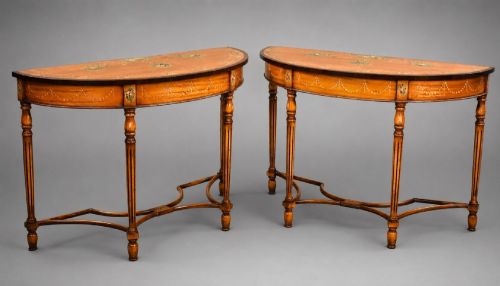
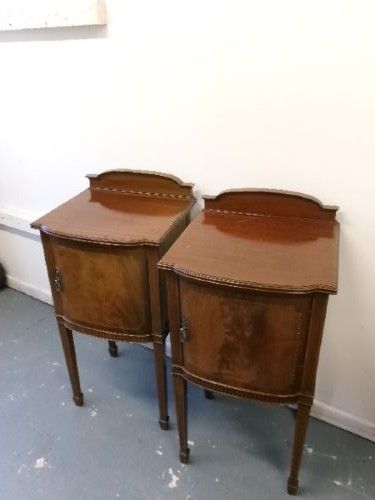
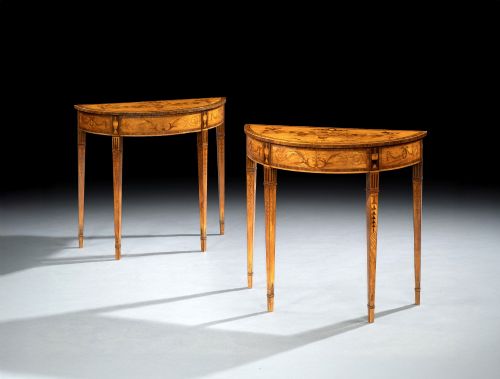
A search for pair satinwood tables reveals matched groupings spanning the eighteenth, nineteenth, and twentieth centuries, produced across British, French, and continental workshops. These items range from utility bedroom furniture such as bedside cabinets and chests to grand reception pieces including console tables, card tables, and demi-lune side tables.
The assortment on this page draws heavily from Georgian origins through the Victorian and Edwardian eras, extending into later Art Deco designs. Buyers frequently encounter smaller bedside cupboards and lamp tables alongside larger painted console tables and folding card tables.
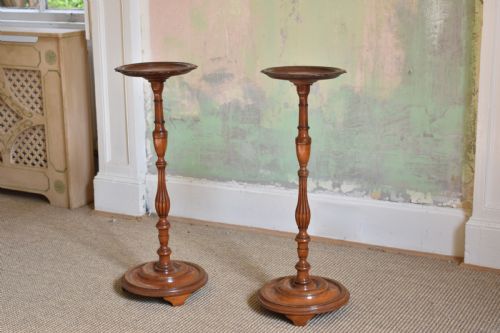
Originating as bespoke commissions or matching chamber suites, these matched sets preserve the balanced aesthetic demanded by historic interior decoration. Their forms reflect changing domestic habits, shifting from the candle stands and kettle stands of earlier centuries to the specialised bedside storage of the Edwardian period.
How they were made
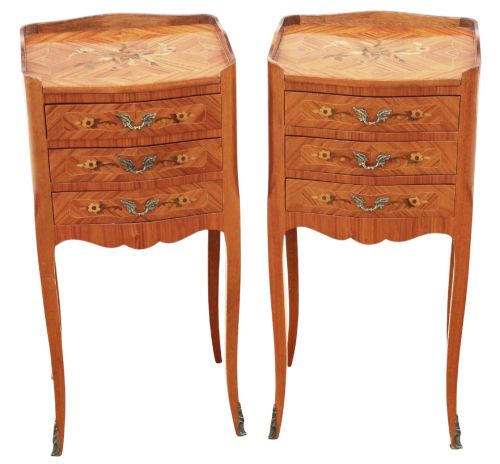
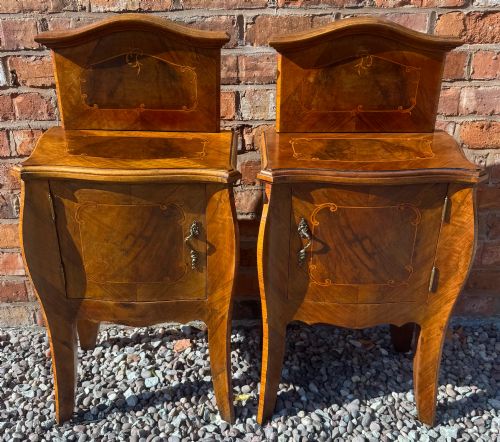
Cabinet makers utilised dense tropical hardwoods, applying figured satinwood veneers over sturdy foundational timbers like mahogany or pine. Marquetry and parquetry ornamentation often incorporated contrasting elements of boxwood, rosewood, ebony, and walnut to form geometric or floral patterns.
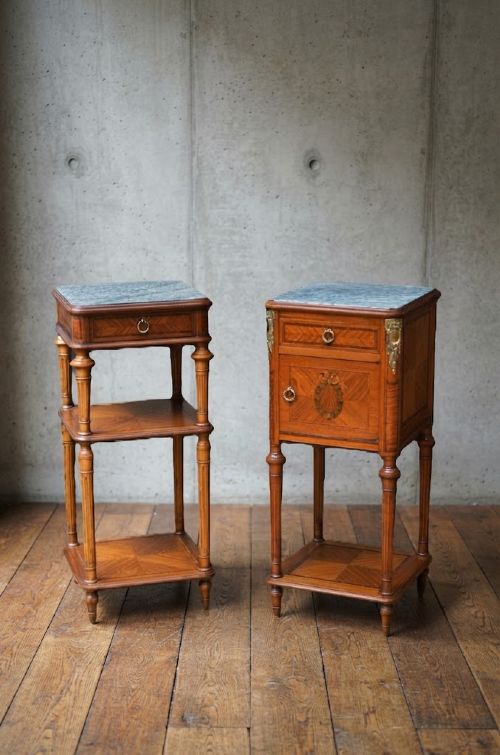
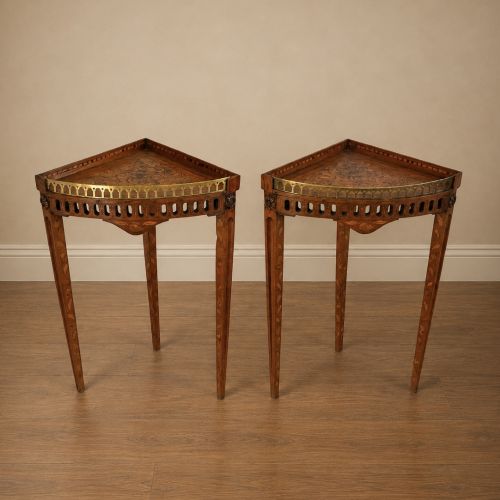
Surface decoration frequently involved delicate hand-painting, gilding, and brass hardware such as galleries, handles, and mounts. Tops of marble appeared on select neoclassical and French revival pieces, providing durable surfaces for daily chamber use.
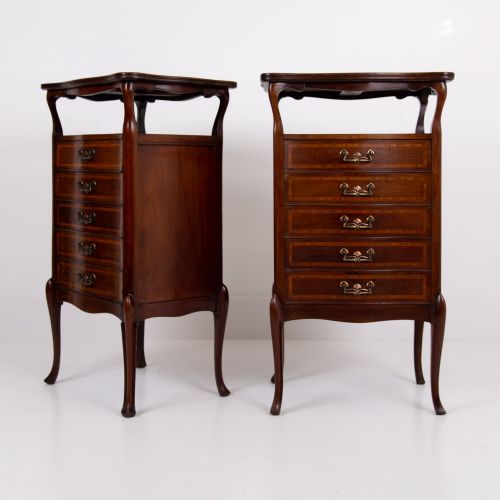
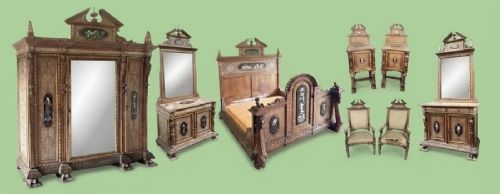
The furniture forms include bedside cabinets, demi-lune console tables, folding card tables, and tiered wine stands.
What varies in quality
Differentiation across the range depends upon the selection of timber veneers and the precision of the marquetry work. Highly regarded examples exhibit continuous grain matching across symmetrical surfaces and tightly fitted joints without modern adhesive intrusion.
The integration of hand-painted motifs and cast bronze or brass mounts further separates standard production from exceptional pieces. Superior items maintain structural integrity alongside crisp detail in carved borders and inlaid banding.
Waring and Gillows·Edwards and Roberts
The Pair Satinwood Tables Glossary
- Demi-lune
- A half-moon shape popular in eighteenth and nineteenth-century console and card tables designed to sit flush against a wall.
- Marquetry
- The art of applying decorative pieces of veneer to a structural structure to form pictorial or geometric designs. Artisans cut various coloured woods to fit precisely together before gluing them down.
- Satinwood
- A lustrous hardwood native to Ceylon and the West Indies known for its golden sheen and reflective grain. It gained widespread favor during the neoclassical and Sheraton periods.
- Parquetry
- A geometric mosaic of wood pieces used for floors and furniture surfaces. It creates repeating patterns using contrasting timbers.
- Gallery
- A raised miniature railing of pierced brass or wood fitted around the edge of a table top to prevent items from sliding off. This feature appears frequently on eighteenth and nineteenth-century occasional and bedside tables.
Pair Satinwood Tables: Frequently Asked Questions
How were pair satinwood tables used originally?
These matching items served practical and decorative functions in formal reception rooms, drawing rooms, and private chambers. Card tables accommodated evening gaming, while console and side tables held decorative lamps and porcelain.
In bedrooms, matched cabinets and bedside tables provided enclosed storage for chamber pots, personal items, and lighting. Their symmetrical arrangement brought formal balance to interior spaces.
How do I identify a Georgian satinwood table?
Eighteenth-century examples typically display restrained neoclassical proportions, fine hand-cut dovetails, and genuine timber construction without modern plywood backing. The satinwood exhibits a natural golden glow rather than heavy modern staining.
Inlaid details on authentic pieces rely on contrasting natural woods like boxwood and ebony rather than printed transfers. Hardware consists of cast brass pulls and hinges appropriate to the period.
How should I care for antique satinwood furniture?
Protect these surfaces by avoiding direct sunlight, which can fade the golden tones of the timber and dry out old finishes. Maintain a stable indoor humidity to prevent the wood veneers from lifting or cracking.
Clean the wood using a soft, dry cloth, and apply traditional beeswax sparingly when the surface appears dull. Avoid modern silicone sprays and liquid polishes that penetrate old finishes.