
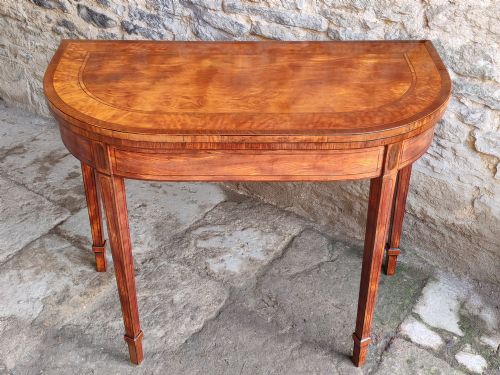
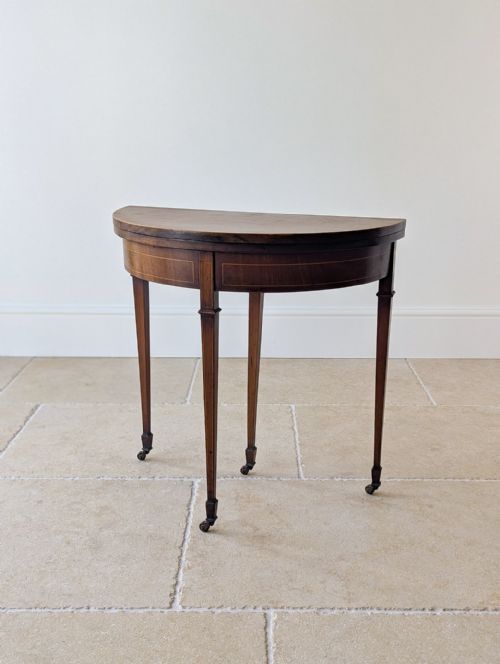
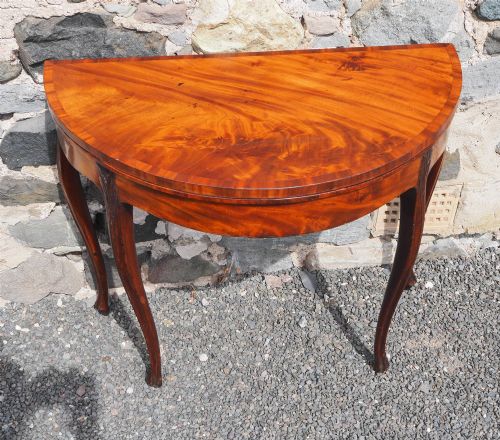
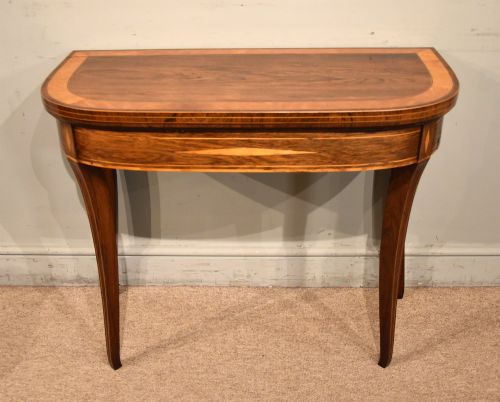
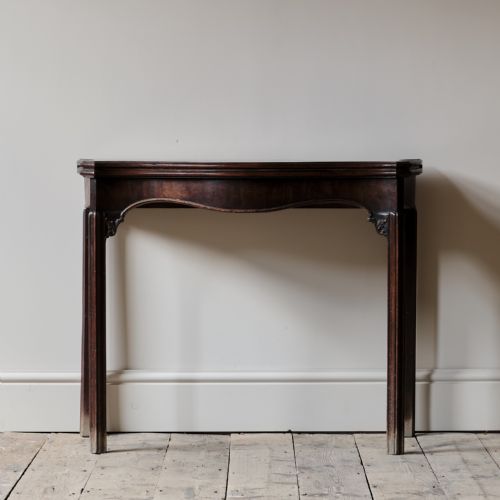
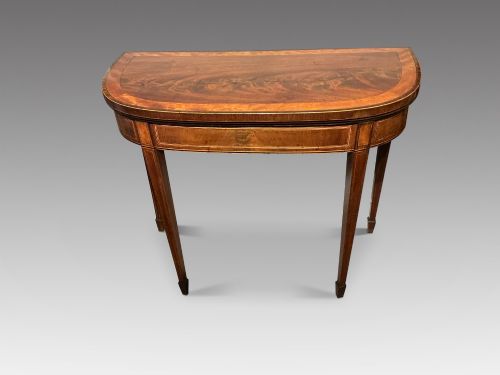
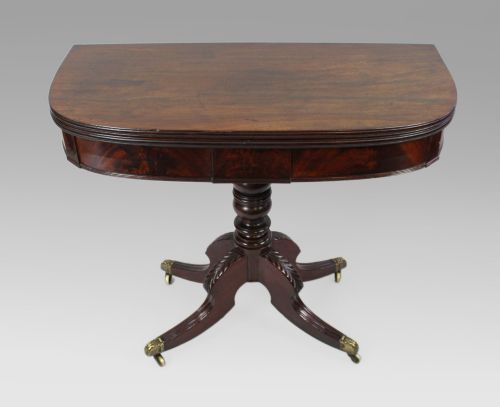

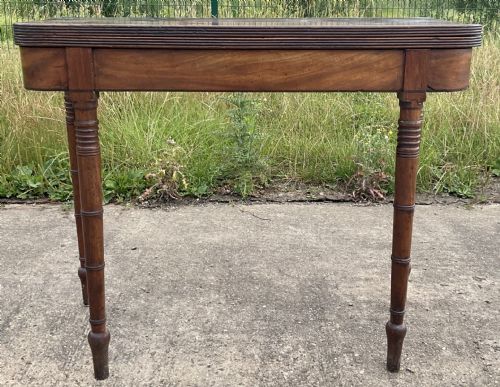
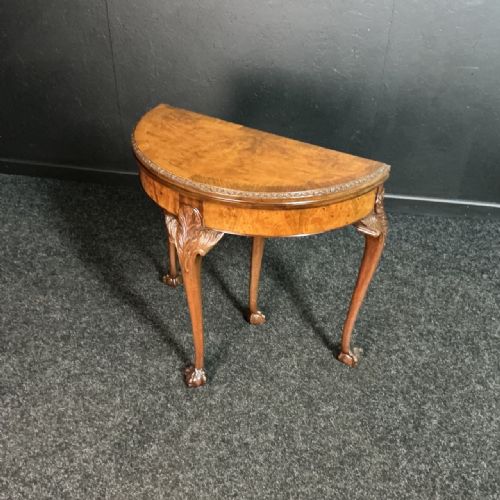
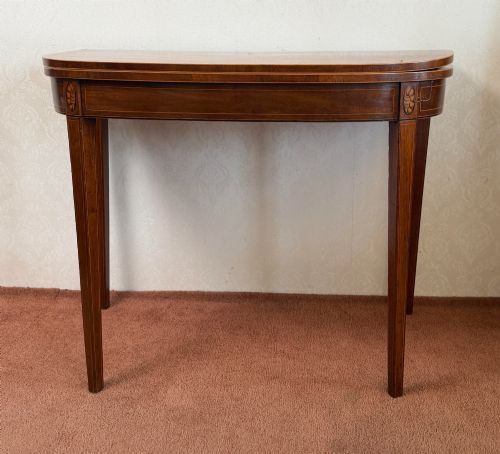
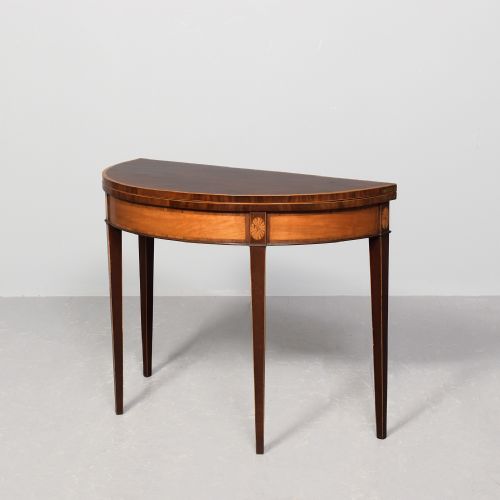
Georgian Demilune Card Table
A georgian demilune card table brings semicircular elegance and folding utility to a room, offering a neat console surface that opens for play.
Georgian Demilune Card Table
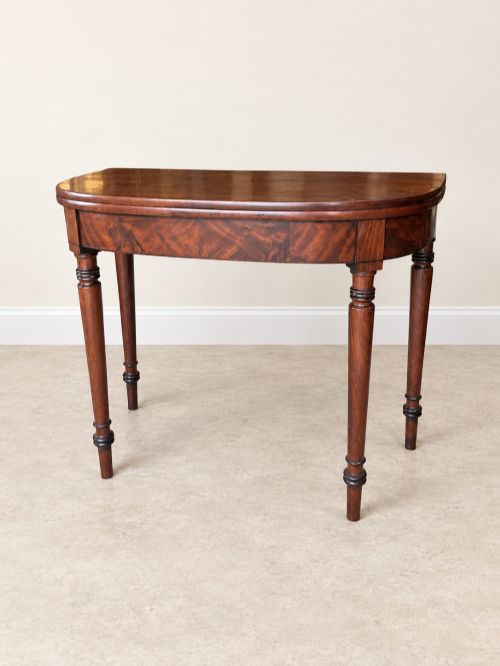
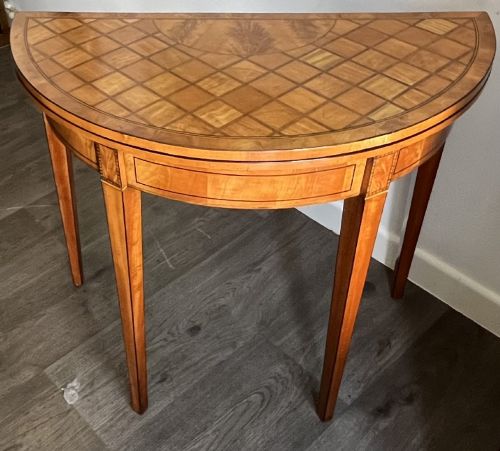
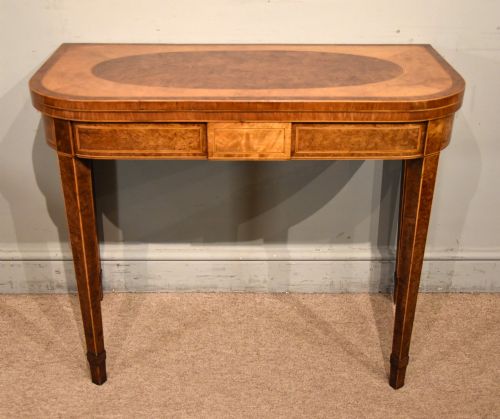
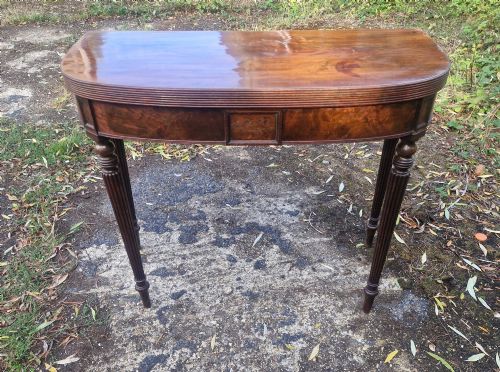
When you search for a georgian demilune card table, you encounter half-round furniture designed to sit flat against a wall until evening card games require a larger playing surface. The selection spans the eighteenth century into the regency period, alongside later revival pieces from the twentieth century.
Most examples deploy a fold-over top supported by a swinging rear leg, revealing a baize-lined interior designed for cards or tea. The profile ranges from plain mahogany boards to satinwood pieces embellished with marquetry and boxwood stringing.
Woods and Construction
Cabinetmakers constructed these tables primarily in solid and veneered mahogany, frequently selecting highly figured Honduras timber for the folding top. Workshops also utilised satinwood, rosewood and walnut, often applying delicate wood inlay and boxwood borders to define the semicircular edge.
Structural integrity relied on stable framework joinery and hinged wooden flaps that required precise alignment when closed. Brass fittings appeared occasionally on hinges and swing leg mounts, while secondary woods such as oak or deal formed the internal frame.
Some tables conceal shallow corner wells carved into the timber beneath the folding top, originally intended to hold coins and gambling chips.
Judging Quality
Quality rests in the selection of timber and the precision of the cabinetwork, particularly in how cleanly the book-matched veneers meet along the fold. Superior examples display rich natural figuring in the woodgrain rather than relying solely on surface decoration.
The cleverness of the leg action and the stability of the pivoted rear gate leg dictate daily utility. Tables that retain their original hinges, smooth folding mechanisms and rich patina stand distinctly apart from heavily restored or later constructed pieces.
Bruce & Burns of Edinburgh·Gillows
The Georgian Demilune Card Table Glossary
- Demilune
- A half-moon or semicircular shape common in console and card tables designed to stand flat against a wall. This profile allows the furniture to occupy minimal floor space when closed.
- Fold over
- A hinged top design where one half folds back upon a second matching leaf to double the surface area. This mechanism converts a narrow console into a square or round table.
- Inlay
- The technique of embedding contrasting woods, such as boxwood or satinwood, into the primary surface to create geometric borders or decorative motifs. It defines the stylistic details of Sheraton and Hepplewhite pieces.
- Marquetry
- Elaborate decorative veneer work assembled in pictorial or patterned designs using various coloured woods. It appears on finer satinwood gaming surfaces from the eighteenth century.
- Baize
- A coarse woollen fabric, traditionally green, used to line the interior playing surface of card tables. It provides a soft, non-slip mat for dealing cards.
Georgian Demilune Card Table: Frequently Asked Questions
How do I use a demilune card table today?
These tables function well as hallway consoles or living room side tables when closed against a wall. Lifting the top reveals a generous surface suitable for display or occasional use.
Opening the leaf requires swinging the hidden rear leg outward to support the weight of the folded flap. This traditional mechanism restores the piece to its original role for board games or writing.
How can I tell a genuine eighteenth century piece from a later revival?
Examination of the internal timber, secondary woods and hand-cut joinery helps determine the age of the structure. Eighteenth-century construction methods differ noticeably from twentieth-century machine-made equivalents.
Tool marks on the underside and the natural ageing of the mahogany or satinwood provide further clues. Revival pieces from the Edwardian era or later often utilise different framing techniques and cleaner, more uniform timber.
What is the difference between a card table and a tea table?
Card tables traditionally feature an internal lining of baize or leather designed for card playing, sometimes with small corner wells for coins or counters. Tea tables typically present a plain polished wood interior surface intended for china.
Makers frequently applied similar semicircular proportions and fold-over tops to both forms, leading to overlapping terminology in historical listings.
How should I care for the polished wood top?
Maintaining the finish involves dusting with a soft, dry cloth and avoiding placement near direct heat sources or strong sunlight. Excessive moisture can damage antique French polish or veneer.
Applying occasional specialist wax preserves the lustre of mahogany and satinwood surfaces without building up heavy chemical residues.