
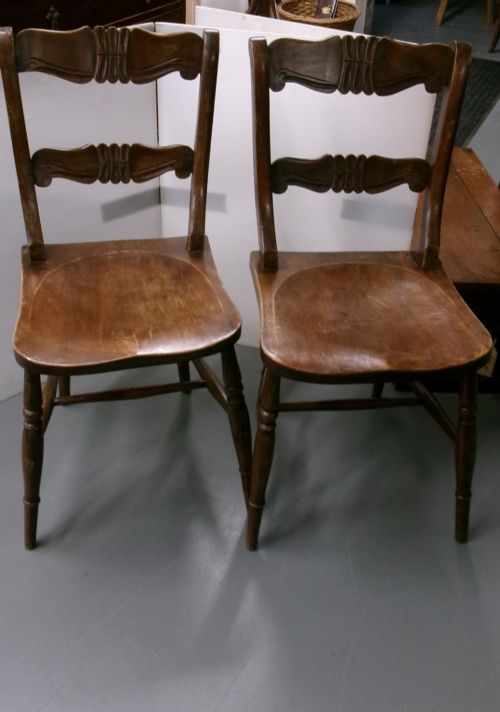
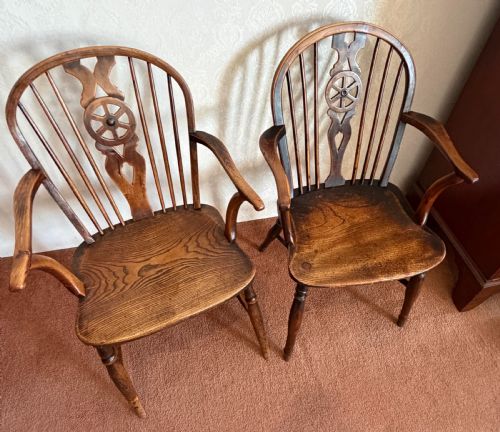


Pair Rustic Kitchen Chairs
Pair rustic kitchen chairs bring honest country character to a room, offering sturdy utility shaped by generations of domestic use.
Pair Rustic Kitchen Chairs
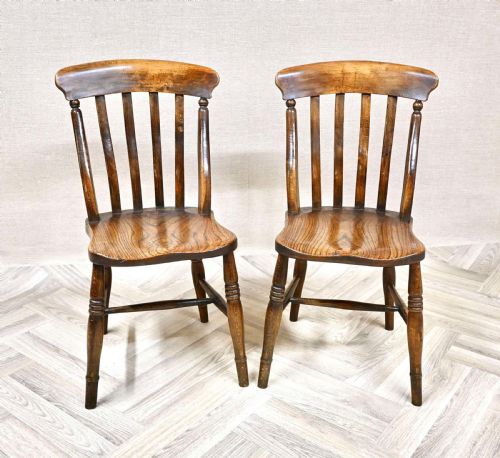
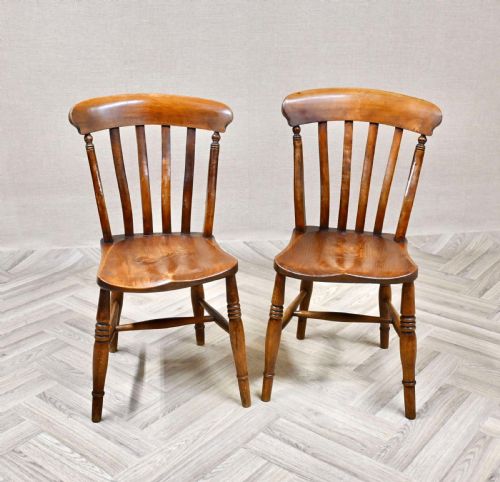
When you search for pair rustic kitchen chairs, you encounter robust seating created for daily domestic labour in farmhouses and cottages. The selection spans the nineteenth century, including Victorian, Georgian, and early twentieth-century examples shaped by vernacular craft traditions.
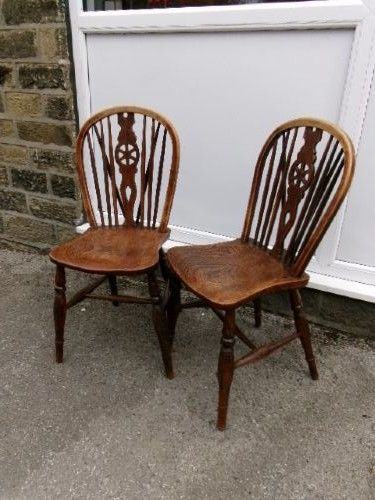
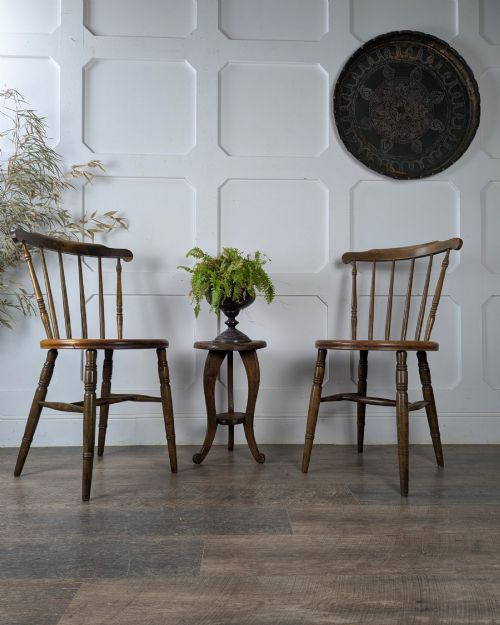
Most entries belong to the Windsor family or feature simple stick backs, ladderbacks, and spindlebacks. Elm, beech, and ash dominate the construction, often paired with rush or solid wood seats designed for hard wear.
You find both matched pairs and near pairs where two chairs share a similar profile, height, and timber. These groupings reflect how country furniture was acquired over time rather than bought in pristine matching suites.
How they were made
Maker-craftsmen built these chairs using locally sourced timbers, combining solid elm for the sculpted seats with bent beech or ash for the spindles and steam-bent bows. This division of materials ensured the seat could withstand pressure while the upper framework remained resilient.
Joints relied on traditional methods such as wedged through-tenons and pole-lathe turning, producing sturdy frames held together without modern adhesives. Surfaces were left bare, waxed, or occasionally finished with early layers of paint that now show honest weathering.
The listings span the nineteenth century, utilising native woods like elm and ash shaped into Windsor, stick back, and ladderback forms.
What varies in quality
Quality rests on the depth of the sculpted elm seat and the integrity of the wedged joints securing the legs and back. Superior examples retain their original timber thickness and structural tightness without excessive replacement parts.
The grace of the turning on the spindles and the balance of the overall proportions distinguish finer country pieces from utilitarian workaday seating. Subtle details like a well-formed wheelback or a comb-piece elevate the visual weight of the pair.
The Pair Rustic Kitchen Chairs Glossary
- Windsor
- A chair built with a solid wooden seat into which the legs, back, and arms are separately inserted. This construction provides exceptional strength through tension and pegged joinery.
- Stick back
- A minimalist chair design where plain upright spindles form the backrest without a central carved splat. They offer a clean silhouette common in vernacular seating.
- Elm
- A dense, tough wood frequently chosen for chair seats because its interlocking grain resists splitting under heavy use. It patinates deeply over decades of handling.
- Rush
- Dried marsh grass twisted into cords and woven tightly to form a flexible, supportive seat base. This traditional seating method appears frequently on ladderback and spindleback chairs.
Pair Rustic Kitchen Chairs: Frequently Asked Questions
Are these chairs comfortable for daily dining?
Most rustic kitchen chairs feature sculpted wooden seats shaped to fit the body over long periods of sitting. While they lack modern upholstery, their ergonomic design supports upright posture.
Adding small wool or linen pads can increase comfort during extended meals without hiding the grain of the timber.
How do I care for antique wood seats?
Keep these chairs away from direct heat sources and sudden humidity changes to prevent the timber from splitting or warping. Natural beeswax applied sparingly helps nourish the dry grain and preserves the historic surface.
Avoid modern silicone polishes that build up sticky residues and dull the natural sheen of the aged wood.
What is a near pair of chairs?
A near pair consists of two separate chairs made in the same region and period that share identical dimensions, timber, and construction methods. Minor variations in turning or back design distinguish them from factory-matched sets.
Such pairings occurred naturally when households gathered utility seating from local makers over time.
How can I tell a nineteenth-century chair from a later copy?
Nineteenth-century examples show hand-turned tool marks on the spindles and deep, uneven wear patterns around the footrests and seat edges. The timber displays a dry, deep-seated oxidation that modern distressing struggles to replicate accurately.
Examine the underside of the seat to check for hand-augered holes and traditional wedged peg construction.