
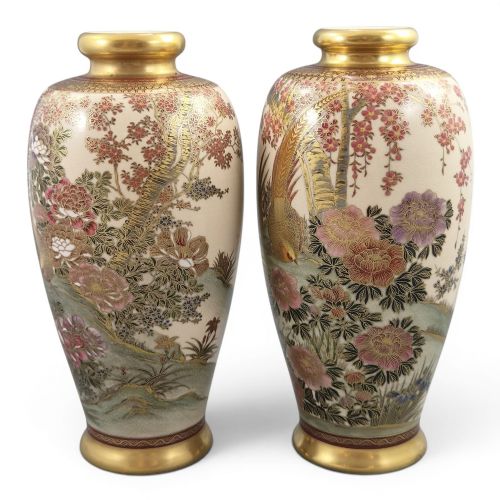


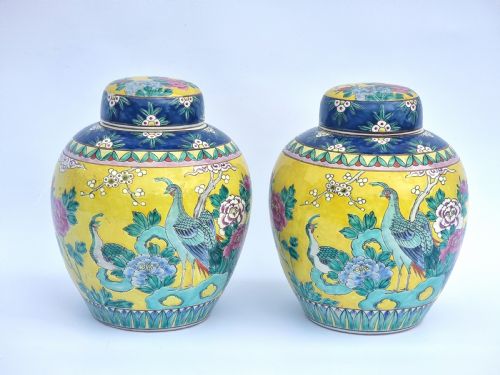


Pair Painted Floral Urns
Pair painted floral urns bring symmetry and botanical ornament to a room, ranging from English earthenware ice pails to Japanese Satsuma and European porcelain.
Pair Painted Floral Urns
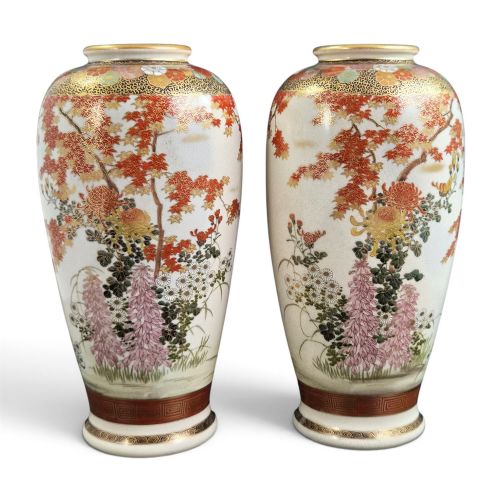
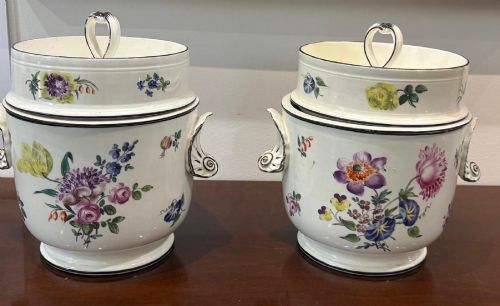
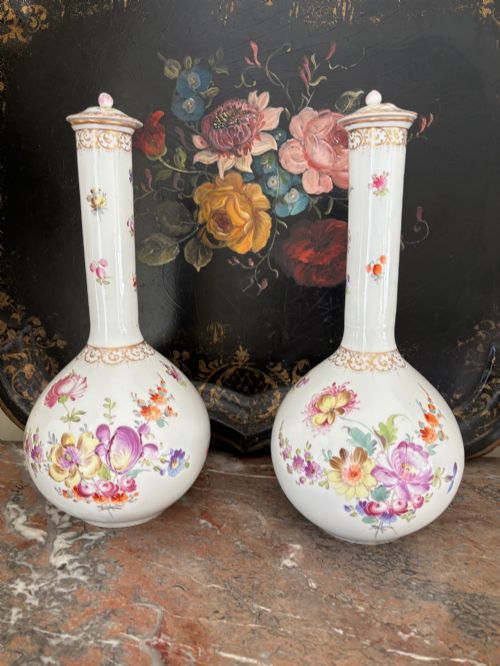
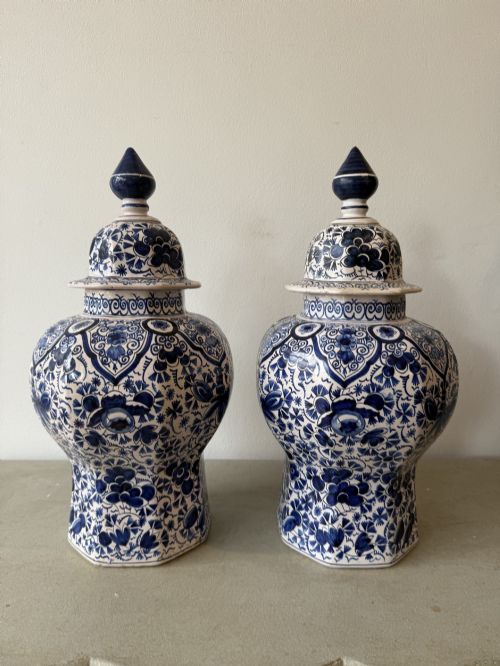
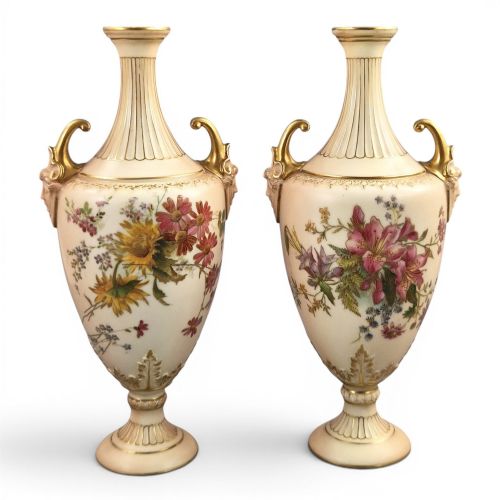
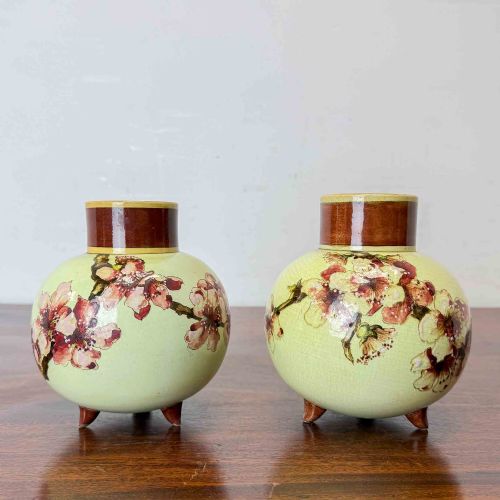
When searching for pair painted floral urns, collectors encounter a diverse selection of symmetrical vessels designed for display, including lidded vases, ginger jars, and bulbous cache-pots. The items available span various cultural traditions, from English creamware and Doulton Lambeth to Meiji period Japanese Satsuma and Imari wares, alongside continental porcelain from factories such as Royal Worcester, Sevres, and Old Paris.
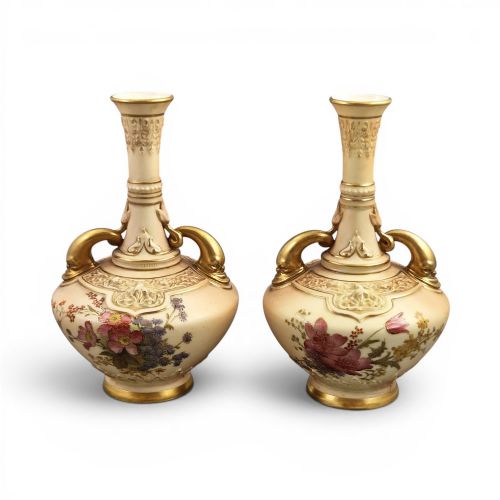
The versions most commonly met on this page include 19th-century and Edwardian ceramic pieces featuring hand-painted botanical motifs. These range from delicate blush ivory porcelain to richly decorated earthenware and pottery vases created across the Victorian and early twentieth-century eras.
Materials and methods
Makers utilised ceramic bases such as porcelain, earthenware, and fine bone bodies, shaping them into bulbous forms, beakers, and double gourd silhouettes. These surfaces were then prepared with glazes and enamels before receiving detailed hand-painted floral decoration.
Decoration frequently incorporated gold leaf, gilding, and raised white enamel to accentuate the botanical designs. Artisans employed specialised firing techniques to fix pigments, sometimes adding dolphin-handled mounts or brass and metal details to complete the decorative vessels.
Listings feature porcelain, earthenware, and glass materials spanning the Victorian, Edwardian, and Meiji periods.
Assessing quality and craftsmanship
The standard of painting defines the distinction between standard production and exceptional examples, with finer pieces exhibiting controlled brushwork, intricate botanical detail, and skilled hand-applied gilding. The clarity of the glaze and the precision of the underlying ceramic body further separate standard items from exhibition-quality works.
Artistic provenance and studio reputation elevate certain pieces, particularly those bearing recognised factory marks or signatures from established Japanese and European ateliers. The complexity of the vessel's form, such as lidded structures, applied dolphin handles, or raised enamel work, also indicates greater ambition in the original manufacture.
Maruni Kobe·Manpei·TG Green·Hakusan·Kinkozan·Hododa·Samson Paris·Doulton Burslem·Ernst Wahliss
The Pair Painted Floral Urns Glossary
- Blush ivory
- A porcelain body with a soft, warm cream-coloured matte finish. It was popularized by factories like Royal Worcester in the late Victorian period as a background for floral painting.
- Imari
- A style of Japanese export porcelain characterised by a palette of underglaze blue, iron red, and gold. Designs typically feature complex floral and panel motifs.
- Cloisonne
- A decorative metalwork technique where compartments are created on a metal surface using thin flat wires and filled with coloured enamel paste before firing.
- Satsuma
- A type of Japanese earthenware featuring a crackle-glazed ivory body. It is traditionally decorated with elaborate polychrome enamels and gilding depicting scenes or floral gardens.
Pair Painted Floral Urns: Frequently Asked Questions
What are pair painted floral urns?
These items are symmetrical ceramic or glass vessels created as matching pairs for decorative display. They typically feature hand-painted botanical motifs across various historical styles.
The selection includes traditional ginger jars, lidded vases, and urn forms originating from European potteries and Japanese export studios during the 19th and early 20th centuries.
How were these urns used?
Historically, matched pairs functioned primarily as mantelpiece ornaments or decorative centrepieces in formal reception rooms. They added visual balance and colour symmetry to interior decor.
Some specialised forms, such as ice pails, served practical dining purposes before transitioning purely into decorative display objects over time.
How do I identify Japanese Satsuma ware?
Satsuma pieces are distinguished by their characteristic creamy earthenware body covered in a fine, microscopic crackle glaze. They almost exclusively feature detailed hand-painted enamel designs enhanced with extensive gilding.
Many examples bear artist signatures, studio names like Kinkozan or Hododa, or Shimazu mon family crests on the underside.
What distinguishes Edwardian porcelain?
Edwardian ceramic design often favours softer colour palettes, blush ivory grounds, and refined Art Nouveau botanical styling. The manufacturing techniques benefited from advanced industrial glazing and firing standards.
Pieces from this period frequently display clear factory backstamps that help pinpoint their exact year of production.