
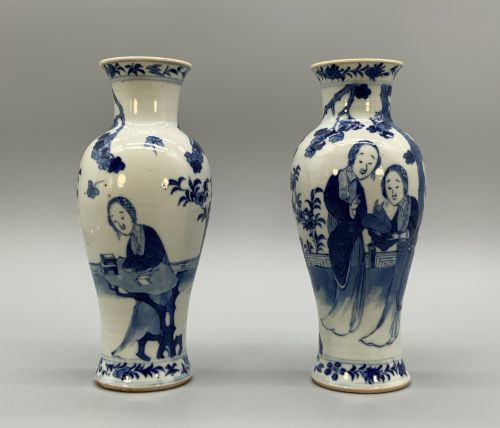
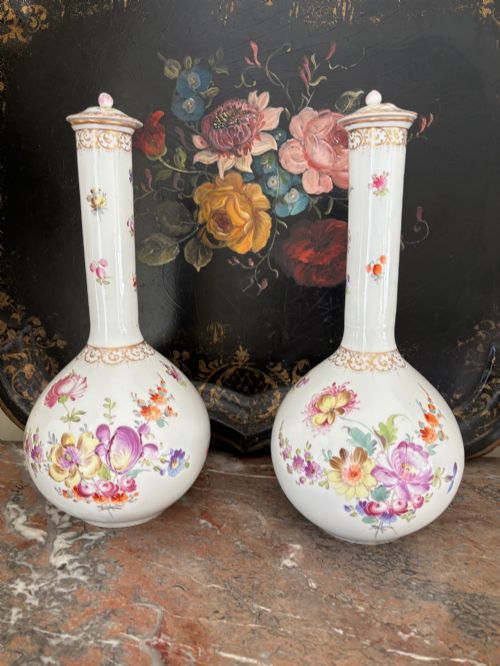
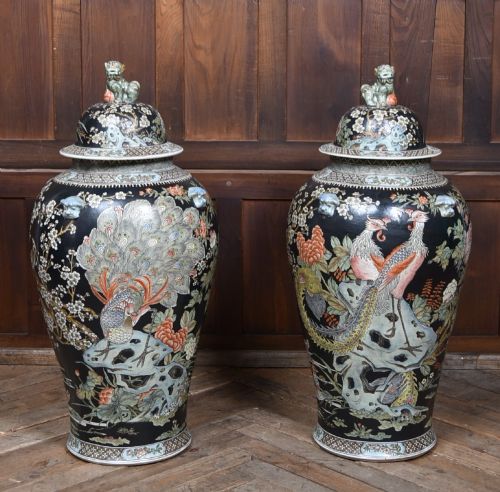
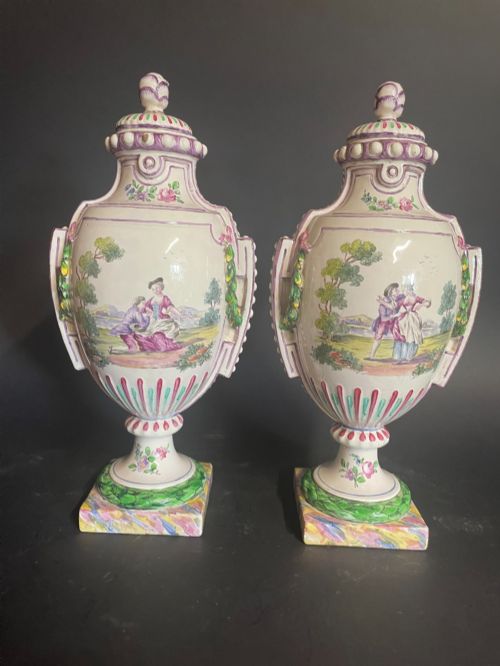

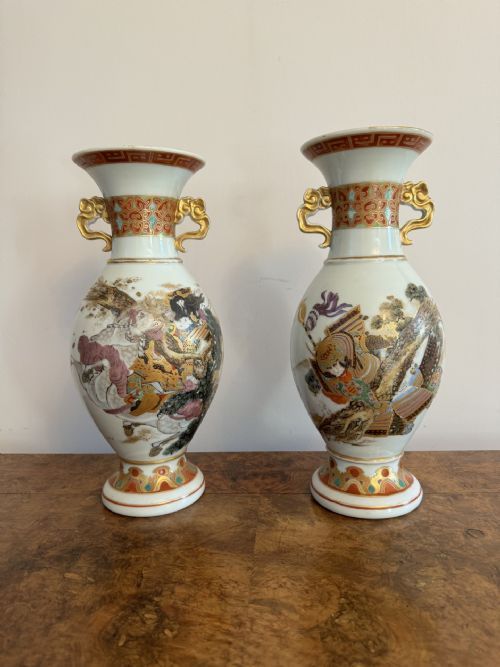
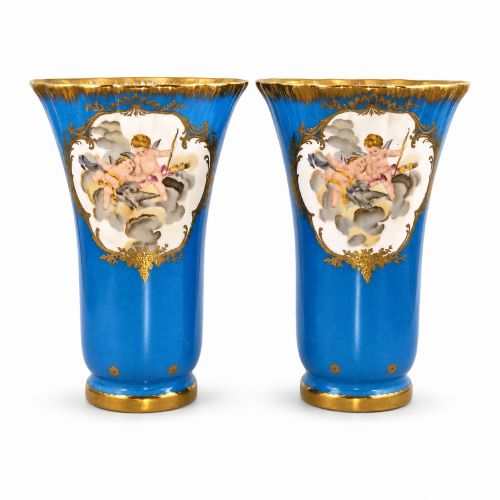
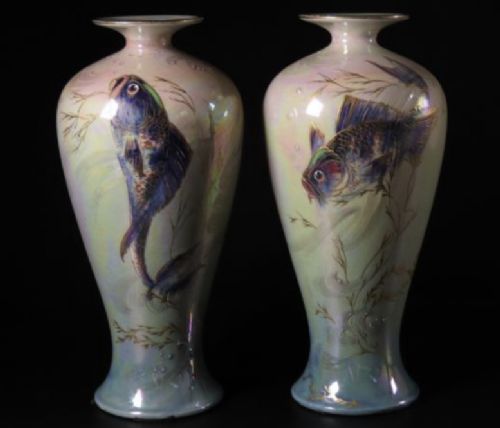
Pair Painted Ceramic Vases
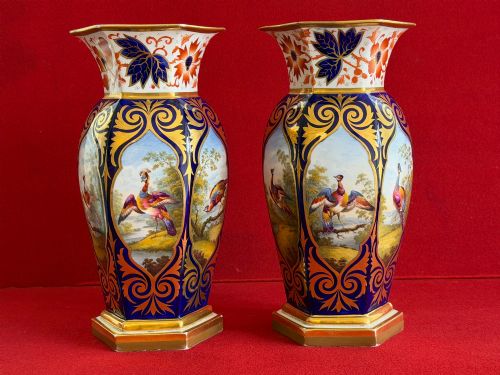
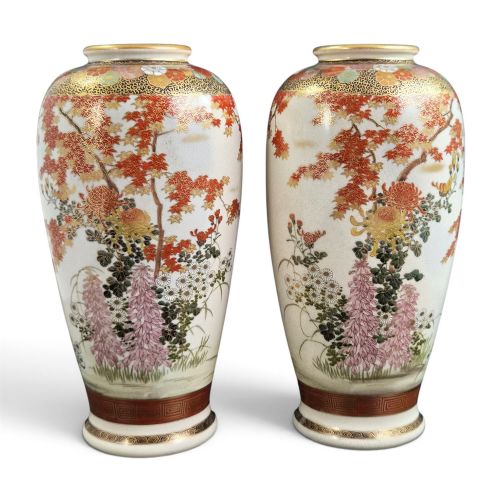
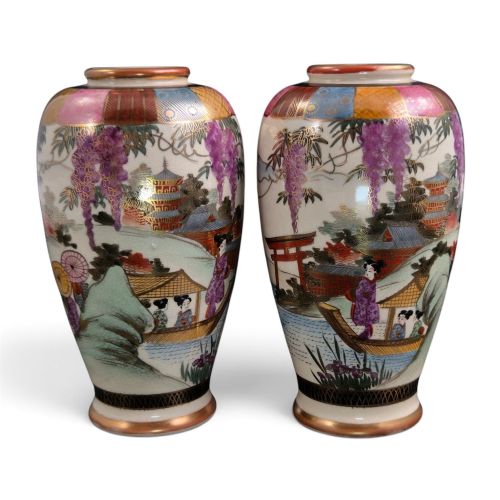
Pair painted ceramic vases bring symmetry and hand-finished colour to a room, spanning delicate Worcester porcelain to bold Japanese Satsuma earthenware.
Pair Painted Ceramic Vases
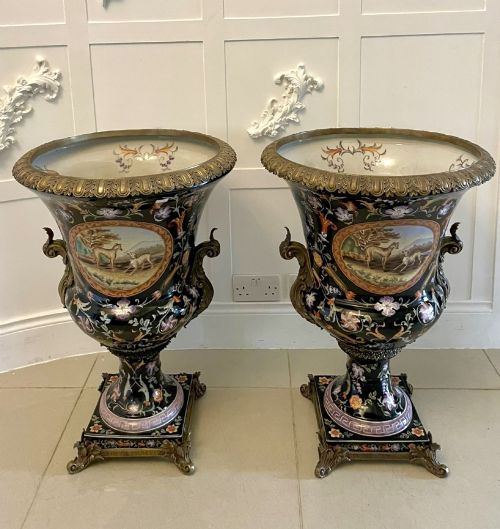
Pair painted ceramic vases encompass dual vessels created across the nineteenth and early twentieth centuries, including pieces from Regency, Victorian, and Edwardian periods. Buyers searching this phrase encounter forms ranging from table lamps and lidded jars to decorative urns and floor vases.
How They Were Made
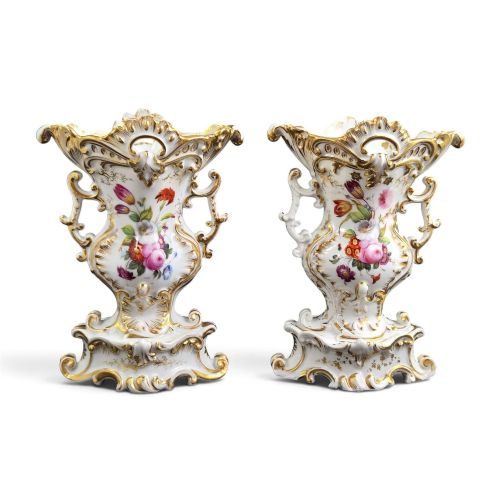
Potters shaped these vessels using ceramic bodies such as porcelain, earthenware, and faience, frequently mounting them with brass or finishing them with glaze and enamel. Artisans then applied intricate hand-painted designs, occasionally incorporating gold leaf, gilding, and lustre techniques.
Kiln firing fixed the pigments and glazes to the clay body, creating durable decorative surfaces. Many items received secondary mountings or specialised covers, such as lidded variations and matching porcelain stands.
What Varies in Quality
Quality rests upon the precision of the hand-painted brushwork and the clarity of the underlying ceramic body, distinguishing master studio output from standard commercial production. Finer pairs exhibit complex figural scenes, deliberate enamel control, and integrated gilding.
The sophistication of the form and the preservation of original mounts or covers further elevate a pair. Pieces signed by recognised makers or produced by celebrated factories retain distinct artistic standing within the range.
Flight, Barr and Barr·Maruni Kobe·Shozan·Jacob Petit·Fourmaintraux-Courquin·Sitzendorf·Sceaux·Samson Paris·Walter Slater·Helena Wolfsohn·Royal Worcester·Doulton Lambeth·Manpei·Kinkōzan·TG Green·Kato Sanhei
The Pair Painted Ceramic Vases Glossary
- Satsuma
- A type of Japanese earthenware featuring a crackle-glaze finish and intricate hand-painted enamel designs. It gained significant popularity for export during the Meiji period.
- Faience
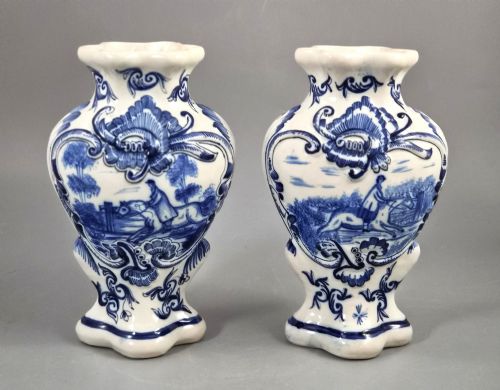
- Tin-glazed earthenware decorated with opaque colours over a white or pale ground. This technique appears widely across European regional pottery traditions.
- Imari
- A style of Japanese export porcelain characterised by a distinctive palette of underglaze blue, iron red, and gold. These pieces often feature dense floral and geometric panels.
- Blush Ivory
- A specialised porcelain body finish developed by Royal Worcester utilising soft ivory-tinted glazes. It served as a background for delicate hand-painted floral decoration during the Edwardian era.
- Lustre
- A metallic ceramic glaze that produces an iridescent sheen when fired in a reduced oxygen atmosphere. It creates reflective surfaces that change tone under shifting light.
Pair Painted Ceramic Vases: Frequently Asked Questions
How were pair painted ceramic vases used?
These vessels functioned primarily as decorative garnitures on mantelpieces, sideboards, and pedestals, often displayed symmetrically to frame a central fireplace or mirror.
Over time, some pairs were adapted into table lamps while retaining their original hand-painted ceramic bodies.
How do I care for antique ceramic vases?
Dust the surfaces gently with a soft, dry cloth to protect delicate enamels, gilding, and gold leaf from abrasive particles.
Keep these vessels away from direct sunlight to preserve the vibrant pigments of the hand-painted decoration.
How can I distinguish Satsuma from Imari?
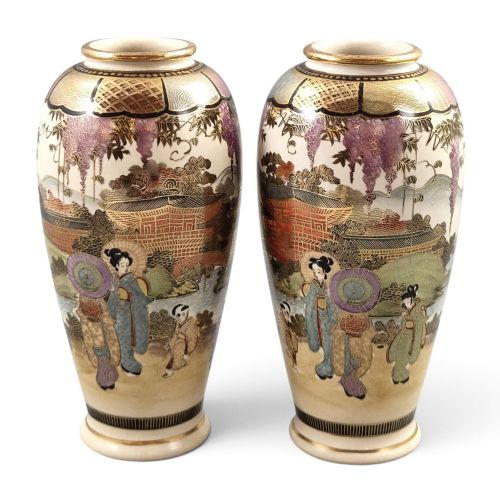
Satsuma pieces utilise a cream-coloured earthenware body with a fine crackle glaze beneath detailed enamel and gilt painting.
Imari pieces consist of hard porcelain decorated in deep cobalt blue, iron red, and gold.
What defines Edwardian ceramic styles?
Edwardian designs frequently favour softer pastel palettes, blush ivory grounds, and naturalistic floral motifs.
Forming techniques during this era emphasised refined elegance and traditional shapes over heavy revivalist ornamentation.