
Pair Painted Armchairs
When sourcing pair painted armchairs, collectors seek matched seating that bridges functional comfort and decorative painted or gilded woodwork.

Pair Painted Armchairs
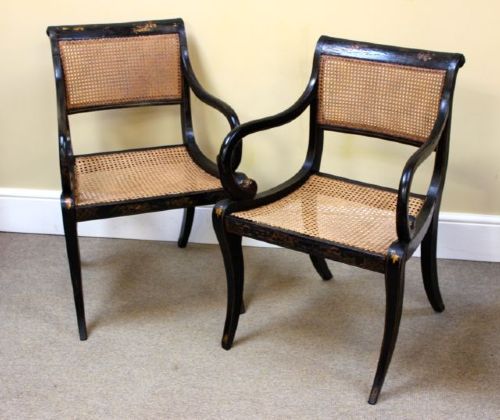
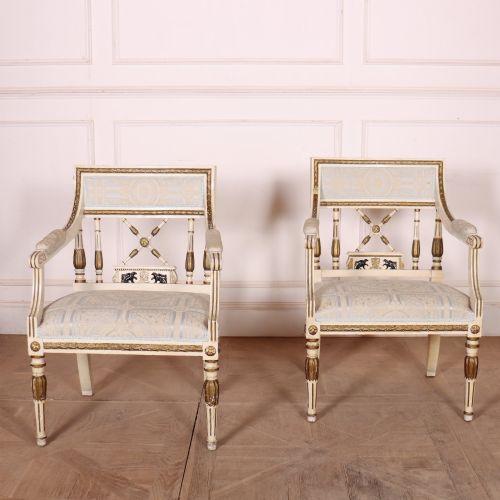
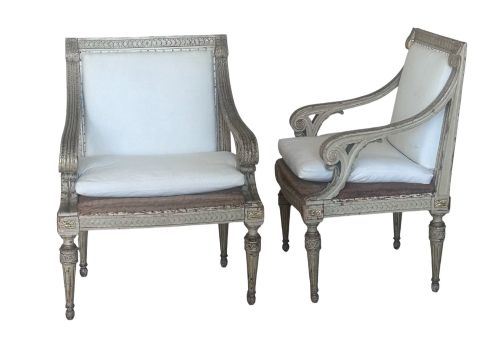
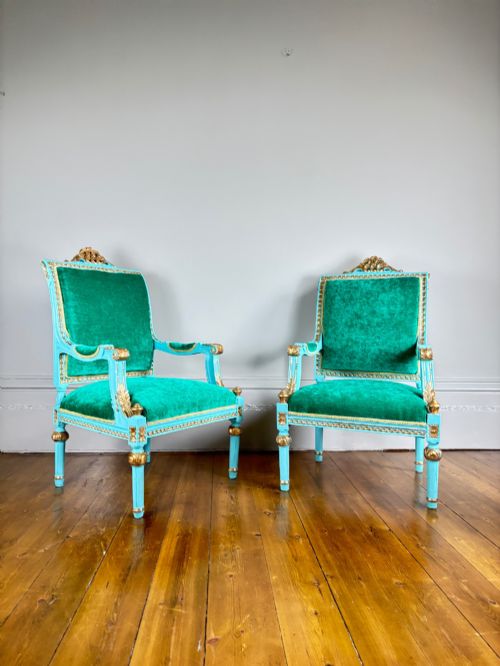
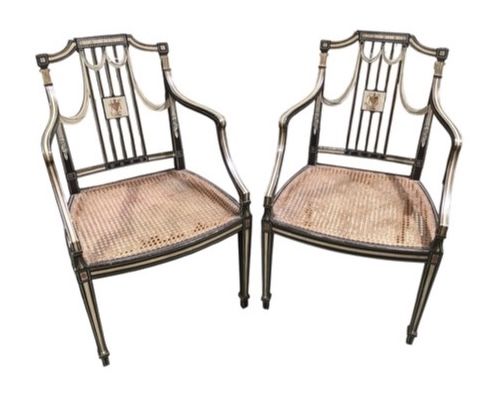
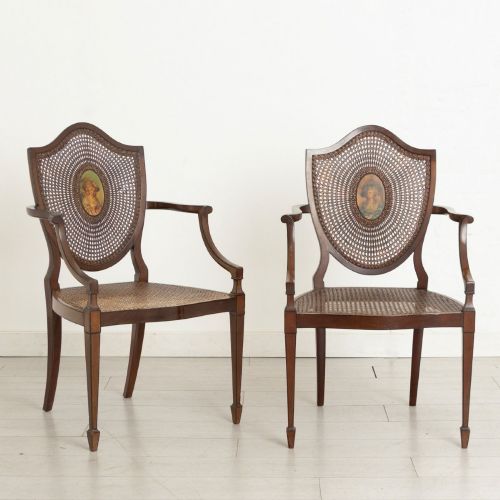
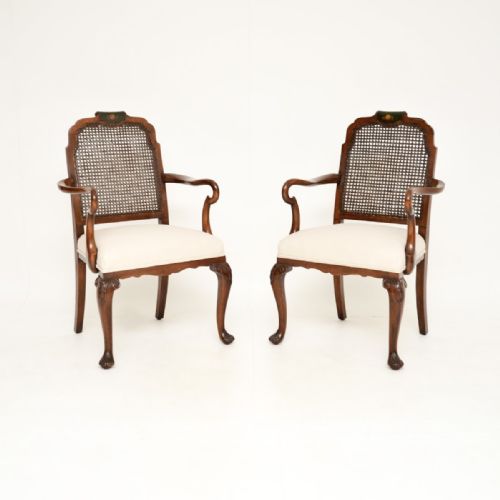
Pair painted armchairs comprise matched seating constructed from wood, iron, or cane, finished with painted surfaces often enriched with parcel gilt details. These items emerge from various periods spanning the eighteenth, nineteenth, and early twentieth centuries.
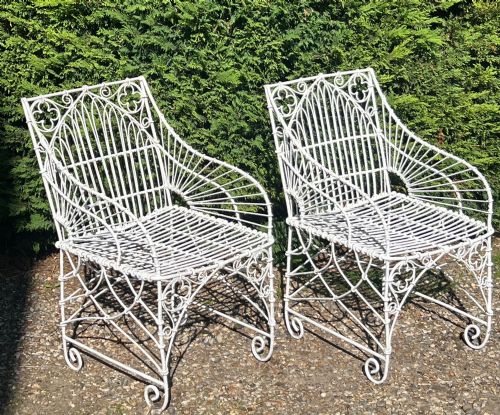
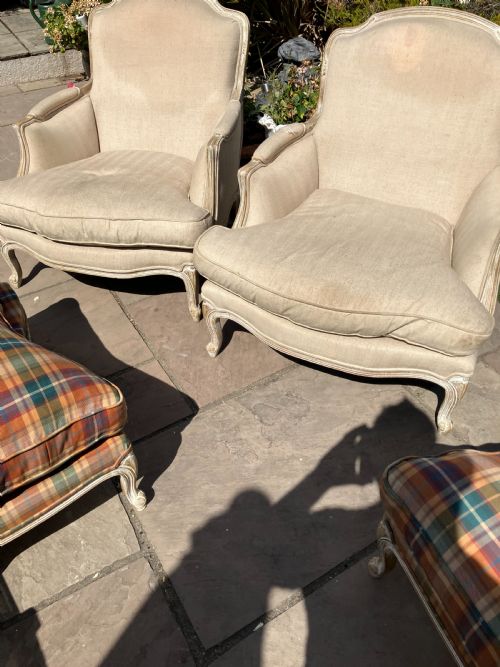
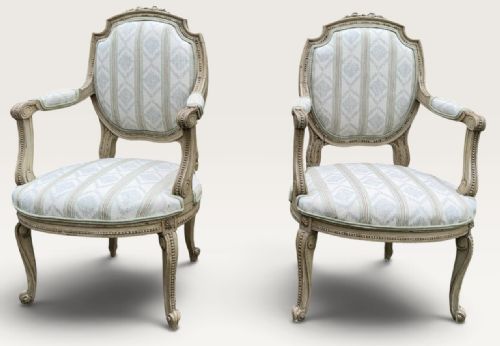
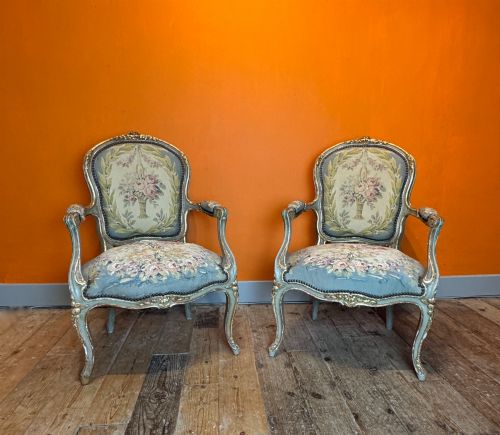
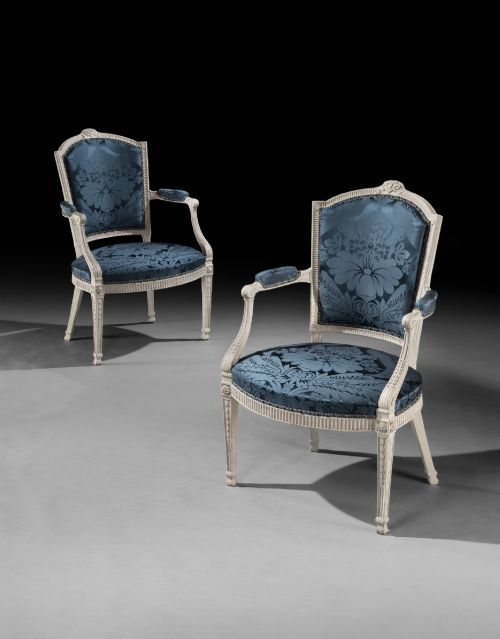
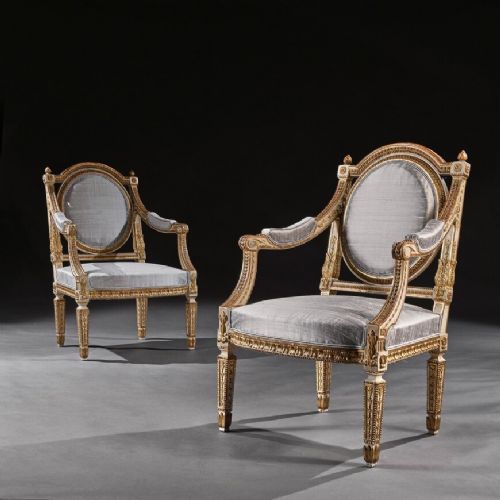
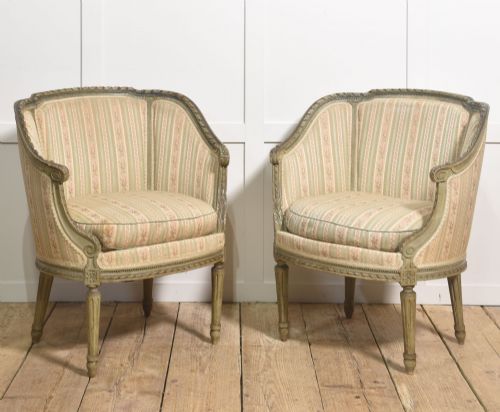
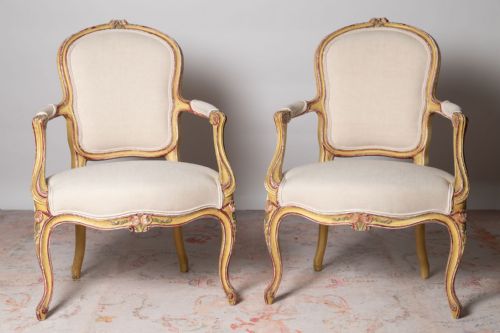
The prevailing form on this page is the French salon chair or bergere originating from the nineteenth or early twentieth century, frequently displaying Louis XV or Louis XVI style influences. Continental examples sit alongside British interpretations, encompassing garden armchairs and open armchairs.
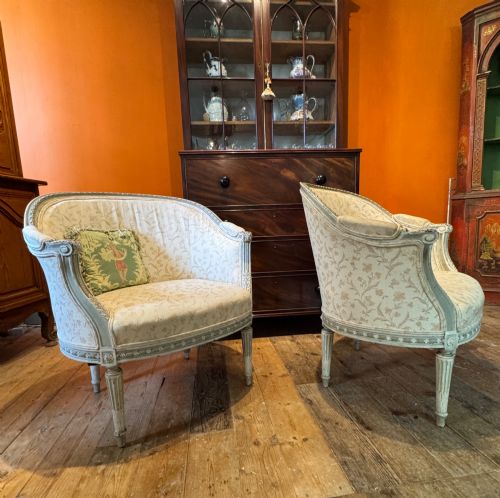
Makers and designers drew upon classical motifs, neoclassical lines, and regional tastes when shaping these frames, resulting in variations from tight tub chairs to larger upholstered armchairs.
How they were made
Carpenters shaped frames from timbers such as beech, satinwood, and walnut, employing traditional joinery to support open arms and carved crest rails. Some garden and conservatory examples utilise cast iron or wrought iron instead of timber.
Finishing involved applying coats of paint directly to the wood, sometimes layering gold leaf as parcel gilt accents over carved details. Upholsters completed the seats using fabric, linen, tapestry, or cane work inserted into the frames.
Pair Painted Armchairs Retail Price Guide 2026
Typical asking prices for pair painted armchairs among the pieces listed under this phrase on Sellingantiques today, from the lower quarter to the upper quarter. They describe what is for sale here now, not the wider market.
Listings feature painted wooden, iron, and caned armchairs spanning the eighteenth century through to the 1930s.
What varies in quality
The distinction between ordinary and superior examples lies in the integrity of the original paint surface and the crispness of the hand-carved woodwork. Pieces retaining their early or original decorative finish command greater interest than those subjected to modern repainting.
Proportion and structural balance dictate the refinement of the armchair, where well-defined stylistic references to periods like Louis XVI elevate the piece above utilitarian workshop products.
White, Allom & Co.
The Pair Painted Armchairs Glossary
- Bergere
- An enclosed upholstered armchair with sides filled in with upholstery or cane work. These typically feature a loose seat cushion resting inside the wooden frame.
- Fauteuil
- An open-framed wooden armchair with upholstered armrests and backrest. The exposed wood around the arms and legs is frequently carved and painted.
- Parcel Gilt
- A decorative technique where specific carved details or highlights are covered in thin gold leaf while the remainder of the object is painted. This adds visual depth to the timber framework.
- Caned
- A seating method utilising woven cane or rattan panels across the backrest or seat base. This technique provides lightweight strength and decorative texture.
- Neoclassical
- A design style drawing inspiration from classical antiquity, featuring straight lines, symmetrical balance, and restrained ornamentation. It appears across eighteenth and nineteenth-century furniture.
Pair Painted Armchairs: Frequently Asked Questions
How do I identify original paint?
Original paint surfaces display natural craquelure, subtle wear patterns, and layered tones that modern chemical stripping and repainting cannot replicate. Examining edges and protected undersides reveals the historic build-up of decorative layers.
Matching the paint characteristics to the underlying wood age helps confirm whether the finish belongs to the period of manufacture or represents a later decorative intervention.
Where were these armchairs used?
These seating pieces served primarily in formal drawing rooms, bedrooms, and salons of substantial residences. Garden variants occupied terraces and conservatories.
Their placement depended on the frame construction, with delicate gilded fauteuils kept inside reception spaces and iron or painted wooden versions destined for semi-protected outdoor areas.
Can I reupholster a period armchair?
Upholstery can be updated using appropriate historical textiles such as linen, tapestry, or needlework to match the aesthetic of the wooden frame. Traditional webbing and stuffing methods preserve the comfort profile.
Careful execution ensures that new fabric adheres to the original sightlines of the arms and backrest without obscuring carved details or painted borders.
How do I distinguish Louis XV from Louis XVI style?
Louis XV frames rely on asymmetrical curves, cabriole legs, and organic rococo motifs. The overall aesthetic prioritises flowing lines over rigid geometry.
Louis XVI furniture introduces straight tapered legs, fluted columns, and symmetrical neoclassical shapes like medallion backs, reflecting a shift back towards classical proportions.