
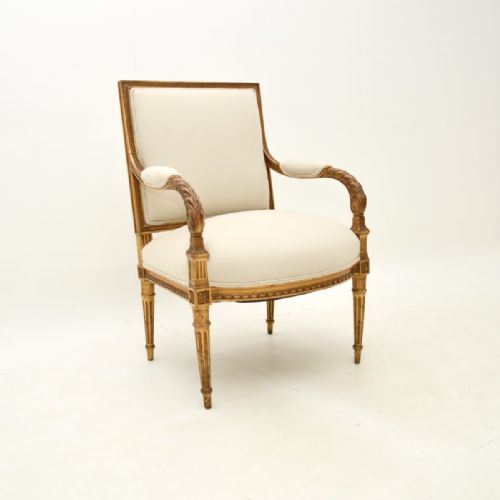


French Chateau Accent Chairs
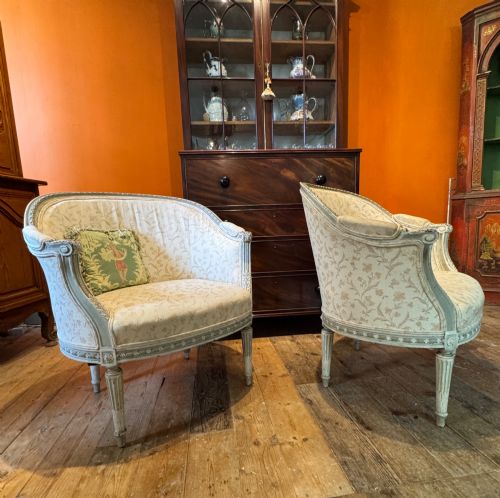
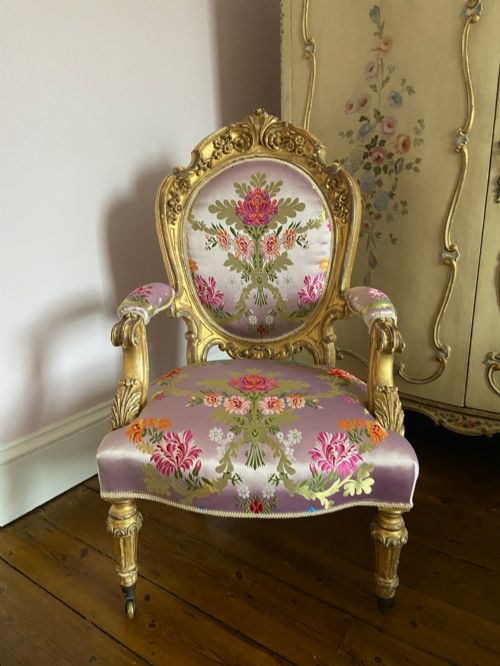
French chateau accent chairs bring classical European seating into domestic spaces, offering graceful carved woodwork and period upholstery.
French Chateau Accent Chairs
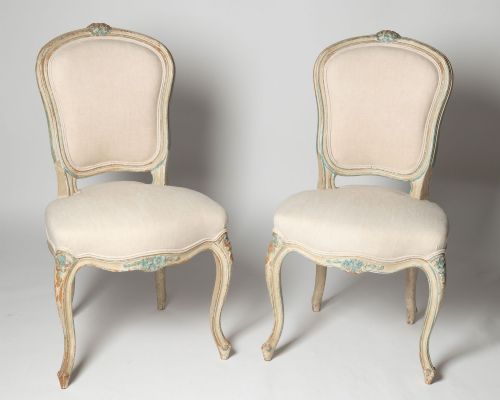
Most examples align with historical revivals such as Louis XV, Louis XVI, and Rococo styles. These pieces function as decorative and functional seating in modern interiors, reflecting traditional craftsmanship.
The inventory demonstrates a strong presence of matched pairs alongside individual salon chairs. These items showcase regional variations from provincial workshops as well as more ornate metropolitan pieces.
How they were made
Carpenters shaped structural frames from hardwoods such as beech, walnut, and oak, often applying decorative carved details by hand. Skilled artisans then finished these wooden skeletons using paint, giltwood, or gilding.
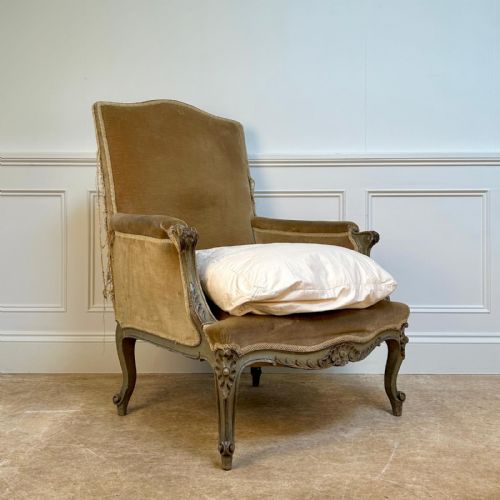
Upholsterers completed the seating using traditional webbing and stuffing before covering the frames in textiles. Materials recorded in the evidence include velvet, silk fabric, and painted surfaces accented with brass components.
French Chateau Accent Chairs Retail Price Guide 2026
Typical asking prices for french chateau accent chairs among the pieces listed under this phrase on Sellingantiques today, from the lower quarter to the upper quarter. They describe what is for sale here now, not the wider market.
Several armchairs arrive in pairs wearing stubborn coats of coral velvet, ready to gossip in the corner.
What varies in quality
The standard of carving on the wooden frames dictates much of the visual distinction between pieces. Crisp, deep relief work on walnut or giltwood indicates a higher grade of craftsmanship than soft or shallow moulding.
Original finishes and period upholstery choices also separate standard examples from finer specimens. Surviving original paint or period silk fabric retains greater historical integrity than later replacements.
The French Chateau Accent Chairs Glossary
- Bergère
- An enclosed upholstered armchair with wooden framing and a solid upholstered back and sides. These seats frequently include caning or loose squab cushions.
- Fauteuil
- An open armchair with upholstered back and armrests, leaving the wooden frame visible at the sides. This form originated in seventeenth century France for formal domestic use.
- Giltwood
- Timber treated with gold leaf or a gold coloured finish applied over a prepared ground. This technique creates a bright metallic surface popular in formal chateau interiors.
- Louis XVI Style
- A neoclassical design vocabulary characterised by straight tapered legs, geometric symmetry, and classical ornamentation. It emerged during the late eighteenth century and saw frequent revival periods.
French Chateau Accent Chairs: Frequently Asked Questions
What is the difference between Louis XV and Louis XVI styles?
Louis XV furniture relies on asymmetrical curves, cabriole legs, and rococo organic motifs. It offers a flowing, sinuous silhouette.
Louis XVI pieces introduce straight lines, symmetry, fluted columns, and neoclassical rectangular proportions. This later style reflects a turn toward ancient Greek and Roman geometry.
Are these chairs suitable for daily use?
Period armchairs and salon chairs function well in contemporary homes when placed with care. Many have sturdy hardwood frames made from walnut or beech.
Upholstery condition varies across surviving examples, so buyers should assess the padding and fabric support. Professional reinforcement can restore stability to vintage frames.
How should I clean gilded wood?
Gilded wooden frames require gentle dusting with a soft, dry cloth to prevent abrasion. Avoid liquid cleaners and chemical sprays that can strip the gold leaf or paint.
Preserving the original surface maintains the historical character of the piece. Regular maintenance protects the delicate metallic finish from moisture and buildup.