



Pair of Tall Nightstands
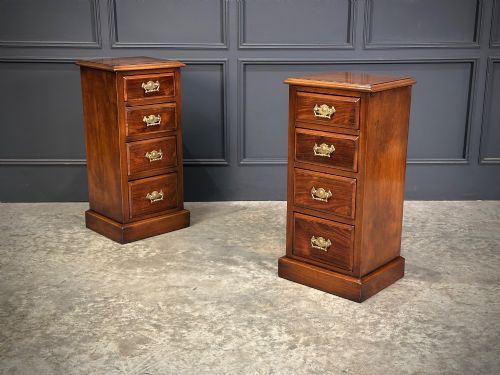
A pair of tall nightstands offers balanced bedside storage and display, bringing symmetry and proportion to a bedroom scheme.
Pair of Tall Nightstands
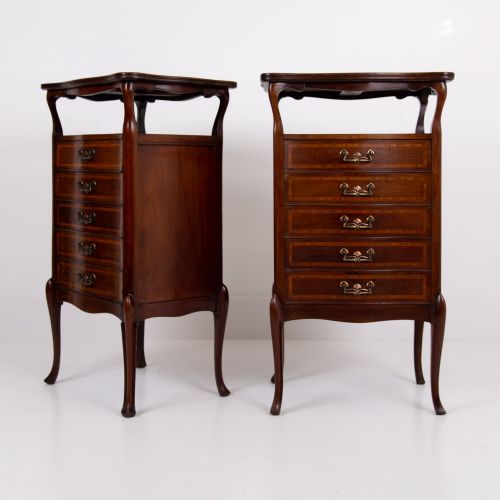
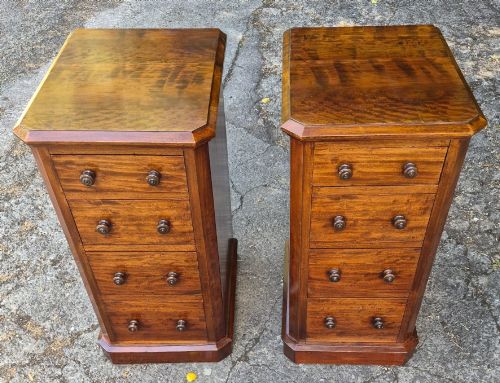
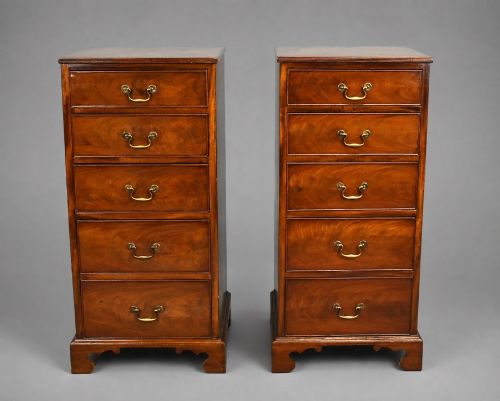
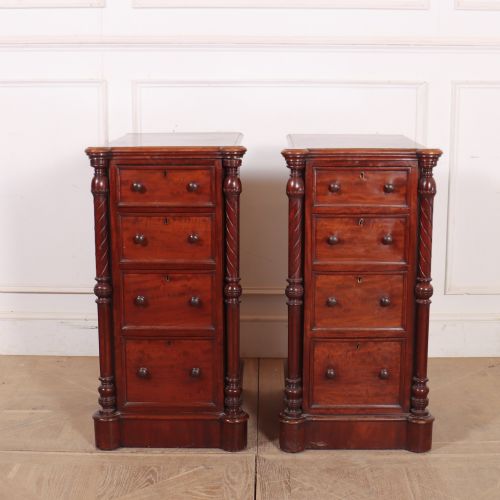
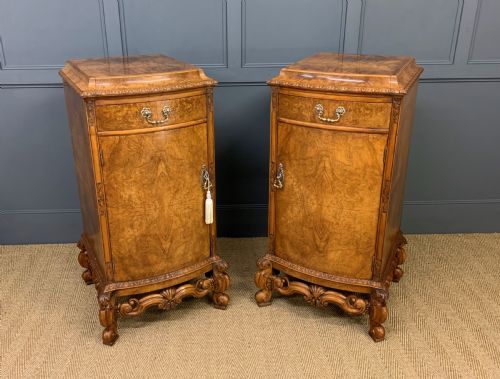
A pair of tall nightstands comprises matching bedside pieces designed to sit beside a bed, taking the form of cabinets, chests of drawers, pedestal cupboards, or side lockers. When you search for a pair of tall nightstands, you encounter pieces that stand higher or narrower than standard bedside tables, providing vertical storage without occupying excessive floor space.
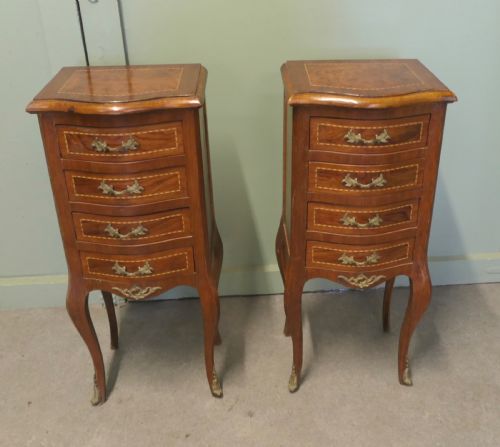
The selections span multiple periods, most notably the Victorian era, the Edwardian period, and the Art Deco era, alongside pieces dating through the nineteenth and early twentieth centuries. English and French provincial workshops dominate the origins, ranging from simple mahogany chests to decorative inlaid cabinets.
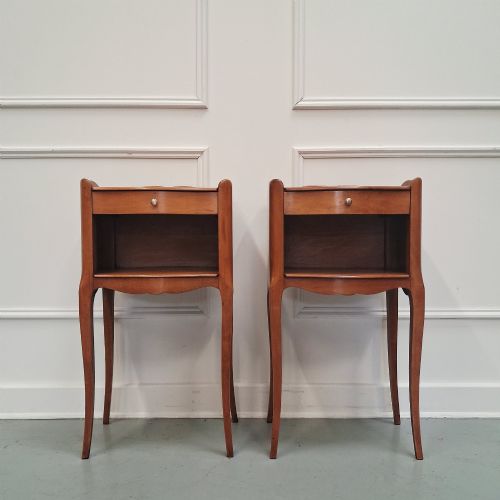
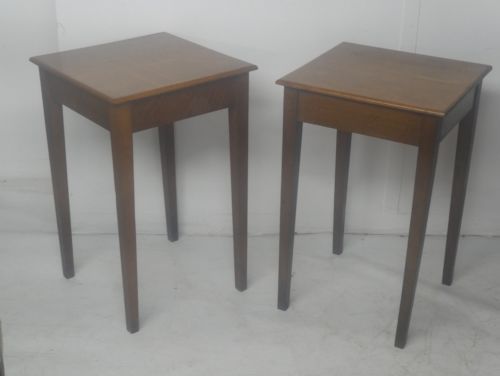
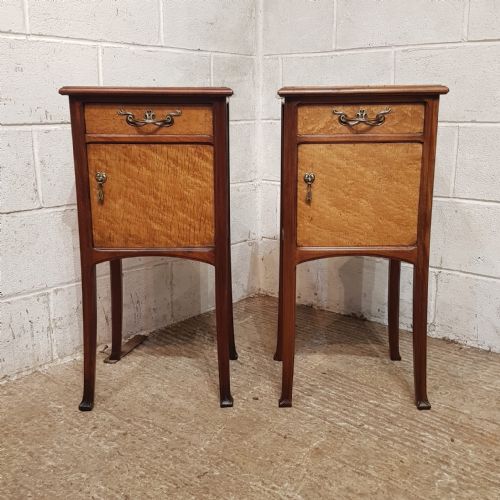
Forms include traditional drawer chests, door cabinets, and open lamp tables, frequently constructed with neat proportions suitable for compact spaces. Buyers select these matched pairs to achieve symmetry in bedroom interiors while accommodating lamps, books, and nighttime essentials.
How they were made
Cabinet makers utilised dense hardwoods such as mahogany, walnut, rosewood, kingwood, and oak as the structural foundation for these bedside pieces. Timber selection governed the durability of the carcase and allowed craftsmen to apply decorative veneers.
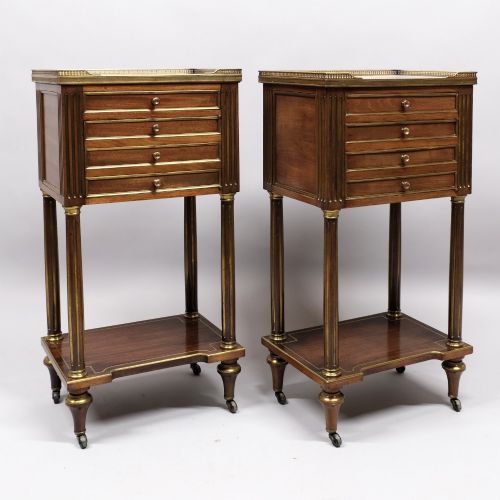
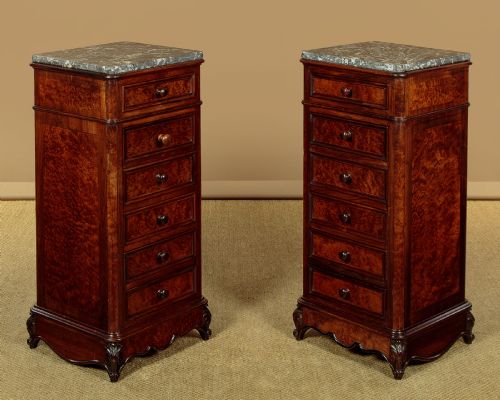
Veneering techniques such as burr walnut, floral marquetry, and parquetry added surface pattern and visual depth to drawer fronts and top panels. Ormolu mounts, brass handles, and marble tops provided contrasting metallic and stone details on French and English examples.
Materials recorded across the inventory include mahogany, walnut, rosewood, kingwood, brass, marble, and oak.
What varies in quality
The refinement of the timber grain and the precision of the veneer work distinguish standard pieces from superior examples. Finely matched burr walnut or intricate floral marquetry indicates high workshop skill during periods like the Edwardian era and the early twentieth century.
Construction details such as dovetail joints in drawer construction and the integration of original brass or ormolu mounts signal superior craftsmanship. The proportion and balance of a tall silhouette also determine the visual harmony of the matched pair.
The Pair of Tall Nightstands Glossary
- Marquetry
- Decorative veneer work arranged in pictorial or geometric patterns across furniture surfaces. Craftsmen assemble thin slices of contrasting wood to create intricate floral or abstract designs.
- Ormolu
- Gilded bronze mounts applied as decorative highlights to furniture. This technique appears frequently on French nineteenth-century and Art Deco pieces.
- Parquetry
- Geometric mosaic woodwork formed by fitting small wooden tiles together. It creates repeating patterns on table tops and cabinet fronts.
- Pedestal cupboard
- A tall, narrow cabinet enclosing storage space behind a single door. These pieces elevate bedside storage into a vertical format.
- Kingwood
- A dense, richly figured timber utilised in fine cabinet making during the eighteenth and nineteenth centuries. Its dark grain provides a striking surface finish.
Pair of Tall Nightstands: Frequently Asked Questions
How do I style tall nightstands?
Match the height of the bedside surface with the mattress level to maintain comfortable access to lamps and books. Use the vertical proportions to balance taller headboards or hang complementary wall lighting above.
Keep decorative objects minimal on the top surface to preserve the grain and finish of the wood. Utilise the internal drawers or cupboards to keep nighttime clutter concealed.
What periods do these pieces date from?
The selection includes pieces from the Victorian and Edwardian eras, alongside Art Deco designs from the nineteen-thirties. Nineteenth-century examples often feature solid mahogany or burr walnut construction.
Later pieces incorporate French styles including Louis XV revival and provincial designs. Each period brings distinct decorative motifs, from simple brass handles to elaborate parquetry veneers.
Are these pieces always sold together?
Yes, the listings comprise matched pairs designed to sit symmetrically on either side of a bed. Sourcing two identical tall nightstands ensures uniform height and matching wood grains.
Pairs often share identical hardware, timber species, and construction methods. This uniformity creates a balanced focal point in a bedroom scheme.
What materials are most common?
Mahogany and walnut appear frequently across English and Scottish pieces from the Victorian and Edwardian periods. French examples often utilise exotic woods like kingwood and rosewood.
Additional materials include brass mounts, marble tops, and oak carcases. Veneer finishes such as burr walnut and parquetry enhance the decorative appeal of the wood.