



Mahogany Oval Cabinets
Mahogany oval cabinets are curved timber storage pieces bringing refined proportions and rich grain to a room.
Mahogany Oval Cabinets
Mahogany oval cabinets comprise curved timber furniture designed for display or storage, appearing across Georgian, Edwardian, and nineteenth-century periods. These pieces combine practical containment with gentle, curved lines that soften room layouts.
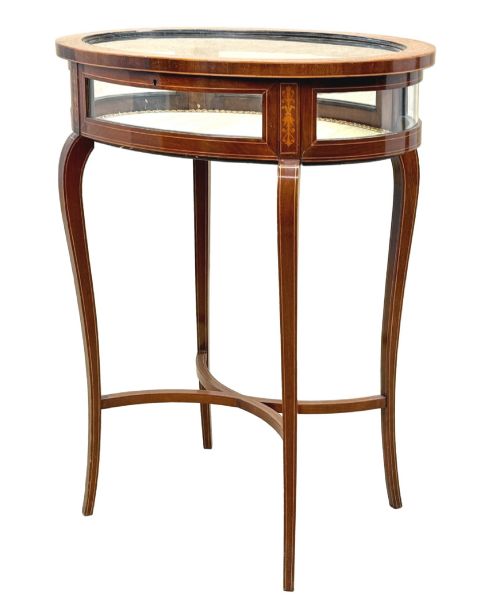
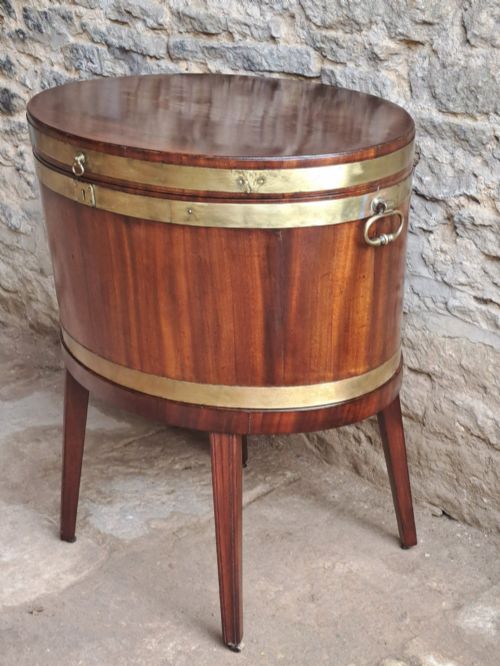
The versions most commonly met on this page span the Edwardian era and the nineteenth century, often taking the form of bijouterie display tables, bedside units, and cellar storage. Makers utilised the curving outline to create softer visual boundaries than standard rectangular chests.
Origins stretch from English workshops to French cabinet makers, linking traditional joinery with decorative revival styles. Buyers select these items to introduce refined timber tones and distinctive curved geometry into domestic interiors.
How mahogany oval cabinets were made
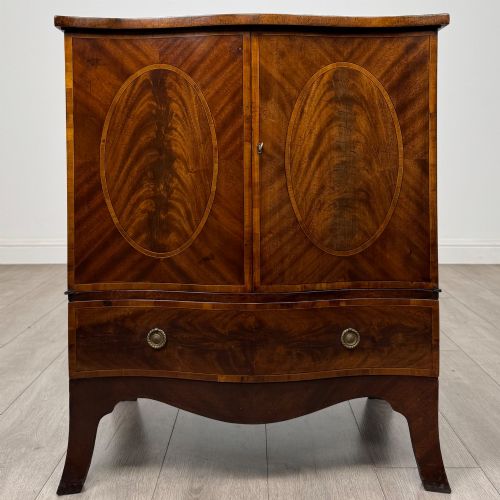
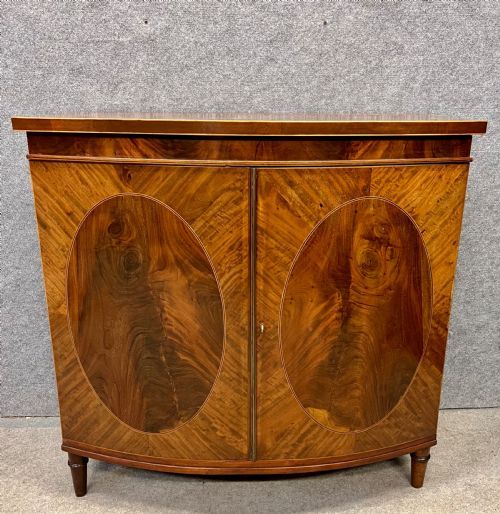
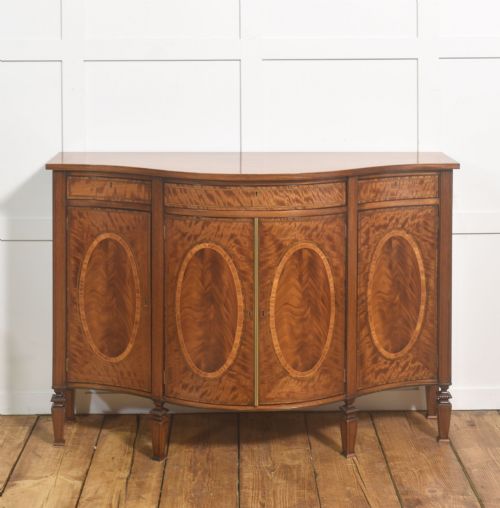
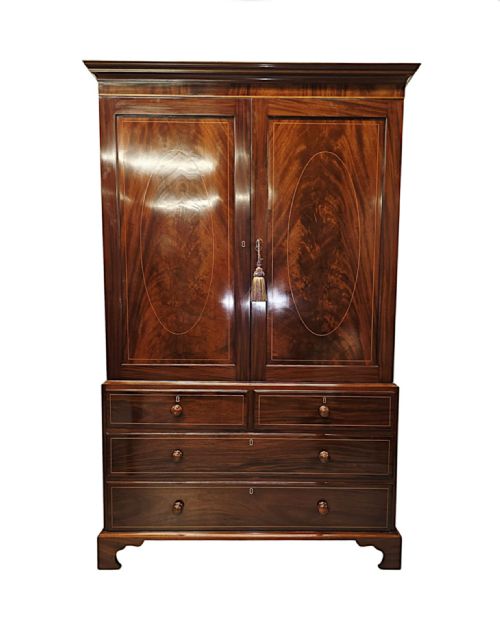
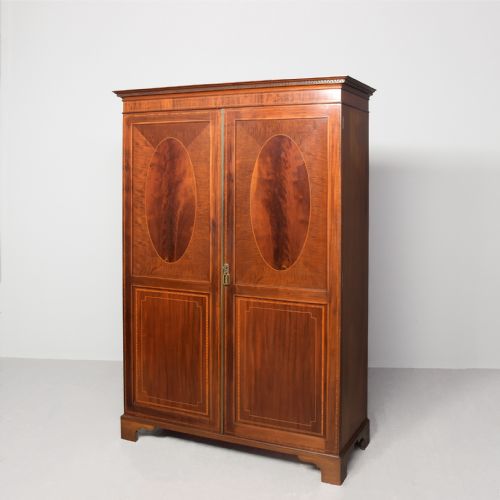
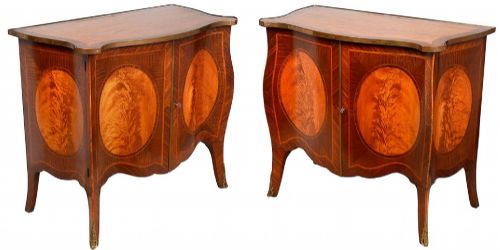
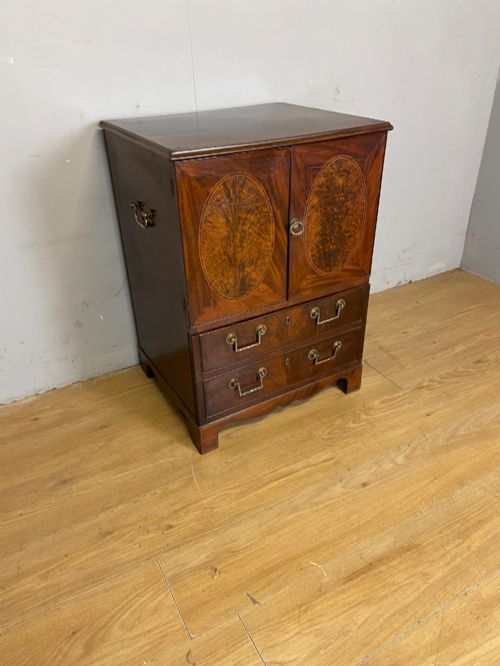
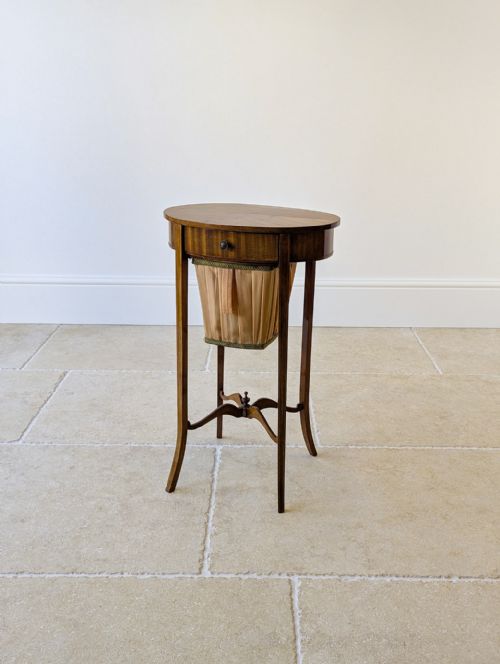
Construction relies heavily on solid mahogany and flame mahogany veneers, shaped carefully over internal framing to achieve the characteristic curved oval profile. Cabinet makers applied boxwood and satinwood inlay to accent the perimeters and door panels.
Metal mounts in brass and ormolu frequently provide structural reinforcement and decorative contrast against the dark timber grain. Glass panels and velvet linings appear on display-focused variants intended to house delicate objects.
Listings incorporate mahogany alongside satinwood, ormolu, and glass across Georgian and Edwardian periods.
What varies in quality
Quality rests upon the selection of timber grain, particularly the depth and symmetry of flame mahogany figures across curved surfaces. Superior examples demonstrate precise inlay work where contrasting woods sit flush within the primary timber.
The execution of the curved joinery and the weight of brass or ormolu mounts dictate the overall standard of the piece. Refined finishing involves smooth operation of doors and drawers that maintain alignment despite timber movement over time.
François Linke·Whytock & Reid of Edinburgh
The Mahogany Oval Cabinets Glossary
- Flame mahogany
- A distinctive wood grain pattern resembling flickering flames, achieved through cutting across the branch junction. This figure represents desirable cabinet work.
- Bijouterie table
- A glass-topped display table intended for small valuables and curiosities, often built with an oval or serpentine plan. These items lift contents into view.
- Ormolu
- Gilded bronze mounts applied to furniture for decorative effect and edge protection. The material adds metallic brightness to dark timber.
- Inlay
- The technique of embedding contrasting woods such as boxwood or satinwood into the primary surface. This ornament defines period styles.
- Cellarette
- A fitted timber chest or cabinet designed to hold wine bottles securely. Many historical examples incorporate lead linings.
Mahogany Oval Cabinets: Frequently Asked Questions
Where should I place an oval cabinet?
These curved pieces suit corners, hallways, and bedside positions where rectangular furniture creates sharp corners. The rounded profile allows smooth movement around the room.
Position them away from direct sunlight and heat sources to protect the polished mahogany surface and prevent timber warping.
How do I clean mahogany surfaces?
Dust the timber regularly with a soft, dry cloth to prevent grit accumulation on the polished finish. Avoid silicone sprays which build up residue over time.
Apply a traditional beeswax polish sparingly when the wood appears dry, buffing gently to maintain the natural lustre of the grain.
Are these cabinets suitable for storage?
Enclosed variants provide secure containment for linens, books, or tableware depending on the internal shelving structure. Glass-topped display versions prioritise visibility over concealed storage.
Assess the internal depth and shelf arrangement to match your intended items before placing objects inside.
How can I date an oval cabinet?
Examine the secondary timbers inside drawers and back panels, alongside the style of inlay and handle fixings. Edwardian and nineteenth-century pieces often feature machine-sawn framing components.
Compare the construction methods and decorative motifs against documented revival periods to establish the likely decade of manufacture.