
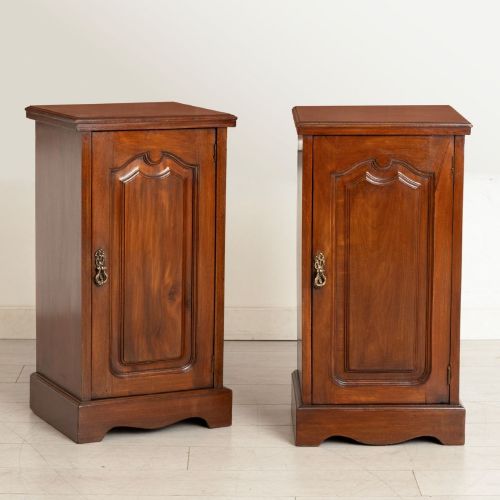


Warm Brown Pedestal Cabinet
A warm brown pedestal cabinet brings rich timber tones and compact storage to any room.
Warm Brown Pedestal Cabinet
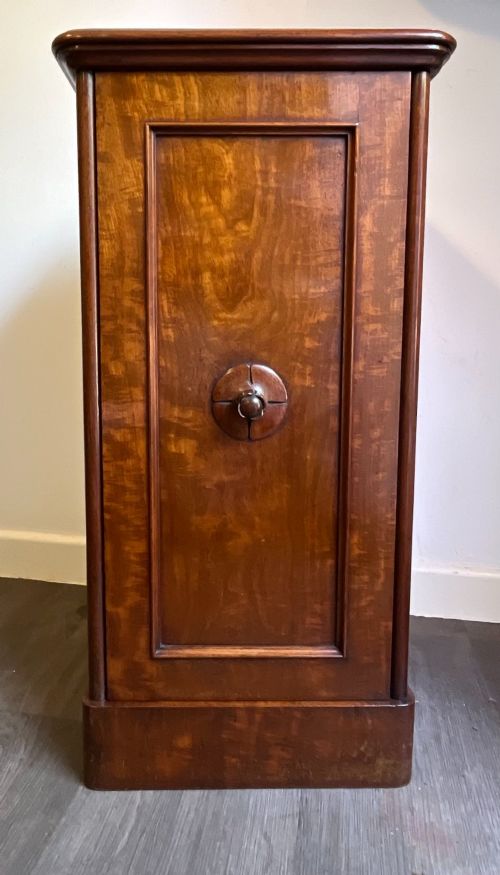
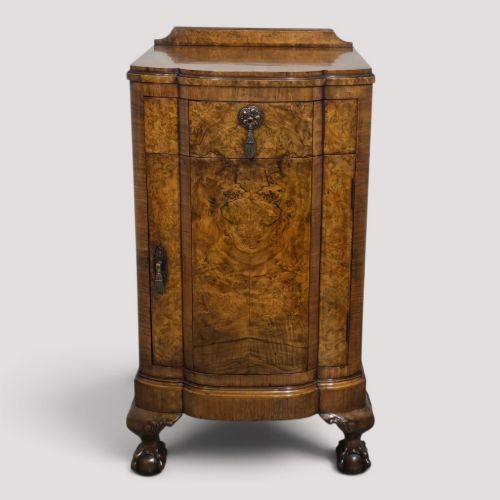
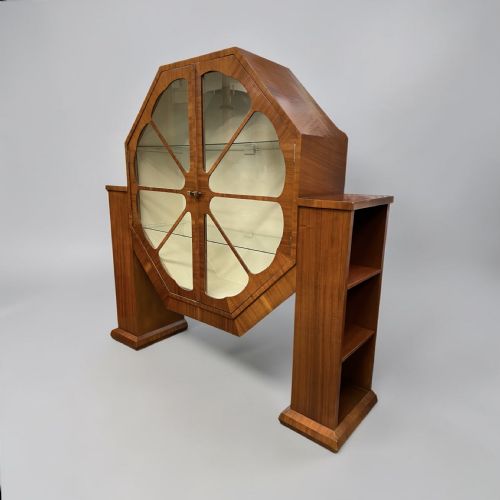
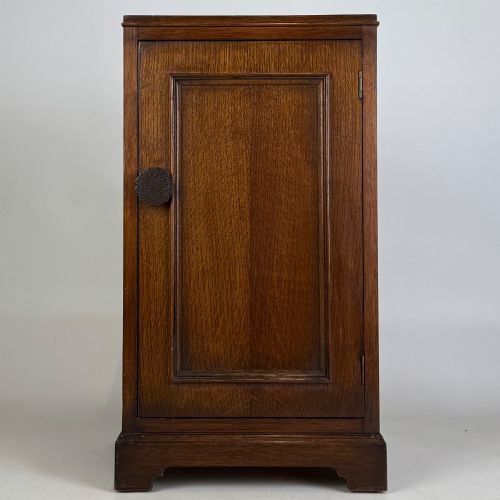
When you search for a warm brown pedestal cabinet, you are looking at freestanding storage pieces built from dark timbers like mahogany, walnut, and oak. These items range from bedside tables and cupboards to display units and compact sideboards spanning the Victorian, Edwardian, and Art Deco periods.
The versions you are most likely to meet on this page are Edwardian and Victorian bedside cabinets alongside later Art Deco side cabinets. They offer enclosed shelving or drawer space while maintaining a smaller footprint than a traditional full-size sideboard.
Makers such as Maurice Adams appear alongside uncredited pieces from the nineteenth and early twentieth centuries. The overarching style moves from ornate nineteenth-century designs towards cleaner geometric lines in the 1930s.
Construction and materials
Carpenters utilised solid hardwoods and veneers, applying rich finishes of mahogany, walnut, and oak to create the characteristic deep brown tones. Satinwood and maple often appear as contrasting stringing or interior details.
Metal hardware such as brass handles and galleries complement the timber construction. Glass panels feature in display variations, while mirrorbacks and inlaid motifs distinguish specific Edwardian and Victorian iterations.
Listings feature mahogany, walnut, oak, and satinwood across the Victorian, Edwardian, and Art Deco periods.
Assessing quality
Finer examples display careful timber selection, where the grain pattern of the mahogany or walnut runs harmoniously across the visible surfaces. Superior craftsmanship is evident in the precision of the joinery and the subtlety of any inlay work.
The choice of secondary woods and the quality of original brass fittings separate standard utilitarian items from more ambitious commissions. Pieces attributed to recorded makers often demonstrate a higher standard of architectural proportion and decorative restraint.
Maurice Adams
The Warm Brown Pedestal Cabinet Glossary
- Pedestal cabinet
- A freestanding, upright piece of furniture featuring enclosed storage beneath a flat top surface. These units function as bedside tables or compact sideboards.
- Stringing
- Thin lines of contrasting timber inlay used to outline drawers, doors, or borders on a cabinet. This technique adds subtle linear decoration to plain mahogany or walnut surfaces.
- Breakfront
- A piece of furniture where the central section projects forward from the flanking outer sections. This architectural form creates depth and visual interest on larger sideboards and cabinets.
- Gallery
- A low raised rail, typically made of brass, positioned along the top edge of a cabinet or sideboard. It prevents small items from sliding off the surface.
- Mirrorback
- An upright wooden frame containing a mirror attached to the rear of a sideboard or cabinet. This addition reflects light and was particularly popular during the Edwardian period.
Warm Brown Pedestal Cabinet: Frequently Asked Questions
What periods do these cabinets come from?
The listings span from the nineteenth century through the Edwardian era up to the Art Deco period of the 1930s. Victorian pieces tend to feature heavier mahogany timbers, while later examples show lighter oak or walnut construction.
Design styles shift from ornate nineteenth-century forms to cleaner geometric lines as the decades progress toward the mid-twentieth century.
Where should I place a bedside cabinet?
These compact wooden units sit comfortably beside a bed to provide enclosed storage for books and personal items. Their flat tops hold a lamp or alarm clock while keeping the floor area clear.
The rich brown timber tones work well alongside both traditional and contemporary bedroom schemes.
How do I distinguish Edwardian from Victorian styles?
Victorian pieces generally utilise heavy solid mahogany or walnut with darker finishes and minimal inlay. Edwardian examples often incorporate lighter mahogany with delicate stringing or mirrorback attachments.
Art Deco items from the 1930s introduce streamlined shapes and contrasting veneers that depart from earlier revival styles.
What woods are most common?
Mahogany and walnut dominate the selection, providing the deep warm brown tones characteristic of these cabinets. Oak also appears frequently, particularly in Edwardian designs.
Satinwood and maple are utilised as secondary woods for internal elements or decorative inlay work.