


Curved Mahogany Side Cabinets
Curved mahogany side cabinets are versatile storage pieces shaped with graceful sweeps, offering a refined focal point for any sophisticated interior.
Curved Mahogany Side Cabinets
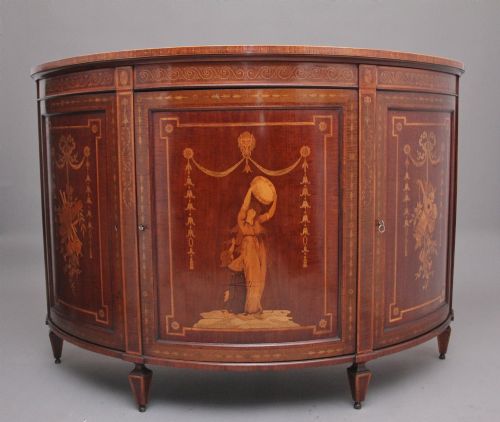
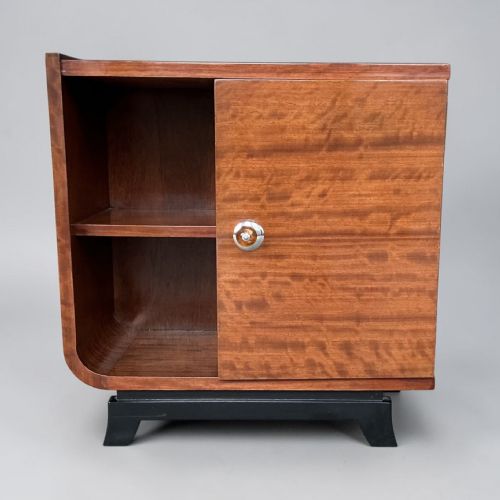
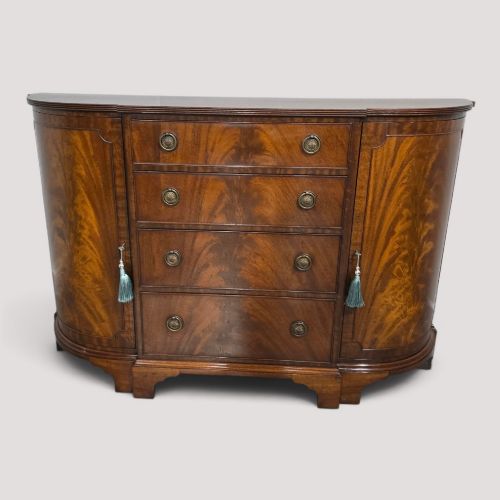
Curved mahogany side cabinets encompass a variety of elegant storage forms defined by their rounded, bow, or demi-lune profiles. These pieces frequently appear from periods such as the nineteenth century, the Edwardian era, and the Art Deco decades, showcasing a rich tradition of cabinet making.
The variations range from compact corner tables and oval cupboards to larger sideboards and display cabinets fitted with glass or tambour doors. Many examples incorporate intricate marquetry, contrasting wood inlays like satinwood and boxwood, and delicate painted finishes.
Originating from diverse European traditions including French, Italian, Dutch, and English workshops, these items adapt effortlessly to modern and traditional rooms alike. Buyers will encounter numerous interpretations spanning revival styles like Sheraton, Georgian, and Louis XV.
Construction and materials
The primary carcase construction relies heavily on solid and veneered mahogany, chosen for its stable grain and deep warm tones. Artisans often enhanced the rich timber surfaces with contrasting marquetry inlays using satinwood and boxwood to create elaborate floral or geometric motifs.
Metal mounts in brass and ormolu frequently accent the key areas, such as feet, handles, and escutcheons, adding a bright contrast to the dark wood. Marble tops and glazed panels also appear on select refined specimens, elevating the functional utility of the furniture.
Some tambour cupboards hide secrets behind sliding wooden slats, proving that nineteenth-century desks were not the only furniture to employ clever tricks.
Judging the standard of execution
Quality in these pieces is dictated by the precision of the curved joinery and the fluidity of the cabinet maker's line. Superior examples demonstrate seamless alignment across bowed doors and complex demi-lune carcases where wood expansion must be managed with absolute skill.
The refinement of the surface decoration separates standard production from exceptional artistry. Hand-cut marquetry, finely chased ormolu mounts, and well-figured mahogany veneers indicate a higher level of workshop investment during creation.
The Curved Mahogany Side Cabinets Glossary
- Demi-lune
- Having a half-moon or semi-circular shape. This profile is frequently seen on tables and cabinets designed to stand flush against a wall.
- Marquetry
- Decorative inlay work using various coloured woods to form pictorial or ornamental patterns on a surface. It requires immense patience and precision from the artisan.
- Ormolu
- Gilded bronze used for decorative mounts and ornamentation on fine furniture. The technique was particularly popular in French and revival pieces.
- Tambour
- A flexible shutter door constructed from narrow strips of wood glued to canvas. It allows smooth operation around curved cabinet fronts.
- Vernis Martin
- A type of decorative lacquer finish developed in France during the eighteenth century. It mimics Asian lacquerwork through multiple translucent varnish layers.
Curved Mahogany Side Cabinets: Frequently Asked Questions
Where should I place a curved side cabinet?
These cabinets work exceptionally well in hallways, dining rooms, or living spaces where a standard rectangular piece might protrude awkwardly. Their rounded profiles soften corners and improve traffic flow in tight areas.
They also serve as functional surfaces for lamps, decorative objects, or serving items while providing discreet enclosed storage underneath.
What is the difference between a side cabinet and a sideboard?
Sideboards are traditionally longer, lower serving pieces designed primarily for dining rooms to hold tableware and food. Side cabinets tend to be taller, more compact storage units suited for general display and organisation.
Both categories share similar aesthetic details and curved fronts depending on the specific period and regional workshop style.
How can I identify revival styles from older pieces?
Revival pieces, such as Sheraton or Georgian style items made in the Edwardian period or later, often use modern mechanical fasteners alongside traditional joinery. The timber preparation and secondary woods inside the carcase also provide clues to the true manufacturing date.
Examining the wear patterns on feet and interior drawer runners helps establish the age and authenticity of the cabinet.