


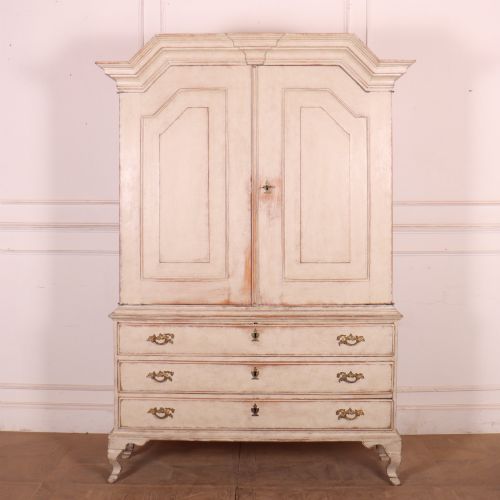


Antique Scandinavian Cupboard
An antique scandinavian cupboard brings architectural presence and painted charm into a room, offering practical storage through centuries of regional craftsmanship.
Antique Scandinavian Cupboard
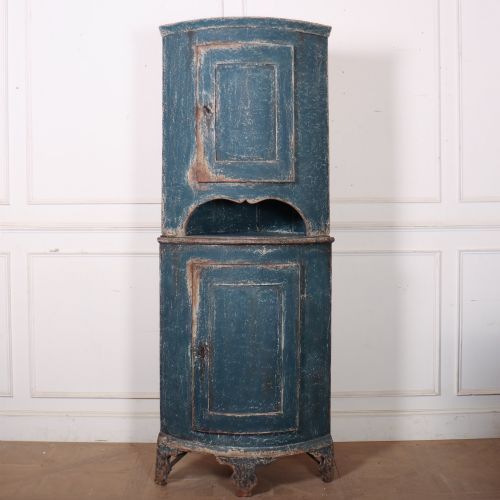
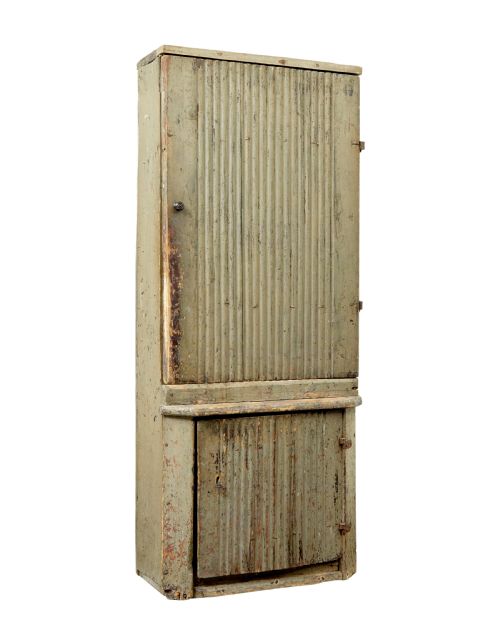
An antique scandinavian cupboard encompasses a diverse group of storage furniture originating from Sweden, Denmark, Finland, and the broader Baltic region. Buyers exploring this category encounter tall linen presses, corner cupboards, wall-mounted cabinets, and substantial double-door wardrobes spanning the eighteenth, nineteenth, and early twentieth centuries.
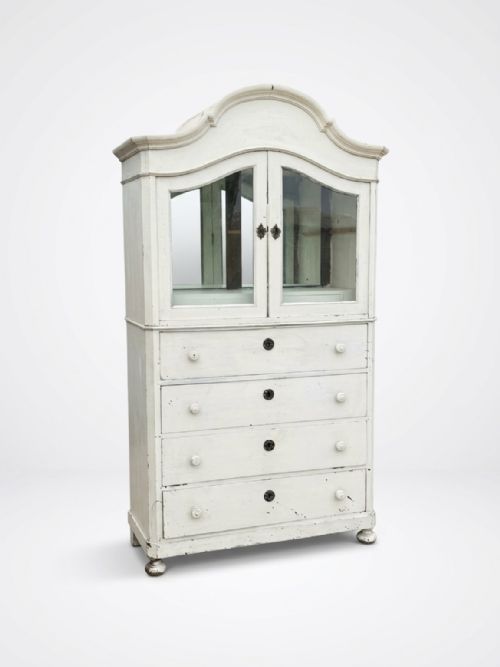
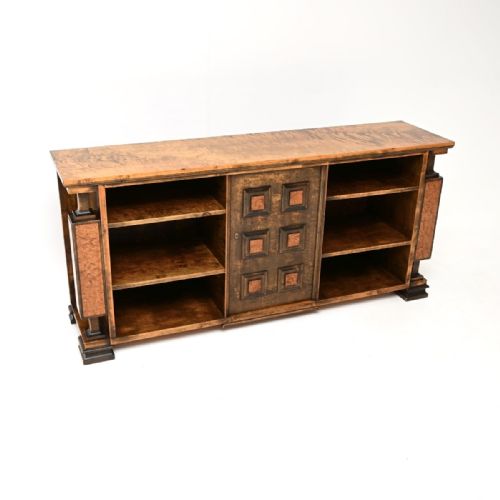
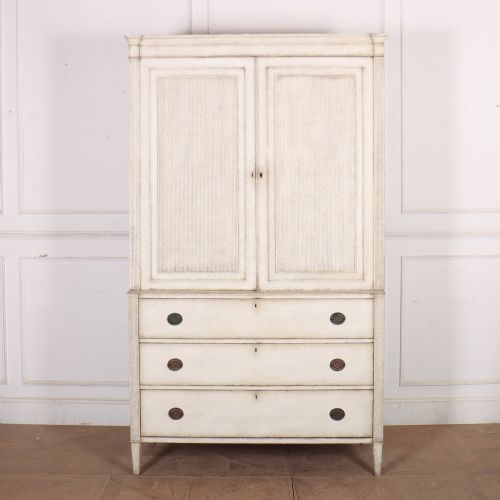
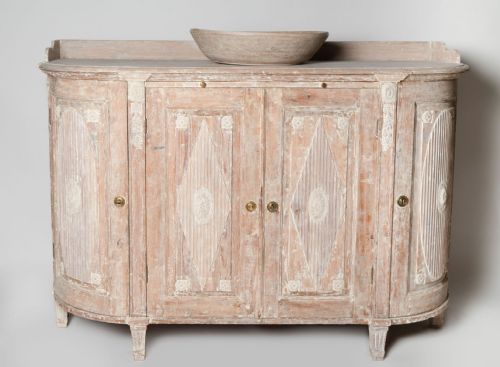
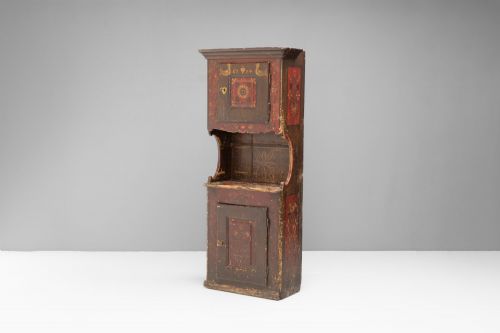
The version most commonly met on this page is the nineteenth-century painted pine cupboard, often finished in soft historical tones that reflect Scandinavian country and folk art traditions. Alongside these rustic country pieces appear more formal expressions, including Swedish Biedermeier sideboards in satin birch and Gustavian kitchen cabinets built for functional domestic interiors.
How they were made
Construction relies heavily on local pine and birch timbers, worked by regional joiners using traditional frame and panel techniques. Surfaces are frequently treated with historical paint layers, ranging from scraped original pigments to decorative folk art motifs applied over a prepared ground.
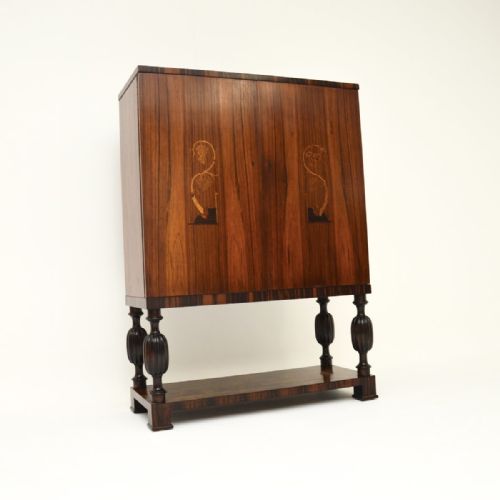
Metal hardware such as iron hinges, brass escutcheons, and locks provide functional security and contrast with the timber surfaces. More polished interpretations incorporate satin birch veneers and marble tops, particularly in nineteenth-century bedside cabinets and buffets.
Listings feature pieces spanning the 18th century, 19th century, and early 20th century, utilising pine, birch, brass, iron, and glass.
What varies in quality
The distinction between ordinary and exceptional pieces rests upon the integrity of the surface finish and the sophistication of the joinery. Cupboards retaining their original scraped paint hold greater visual and historical coherence than those subjected to modern repainting.
Proportion and architectural detailing also determine the caliber of a piece, separating simple utilitarian boxes from balanced Gustavian corner cabinets and serpentine-shaped cupboards with refined proportions.
The Antique Scandinavian Cupboard Glossary
- Gustavian
- A neoclassical Swedish design style spanning the late eighteenth and early nineteenth centuries, characterised by restrained symmetry, fluted columns, and pale painted finishes.
- Biedermeier
- A Central European and Scandinavian style from the early to mid nineteenth century emphasising clean lines, domestic comfort, and the natural grain of birch and other timbers.
- Bonnet top
- A distinctive raised, arched canopy or cornice crowning the top of a tall cabinet or cupboard.
- Serpentine
- A curved line or front shaped with a convex centre flanked by concave sides, adding fluid movement to case furniture.
- Scraped paint
- A conservation method that reveals original historical pigment layers beneath subsequent coats of modern paint.
Antique Scandinavian Cupboard: Frequently Asked Questions
How do I identify a Gustavian cabinet?
A Gustavian cabinet typically displays restrained neoclassical details such as fluted columns, symmetrical door panels, and pale painted surfaces. These pieces draw inspiration from French Louis XVI design translated through a distinctly Swedish lens.
They often sit on tapered legs and eschew heavy ornamentation in favour of balanced architectural proportions.
Are these cupboards made of solid pine?
Many regional cupboards are constructed from solid pine, which was readily available across Scandinavian forests. This softwood accepted paint readily, leading to the tradition of decorative painted finishes.
Other examples utilise hardwoods like birch and satin birch, particularly in nineteenth-century urban pieces and Biedermeier furniture.
Where were these cupboards used originally?
These cupboards functioned as essential storage furniture in farmhouses, manors, and town houses across Sweden, Denmark, and Finland. They kept household linens, kitchen provisions, and clothing protected from dust and dampness.
Wall cupboards maximised space in compact rooms, while large double-door armoires anchored main living areas.