
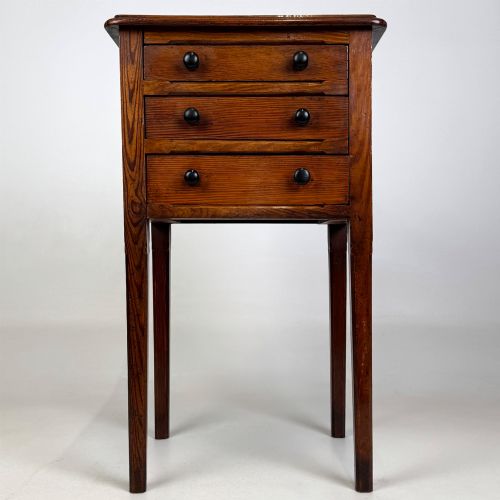
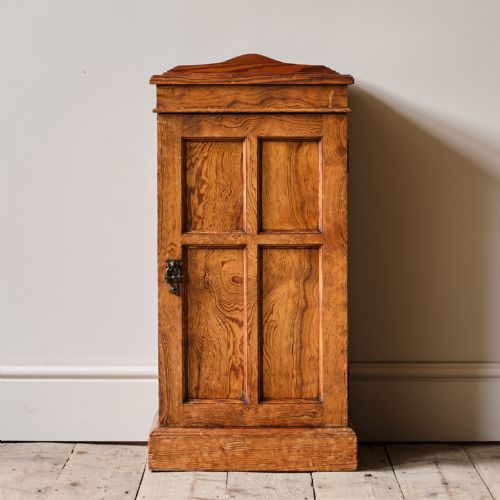
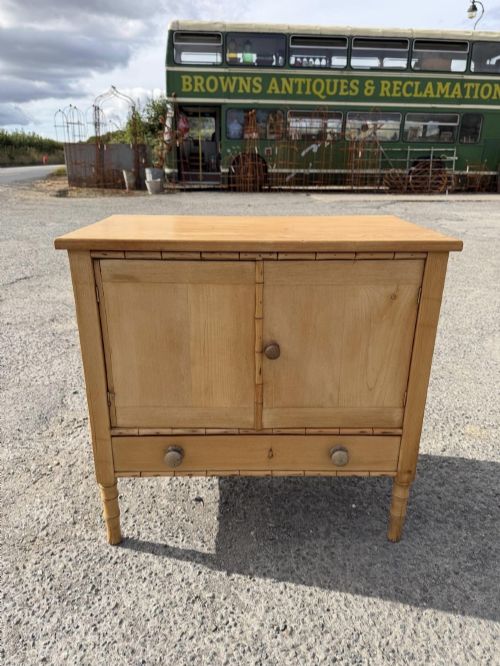
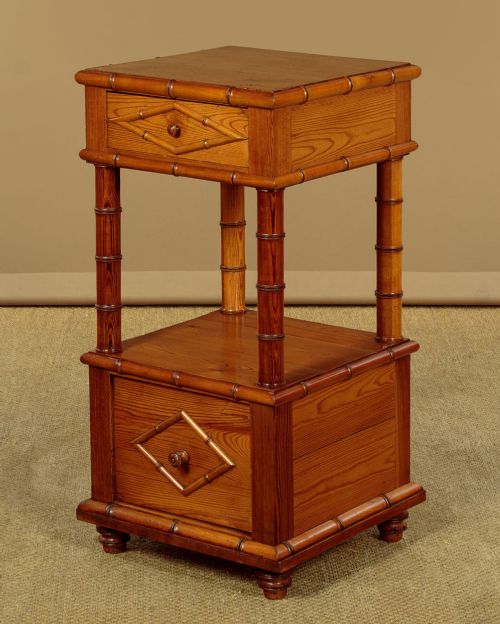
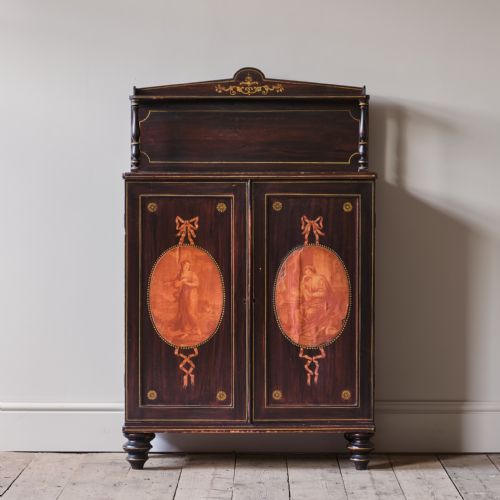
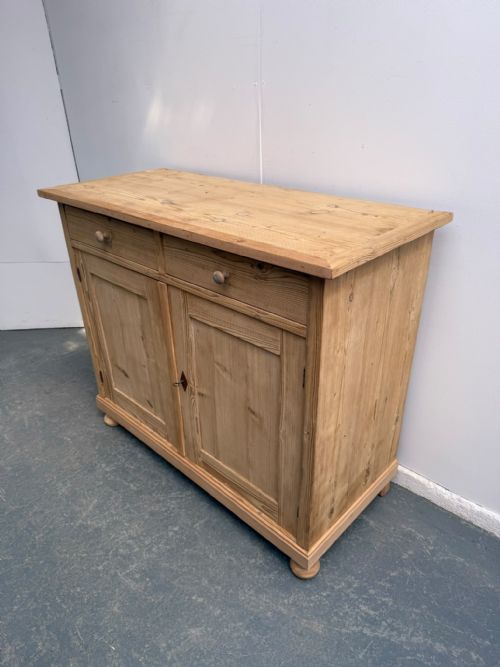
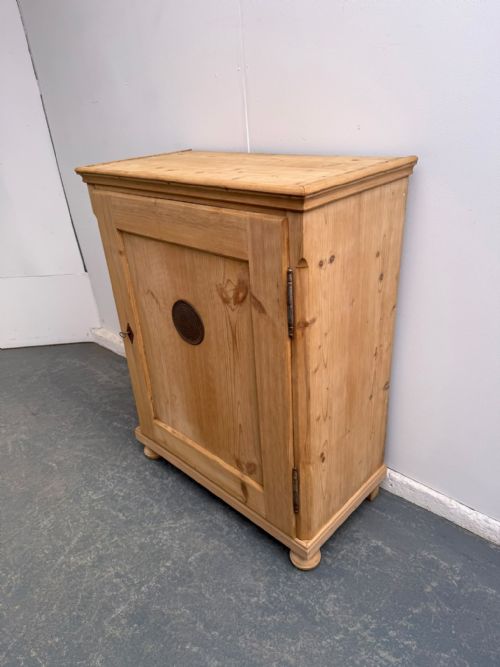
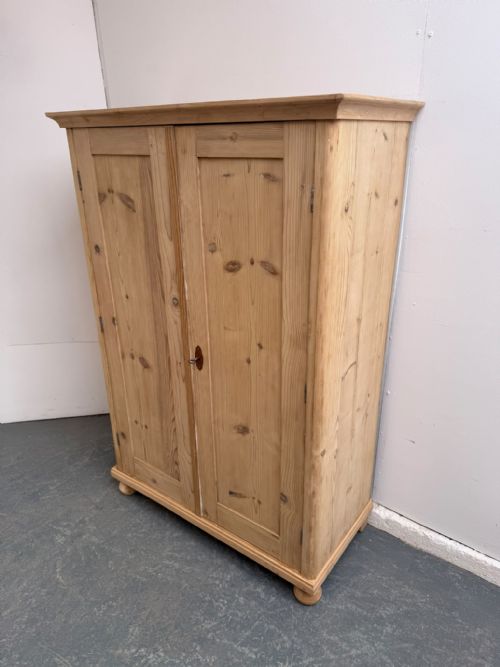

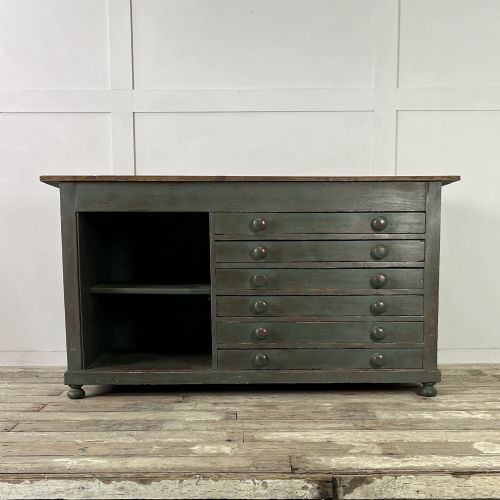


Pine Side Cabinet
Solid timber utility meets domestic practicality in a pine side cabinet, offering honest storage shaped by generations of regional craftsmanship.
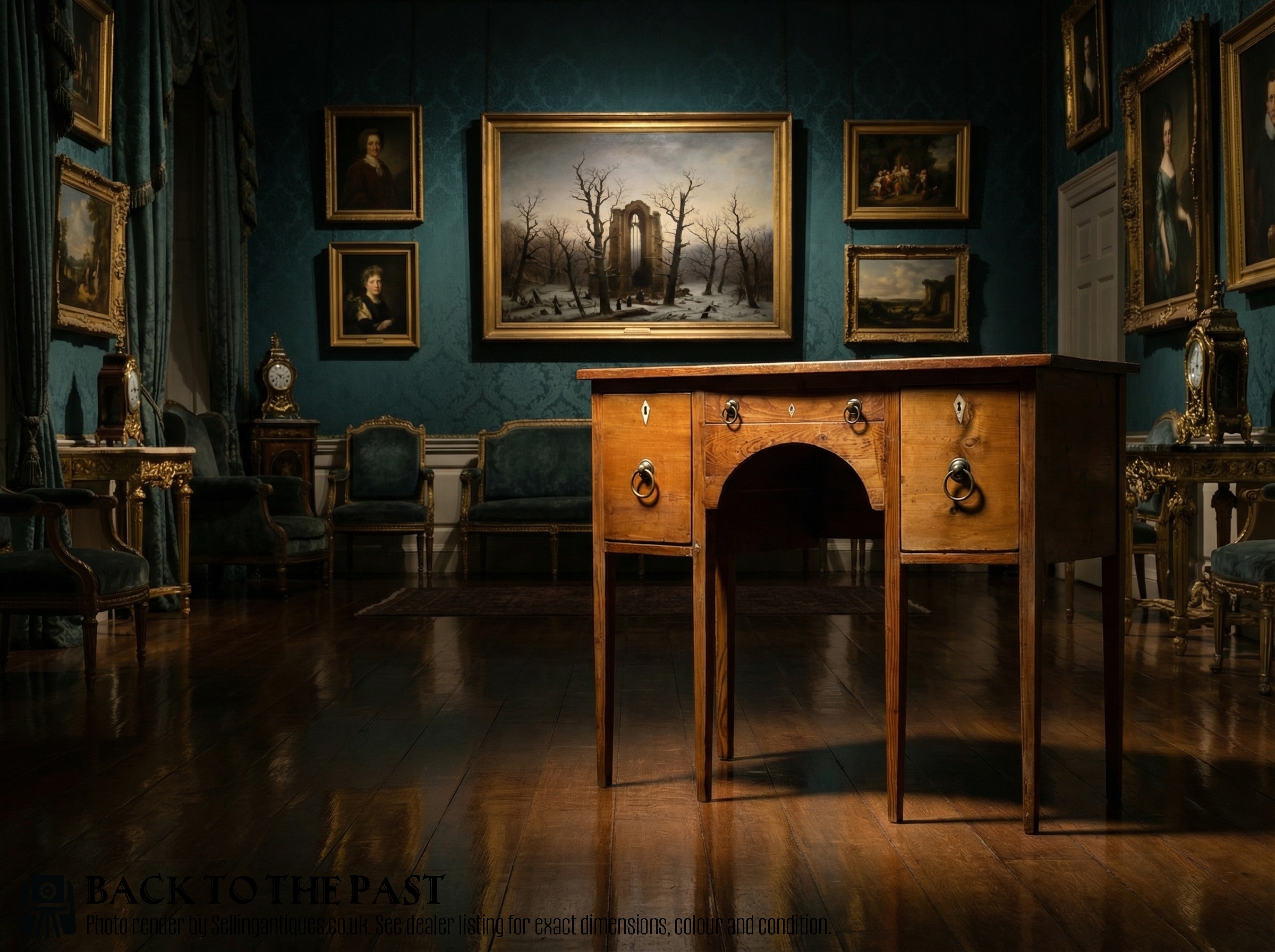
Pine Side Cabinet
A pine side cabinet covers a broad family of domestic storage pieces, ranging from compact bedside pot cupboards to larger chiffoniers, dresser bases, and shop fittings.
The version most commonly met on this page is the Victorian bedside cabinet or small bedroom cupboard, frequently encountered in pairs and often retaining original paintwork or stripped waxed surfaces.
Materials and Construction
Construction relies heavily on native and imported softwoods, primarily standard pine, dense pitch pine, and Oregon pine, occasionally combined with oak, ash, or walnut framing.
Surface finishes vary widely between raw stripped timber intended for waxing, simulated grain painting such as faux bamboo, and layers of original coloured paint in grey, cream, black, or blue.
Hardware elements incorporate brass handles, iron fittings, and inset marble tops, joining traditional panelled, carved, and columned timber carcasses.
Pine Side Cabinet Retail Price Guide 2026
Typical asking prices for pine side cabinet among the pieces listed under this phrase on Sellingantiques today, from the lower quarter to the upper quarter. They describe what is for sale here now, not the wider market.
Evaluating Construction and Finish
Quality rests upon the integrity of the timber joints, the stability of the carcass, and the preservation of original decorative paint surfaces rather than later alterations.
Finer examples display careful proportions, well-executed carving, or retained original factory and household paintwork, whereas utility pieces show utilitarian joins and heavy subsequent stripping.
The Pine Side Cabinet Glossary
- Pitch pine
- A dense, resinous softwood timber favoured during the nineteenth century for its distinct grain pattern and durability. It withstands heavy daily use better than standard softwoods.
- Pot cupboard
- A small bedside cabinet originally designed to house a chamber pot behind a single door. These pieces often feature an internal shelf and compact proportions.
- Chiffonier
- A low sideboard or cabinet featuring drawers and cupboards, developed during the Regency and Victorian eras for dining and living rooms.
- Wellington chest
- A tall, narrow chest of drawers secured by a hinged locking stile on one vertical edge. This form provides substantial drawer space within a minimal floor footprint.
- Faux bamboo
- A decorative paint technique or wood-carving style mimicking the segmented stems of bamboo. It gained popularity during the nineteenth century under Asian design influences.
Pine Side Cabinet: Frequently Asked Questions
What is a pine side cabinet used for?
These cabinets serve as practical storage furniture for bedrooms, living spaces, and hallways, holding bedside items, table linen, or general household goods. Their compact footprints make them adaptable additions to modern rooms needing surface space and enclosed storage.
Historically, many smaller variants functioned specifically as pot cupboards or nightstands, keeping necessary items close at hand. Today, they easily transition into living room lamp tables or hallway storage units.
How do I identify a Victorian pine cabinet?
Victorian pieces usually exhibit characteristic construction methods, such as hand-cut dovetail joints in the drawer boxes and solid pine backboards. Stylistic clues include panelled doors, turned column supports, or plinth bases.
Many pieces from this era also carry traces of their original painted finishes or have been stripped down to raw waxed pine over subsequent decades. Examining the interior timber and hardware helps confirm the nineteenth-century origin.
Are painted finishes original on these cabinets?
Original painted surfaces survive on numerous continental and English country pieces, showing layers of period colours like grey, cream, black, or blue. These coatings often exhibit natural wear and craquelure that confirm age.
Other cabinets were stripped of their later paint layers to expose the grain of the underlying pine or pitch pine. Inspecting corners and concealed surfaces helps determine whether a paint finish dates from the period of manufacture.
How should I care for a waxed pine cabinet?
Waxed pine surfaces benefit from occasional applications of beeswax to nourish the timber and maintain a soft sheen. Avoiding direct sunlight and excessive moisture prevents the wood from drying out or warping.
Dusting with a dry, soft cloth preserves the finish. Heavy cleaning agents should be avoided, as they strip the protective wax barrier from the softwood.