




Antique Swedish Nightstands
These antique Swedish nightstands bring practical storage and pale painted elegance to a bedroom, combining functional proportions with classic Scandinavian design.
Antique Swedish Nightstands
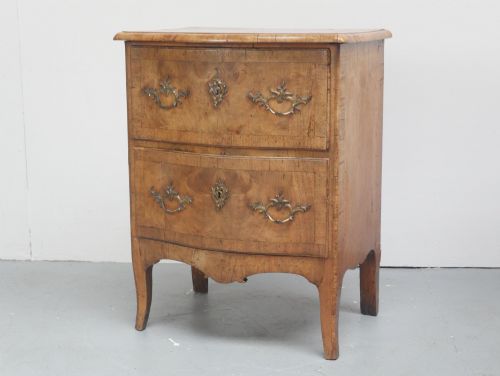
When you search for antique swedish nightstands, you find practical bedside pieces that typically take the form of small chests of drawers, commodes, bedside cupboards, and side tables. These pieces provide compact storage beside a bed while establishing a distinct period character in a room.
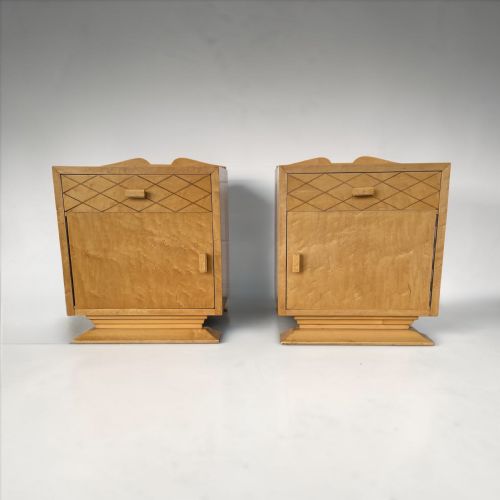
You are most likely to meet 19th century examples on this page, alongside 18th century pieces and later designs from 1890, 1920, and 1930. They appear frequently as pairs, which makes them particularly useful for balancing both sides of a bed.
The forms draw on traditional regional styles including Gustavian, Scandinavian country, Swedish Rococo, and Swedish Biedermeier, often finished with pale paint or warm wood tones. Alongside these, occasional continental or Georgian country influences appear within the selection.
How they were made
Cabinet makers built these pieces using regional timbers such as pine, painted softwood, and birch, frequently applying birch veneer or solid birch for polished surfaces. Selected examples also incorporate contrasting materials like brass hardware and marble or faux marble tops.
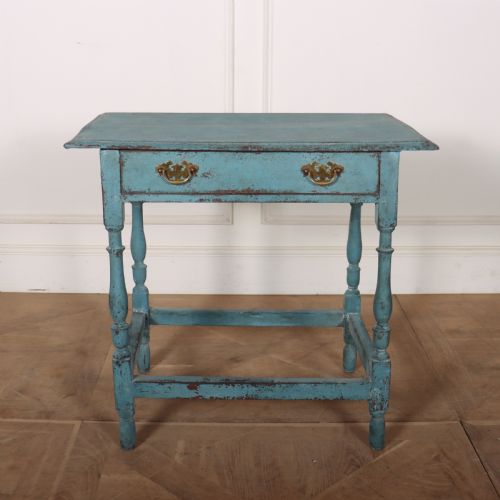
Many surfaces carry traditional hand-painted finishes, often in white or pale tones that typify Scandinavian furniture decoration. These painted treatments range from simple coatings to more elaborate layered schemes designed to brighten northern European interiors.
Listings span the 18th century, 19th century, and the 1890, 1920, and 1930 decades, utilising pine, birch, brass, and paint.
What varies in quality
The distinction between standard examples and finer pieces rests on the handling of proportions, surface finish, and decorative restraint. Superior specimens display well-balanced drawer arrangements and crisp mouldings that reflect the maker's training within specific regional traditions.
The integrity of the painted finish or veneer work plays a major role in establishing the character of each piece. Original or sympathetically maintained surfaces with appropriate patination separate superior examples from those with heavier later interventions.
The Antique Swedish Nightstands Glossary
- Gustavian
- A Swedish neoclassical style popular during the late 18th century and later revived, known for restrained symmetry, fluted columns, and pale painted surfaces. It draws inspiration from French Louis XVI design adapted to Scandinavian tastes.
- Commode
- A low chest of drawers or cabinet designed with multiple drawers or doors. In Scandinavian furniture, these often serve as bedside storage or secondary case pieces.
- Satin birch
- A dense hardwood with a lustrous, reflective grain often used for veneering case furniture during the 19th century. It provides a warm, golden appearance when polished.
- Bedside cupboard
- A small enclosed cabinet with a door, used to store personal items next to a bed. These often feature an internal shelf and a drawer above the main compartment.
- Painted softwood
- Timber derived from coniferous trees, such as pine, finished with an opaque paint layer. It forms the structural carcass for the vast majority of traditional Scandinavian case pieces.
Antique Swedish Nightstands: Frequently Asked Questions
Are these nightstands usually sold as pairs?
Many of the bedside tables and chests listed on this page appear as matched pairs. This reflects traditional bedroom furnishing practices where symmetry is desired on either side of a bed.
Single examples also occur among the listings, typically originating from 18th century or early 20th century production.
What materials are used for the tops?
While many pieces feature wooden tops in painted softwood or polished birch, select examples incorporate marble or faux marble surfaces. These stone and painted surfaces provided durable tops for daily bedside use.
Cabinets with faux marble finishes offer the decorative look of stone while utilising lighter wooden construction.
How do I identify a Gustavian nightstand?
Gustavian pieces typically display neoclassical design elements such as straight tapered legs, subtle fluting, and pale painted finishes. The decoration remains restrained, avoiding excessive ornamentation in favour of balanced proportions.
This style bridges late 18th century neoclassical ideals with Scandinavian practicality.
What is the difference between a commode and a chest of drawers?
In this regional context, commodes and chests of drawers both provide stacked drawer storage in compact formats. Commodes often refer to slightly more formal two-drawer or three-drawer case pieces with decorative hardware.
Both forms function effectively as bedside tables depending on the height and surface area required.
How do I care for painted antique furniture?
Painted Scandinavian surfaces require gentle cleaning with a dry or lightly damp cloth to preserve the finish. Avoid harsh chemical cleaners that can degrade historic paint layers and binders.
Placing pieces away from direct heat sources helps prevent timber movement beneath the painted surface.