







Biedermeier Style Pedestals
Biedermeier style pedestals bring clean lines and striking timber grains to an interior, offering both display space and architectural presence.
Biedermeier Style Pedestals
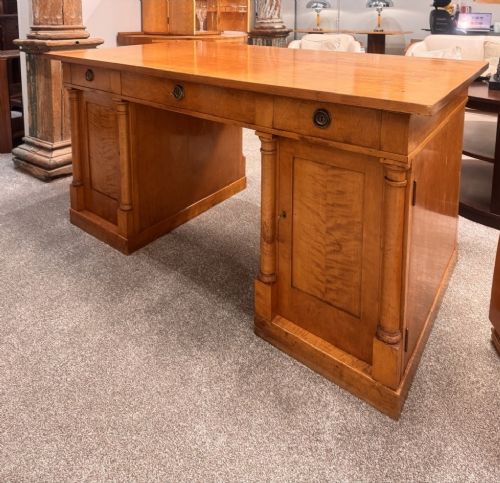
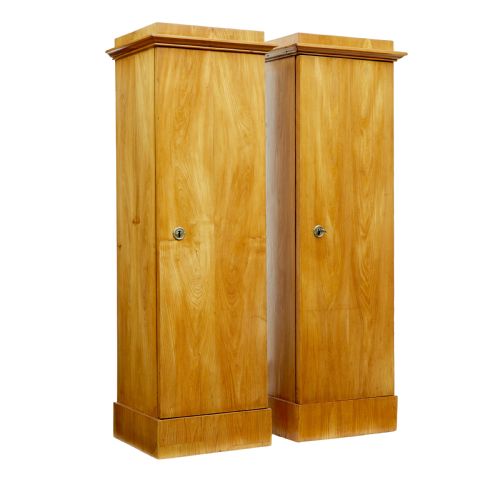
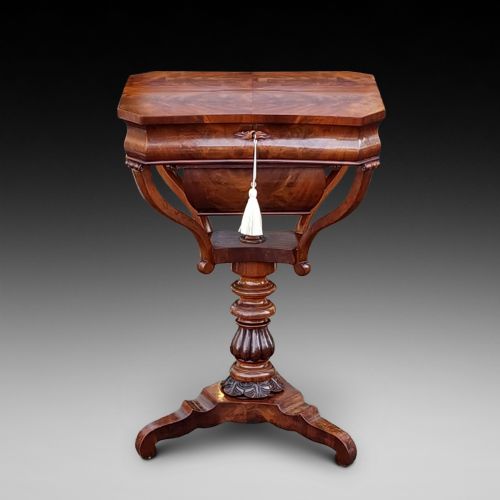
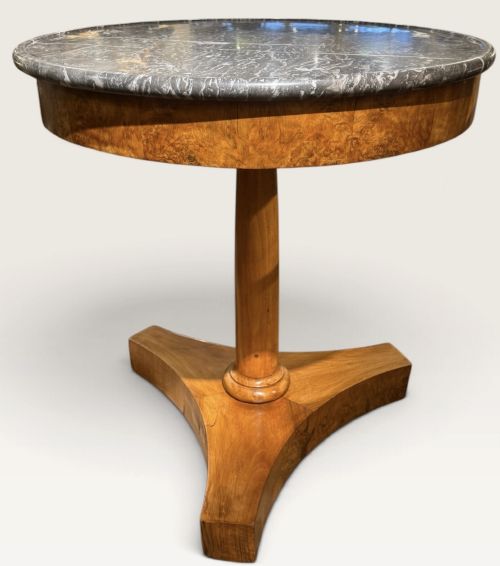
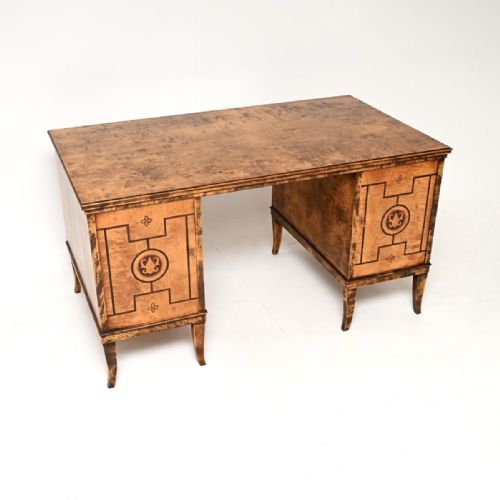
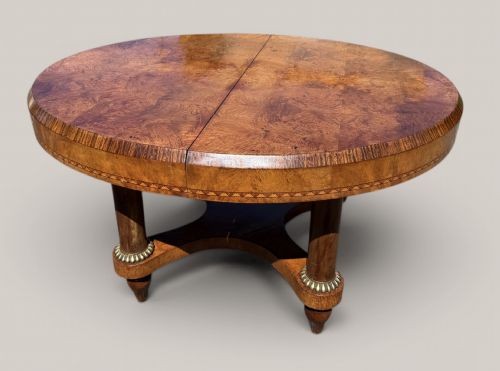
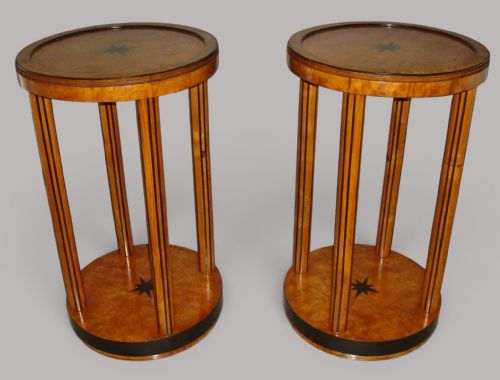
Biedermeier style pedestals and related supporting tables encompass pieces designed with a single central column or columnar support, drawing on 19th century Central European and Scandinavian traditions. While the search phrase points specifically to pedestals, buyers will encounter a variety of related forms on this page, including occasional tables, centre tables, sofa tables, and pedestal cupboards.
The material palette is dominated by richly figured timbers such as burr walnut, burr birch, satin birch, elm, and flame mahogany, often paired with contrasting dark ebony details or marble tops. Pieces span the 19th century into later revival periods up to 1930, reflecting both Swedish Biedermeier and wider continental influences.
Forms range from simple drum tables and lyre-form occasional tables to fitted pedestal cupboards and jardinieres. Buyers are most likely to meet 19th century Scandinavian examples utilising native birches and elms alongside classic mahogany and walnut constructions.
Assessing Quality and Execution
Quality rests primarily on the selection and symmetry of the veneer work, where superior examples display continuous, harmoniously matched burr figures across prominent surfaces. The crispness of the joinery around curved doors, drum edges, and pedestal junctions further distinguishes finer workshop output from simpler utilitarian pieces.
Proportion and the handling of secondary materials also dictate value, with the best pieces balancing solid timber mouldings against delicate inlay or restrained metal mounts without cluttering the silhouette.
Biedermeier Style Pedestals Retail Price Guide 2026
Typical asking prices for biedermeier style pedestals among the pieces listed under this phrase on Sellingantiques today, from the lower quarter to the upper quarter. They describe what is for sale here now, not the wider market.
Listings feature 19th century Scandinavian and Victorian periods, showcasing woods like burr birch, elm, and mahogany across pedestals and occasional tables.
The Biedermeier Style Pedestals Glossary
- Burr Walnut
- A timber derived from the irregular growth or burl of a walnut tree, prized for its swirling, highly figured grain patterns. It is frequently utilised in high-end 19th century veneering.
- Gueridon
- A small circular table supported by a central column or pillar, originating in France during the 17th century. These pieces often feature marble tops and serve as display or occasional tables.
- Ormolu
- Gilt bronze ornamentation applied to furniture mounts and feet, popular in French Empire and related continental cabinetmaking. The technique involves coating metal in a mercury and gold amalgam.
- Satin Birch
- A pale, luminous timber with a fine, silky lustre, commonly harvested in Northern Europe. It provides a striking, light-toned alternative to darker mahoganies in Scandinavian furniture.
- Lyre Form
- A decorative furniture base or support shaped like the ancient stringed musical instrument. This motif appears frequently in the underframes of 19th century occasional and card tables.
Biedermeier Style Pedestals: Frequently Asked Questions
What defines a Biedermeier piece?
Biedermeier furniture originated in Central Europe during the period between 1815 and 1848, prioritising utility, clean lines, and polished wood grains over excessive ornamentation. It draws heavily on French Empire forms but strips away complex military and classical iconography in favour of domestic warmth.
In practice, this translates to smooth mahogany, birch, and walnut surfaces where the natural beauty of the timber grain serves as the primary decoration.
Where should I place an occasional table?
Occasional tables and small pedestals work effectively beside seating arrangements, in hallways, or as plant stands in lit corners. Their compact footprints allow them to add architectural interest to dead space without crowding a room.
Parks of tables with marble tops or delicate marquetry function well where moisture or heavy daily use is not a primary concern.
How do I care for burr veneer?
Burr veneers require stable indoor humidity and protection from direct sunlight to prevent the thin wooden layers from drying, warping, or lifting over time. Dusting with a dry, soft cloth is usually sufficient for regular maintenance.
Avoid placing damp items directly onto polished wooden surfaces, and consult a professional conservator before applying modern commercial polishes or waxes.
How can I tell Swedish pieces apart?
Swedish Biedermeier and related Scandinavian furniture often make extensive use of native light timbers such as birch, elm, and Karelian birch. These woods give the pieces a brighter, cooler aesthetic compared to the deeper red and brown tones of English or Central European mahogany equivalents.
Regional maker traditions also favoured minimalist geometric forms, restrained brass hardware, and contrasting dark ebony banding rather than heavy carved ornamentation.