



Pair of Stone Urns
A pair of stone urns brings instant classical proportion to an outdoor terrace or an interior hall.
Pair of Stone Urns
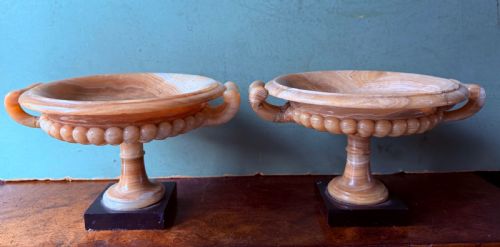
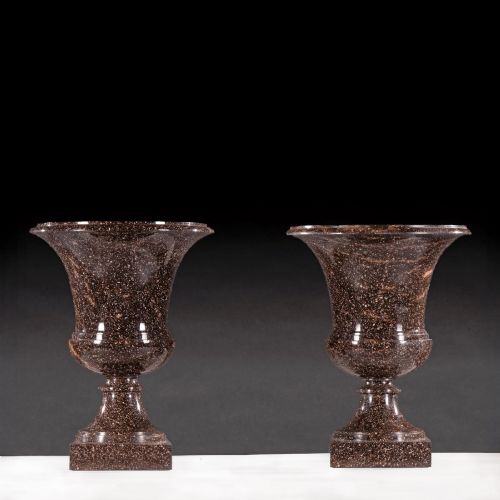
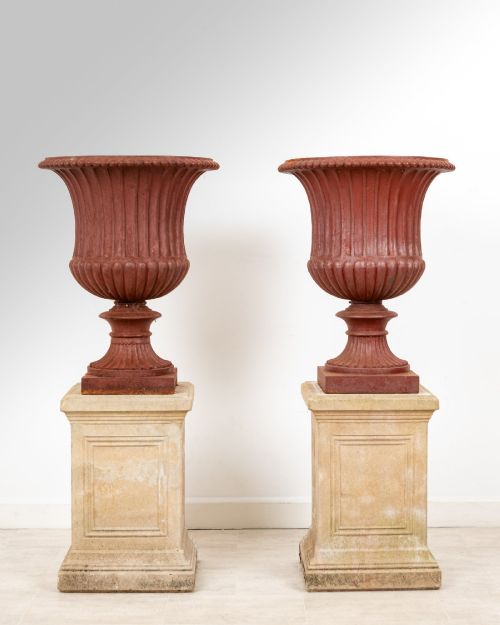
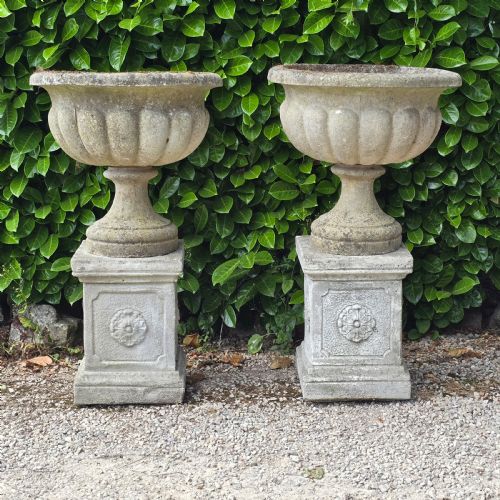
When you search for a pair of stone urns, you encounter symmetrical vessels designed for formal garden display or grand interior decoration. These pieces draw heavily on classical antiquity, taking the form of campana shapes, tazza bowls, or lidded vessels.
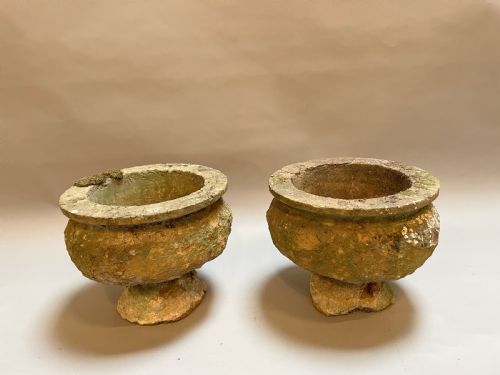
The versions most commonly met on this page span the nineteenth century up to the early decades of the twentieth. They appear carved from solid natural materials like limestone and marble, or cast in reconstituted and composite stone for garden use.
Materials and Construction
Masons shaped natural stones such as limestone and various marbles using traditional hand-carving chisels to achieve smooth classical contours. These carved items often display the subtle veining and natural variations inherent to quarried mineral blocks.
Alternatively, durable outdoor examples were produced by casting reconstituted stone, composite stone, or cast stone into moulds. This technique allowed workshops to repeat complex decorative details like rams head handles, lotus leaves, and goat masks with precision.
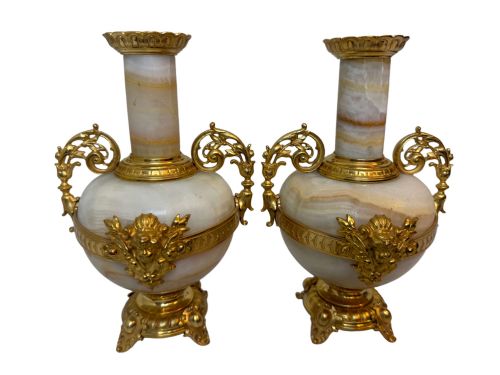
Listings feature items shaped from marble, alabaster, limestone, and cast stone across the nineteenth and twentieth centuries.
Judging Quality
Quality rests upon the crispness of the carving or the fidelity of the cast details against the classical vocabulary. Superior examples exhibit deep, clean undercut foliage and sharply defined classical motifs rather than soft, blurred edges.
The selection of the raw mineral block also dictates distinction, where finely figured marble or dense, unblemished limestone elevates a piece above standard utility gardenware.
Coalbrookdale
The Pair of Stone Urns Glossary
- Campana
- A bell-shaped garden or decorative urn with an everted rim and a flared body. This classical silhouette derives from ancient metal and terracotta prototypes.
- Tazza
- A shallow saucer-like vessel or cup raised on a high foot and stem. These items were frequently created as Grand Tour souvenirs in carved stone or alabaster.
- Reconstituted Stone
- A durable building material composed of crushed stone aggregate and a binder moulded to imitate natural quarried rock. It gained popularity for garden ornaments during the nineteenth and twentieth centuries.
- Grand Tour
- A cultural journey undertaken by wealthy young Europeans through Italy during the eighteenth and nineteenth centuries. Travellers collected miniature or cabinet-scale carved stone urns and vases as mementos.
- Gilt Bronze
- Copper alloy cast elements treated with a layer of gold to provide metallic enrichment. These mounts often accent stone or marble bodies on classical revival decorative pieces.
Pair of Stone Urns: Frequently Asked Questions
Where should I place stone urns?
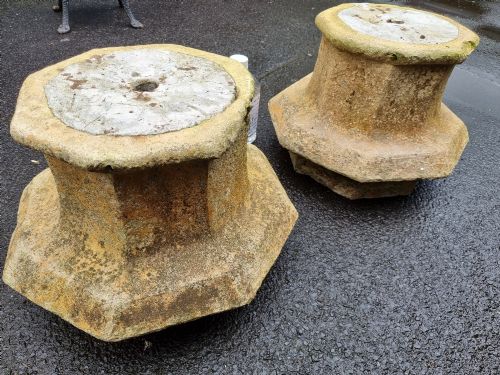
These decorative vessels suit formal garden settings, flanking stone doorways, or resting atop dedicated pedestals and plinths. Interior examples function well upon heavy tables, mantels, or column bases.
Position them where their symmetrical weight creates a strong architectural focal point. Ensure the supporting ground or furniture can safely bear the substantial weight of solid stone.
How do I clean stone urns?
Gently brush away loose dirt or organic debris using a soft-bristled brush to protect the aged surface patina. Avoid harsh chemical cleaners or abrasive scouring pads that might strip the historic finish.
For outdoor reconstituted or natural stone, plain water and mild soap usually suffice. Allow the material to dry naturally without artificial heat sources.
Are these urns frost resistant?
Natural hard stones and properly cured cast stone generally withstand normal winter weather if kept free of standing water. However, porous limestones and softer alabasters are best brought indoors during freezing conditions to prevent cracking.
Check that drainage holes remain clear so trapped moisture does not expand inside the vessel body. Placing pot feet beneath outdoor urns also prevents winter dampness from rising through the base.
How can I tell the period?
Examining the tooling marks, weathering patterns, and the specific geological composition helps distinguish nineteenth-century carving from later twentieth-century casting. Earlier pieces often display hand-chiseled surfaces and older patination.
Stylistic cues such as neoclassical proportions or Grand Tour provenance also point towards specific decades. Compare the decorative motifs against documented examples from the same era.