



19th Century Stone Urns
These 19th century stone urns bring classic sculptural form and rich geological variety to interior spaces and gardens alike.
19th Century Stone Urns
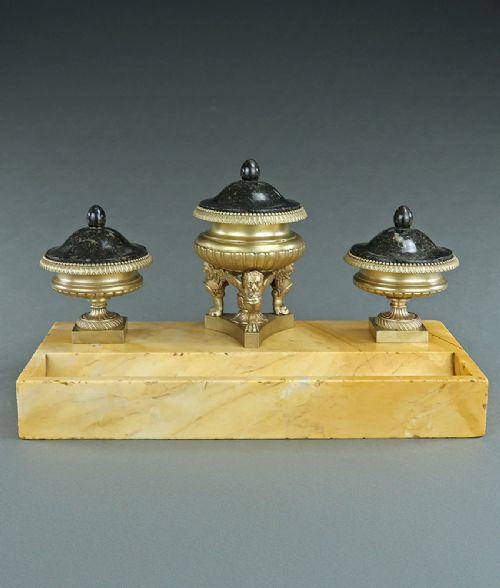
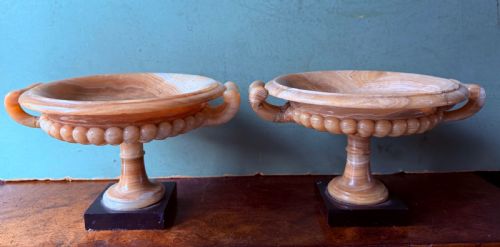
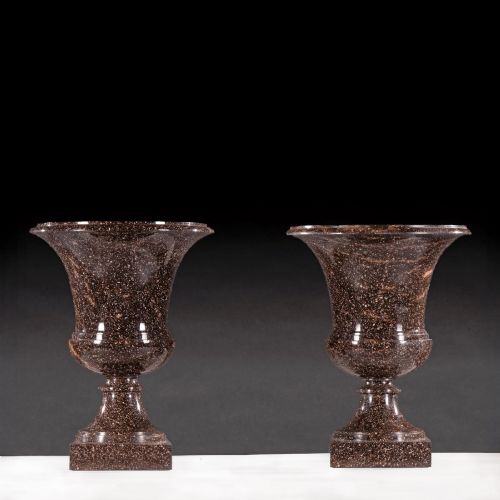
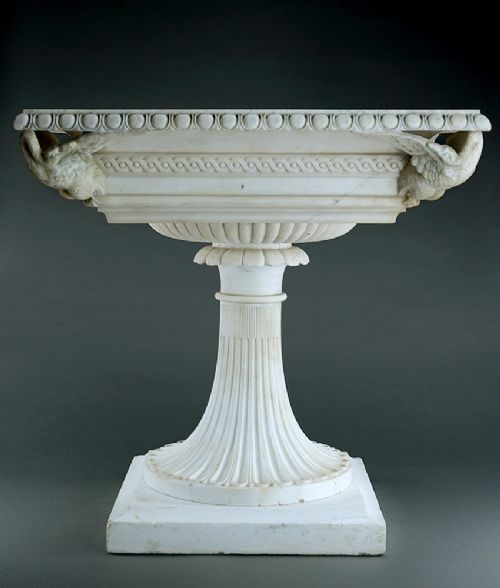
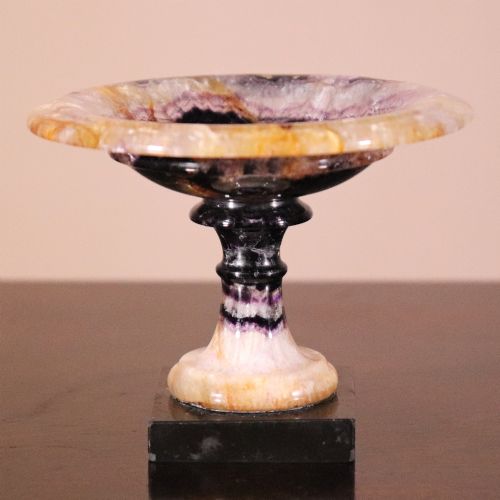
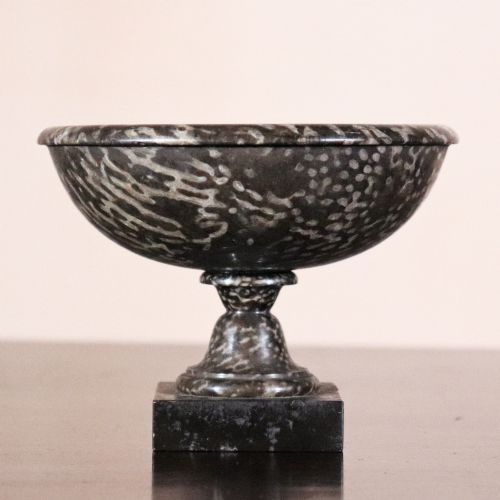
When searching for 19th century stone urns, buyers encounter a diverse range of decorative vessels rooted in classical antiquity, including campana shapes, tazzas, and garden planters. These pieces span from small-scale Grand Tour souvenirs to monumental neoclassical centrepieces designed for substantial rooms or estates.
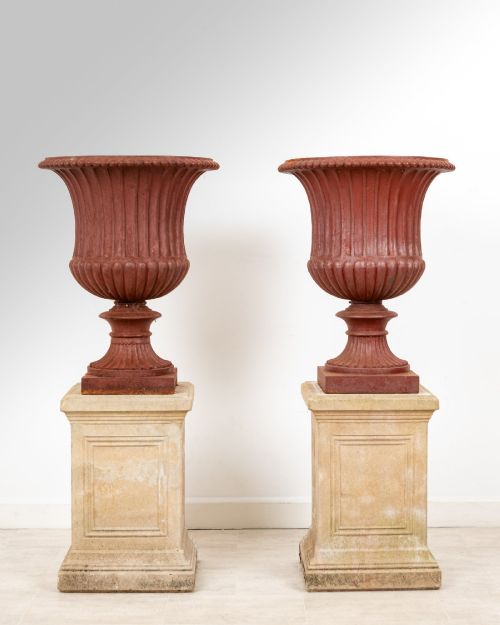
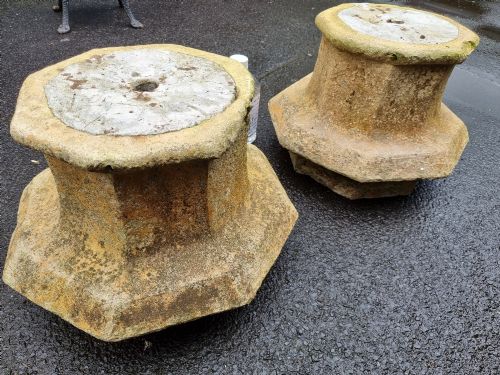
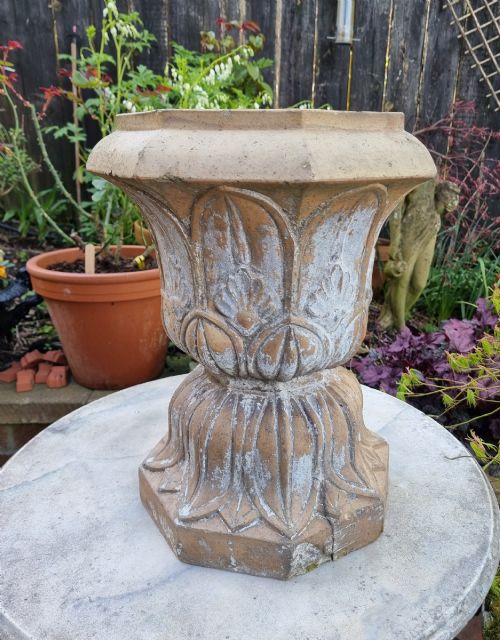
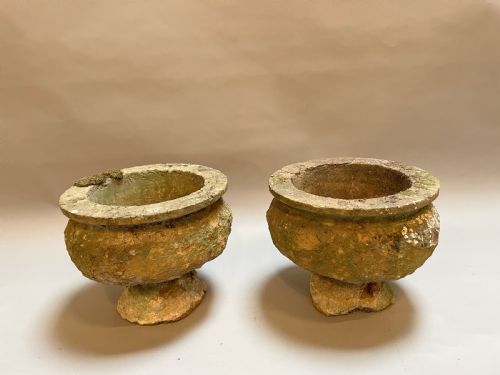
The selection on this page leans heavily toward Italian Grand Tour souvenirs carved from specialised stones, alongside domestic garden pieces in terracotta, limestone, and cast iron. Smaller decorative vessels sit alongside sturdy garden urns placed upon stone plinths.
Originating across Britain, Sweden, France, and Italy, these objects capture the period fascination with classical archaeology and natural mineral specimens. Forms shift from severe architectural campana profiles to shallow decorative tazze and ornamental centrepiece bowls.
How they were made
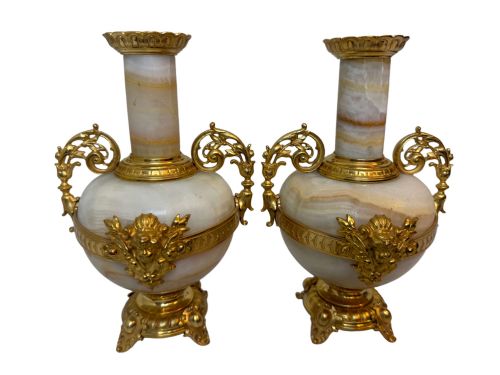
Carvers shaped blocks of marble, alabaster, limestone, and onyx by hand, often utilising coloured mineral varieties like Sienna, Ashford coral, and Malachite to catch the eye. Workers turned these stones on lathes or carved them meticulously to mimic ancient excavated artefacts.
Garden pieces relied on durable earthen media and cast mixtures, such as terracotta, stoneware, and composite stone, shaped in moulds and fired or cured for outdoor endurance. Iron components and plinths provided structural support and elevation.
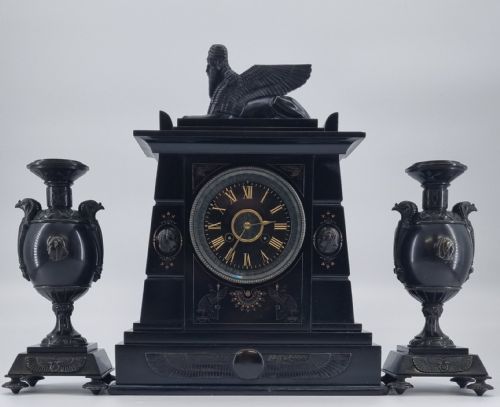
Gilt bronze, ormolu, and champlevé enamel mounts frequently decorate the mineral bodies, fixed with mechanical pins or adhesives to contrast the cold stone with warm metallic detailing.
Several terracotta garden urns feature grinning carved heads protruding directly from their side handles, watching visitors from the shrubbery.
What varies in quality
The integrity of the mountings and the fidelity to antique archetypes determine the overall success of Grand Tour souvenirs. Heavier architectural proportions and balanced symmetry separate commanding decorative statements from minor mantel ornaments.
Boschetti·Selim Bright
The 19th Century Stone Urns Glossary
- Campana
- A bell-shaped vessel with a flaring rim and a pedestal foot. This silhouette originates from ancient terracotta and bronze wine krater designs.
- Tazza
- A shallow cup or bowl mounted on a stem and foot, commonly carved from decorative stone. They serve primarily as visual display objects.
- Grand Tour
- A cultural journey undertaken by wealthy young Europeans in the 19th century. Souvenirs purchased along the route included miniature marble and alabaster architectural models and vessels.
- Ormolu
- Finely ground high-carat gold applied to a bronze base using mercury amalgamation. This technique provides rich metallic highlights on decorative urns and clocks.
- Labrum
- A large classical stone basin or tub used in ancient Roman architecture. Nineteenth-century interpretations replicate these shallow vessel forms for display.
- Porphyry
- An extremely hard igneous rock containing large crystals, prized since antiquity for its deep purple or red colour and difficulty to carve.
19th Century Stone Urns: Frequently Asked Questions
What is a campana urn?
A campana urn is a bell-shaped decorative vessel featuring a wide mouth and a footed base, modeled after classical garden and table ornaments.
Makers during the 19th century produced these in stone, iron, and terracotta for both indoor display and garden placement.
Where were Grand Tour items made?
Grand Tour souvenirs were carved primarily in Italian workshops located near major archaeological sites and artistic centres like Rome, Florence, and Carrara.
Local artisans utilised regional marbles and alabasters to supply travelling collectors with portable classical art.
How do I care for marble urns?
Marble and stone vessels require gentle dusting with a dry cloth and protection from harsh chemical cleaners or acidic liquids.
Indoor pieces should stay clear of direct moisture, whilst garden stone objects weather naturally according to their specific material hardness.
What is Ashford marble?
Ashford marble is not a true metamorphic marble, but rather a compact black limestone from Derbyshire inlaid with colourful fossils and minerals.
Craftsmen in the 19th century polished this material into smooth decorative tazze, urns, and desk ornaments.