





Garden Urns on Pedestals
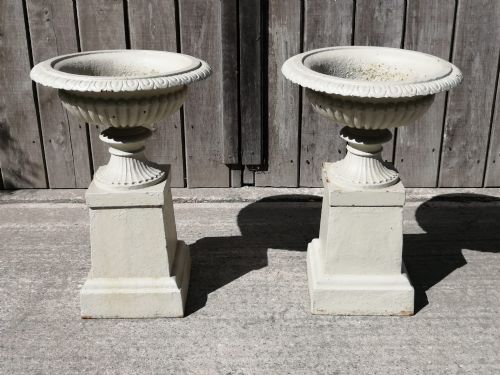
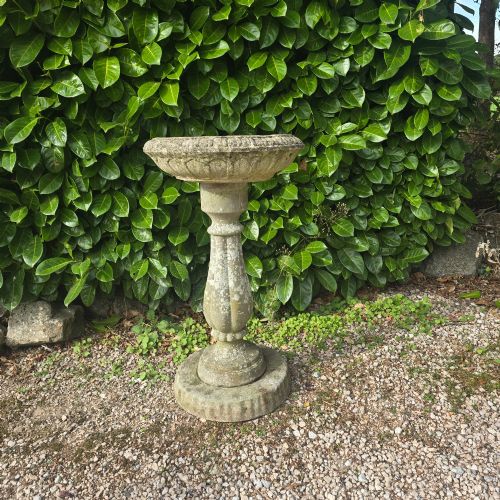
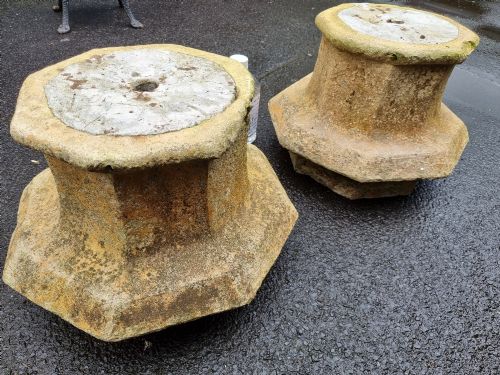
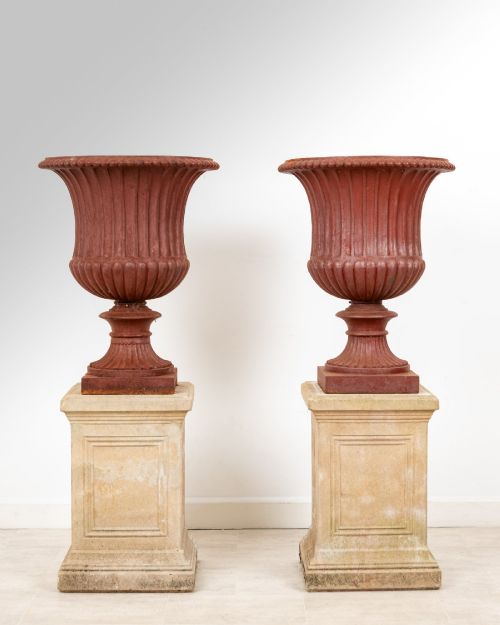
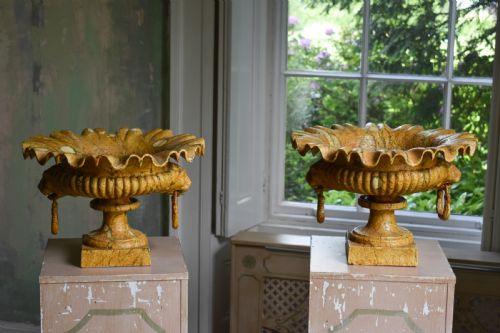
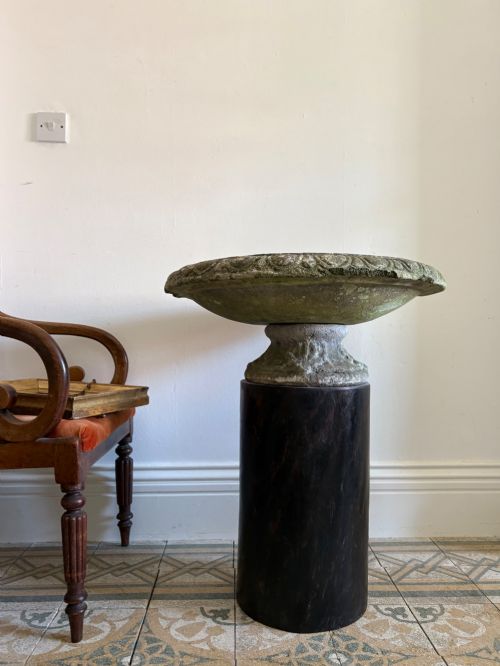
Garden urns on pedestals bring classical weight to a terrace, combining deep planting bowls with raised stone or iron plinths.
Garden Urns on Pedestals
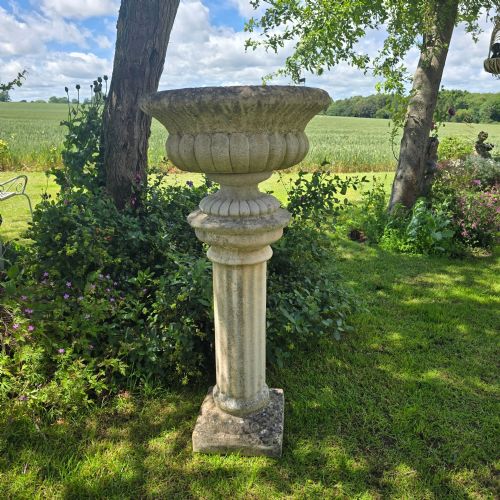
Garden urns on pedestals combine a raised base with a planting bowl, taking forms that run from classical campana shapes to Gothic revival designs. These assemblies serve as focal points for terraces, lawns, and formal pathways.
The selections here span the nineteenth century, the Edwardian era, and the early decades of the twentieth century. Examples range from iron foundry work to cast stone and terracotta forms.
Buyers encounter individual vessels paired with matching plinths as well as associated groupings assembled over time. The proportions vary from low, broad jardinieres to tall columns supporting deep bowls.
Materials and technique
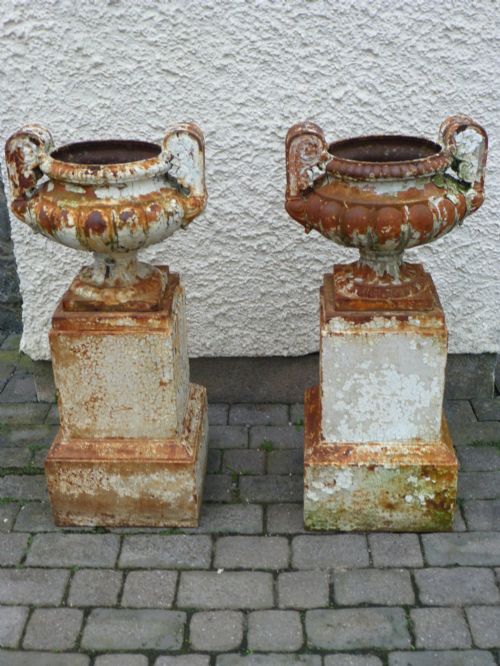
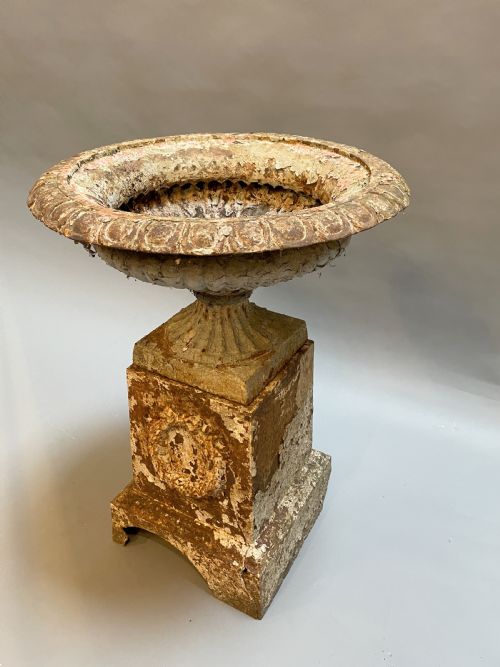
Foundries produced metal vessels using cast iron, pouring molten metal into sand moulds to create crisp details like acanthus leaves and gadrooning. These iron urns frequently sat upon matching iron stands or stone plinths.
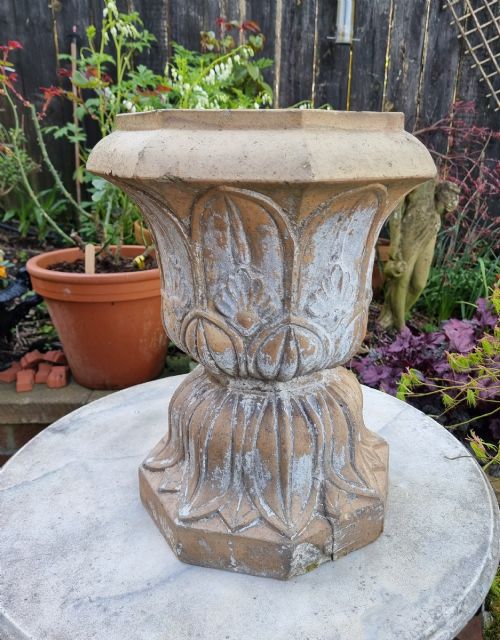
Makers utilised terracotta, stoneware, and composite stone for earthenware and cast pieces, shaping clay by hand or pressing material into moulds before firing or curing. Stone examples involved carving limestone, marble, or sandstone with chisels.
Garden Urns on Pedestals Retail Price Guide 2026
Typical asking prices for garden urns on pedestals among the pieces listed under this phrase on Sellingantiques today, from the lower quarter to the upper quarter. They describe what is for sale here now, not the wider market.
Grand Tour travellers brought home miniature Italian marble tazzas, inspiring generations of British gardeners to place heavy iron campana urns on suburban lawns.
What varies in quality
The definition of the casting dictates the visual sharpness of ornament, separating crisp foundry work from soft, worn impressions. Heavier metal thickness and solid stone construction denote greater durability and substance.
Surface patination and the integrity of original paint or natural weathering contribute to the character of each piece. Retaining matching original pedestals elevates the coherence of the ensemble.
Dunfermline Clay Company·Falkirk Carron foundry·Coalbrookdale·Andrew Handyside·Lipscombe and Co
The Garden Urns on Pedestals Glossary
- Campana
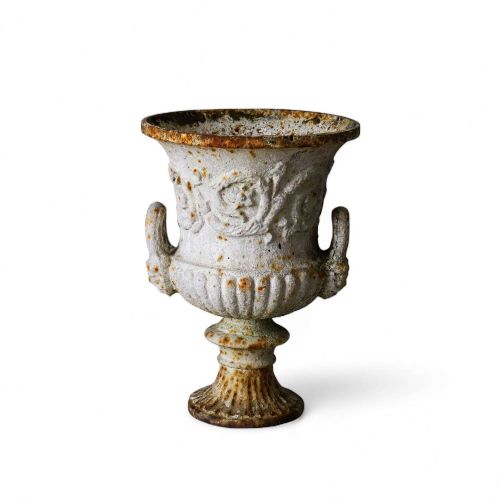
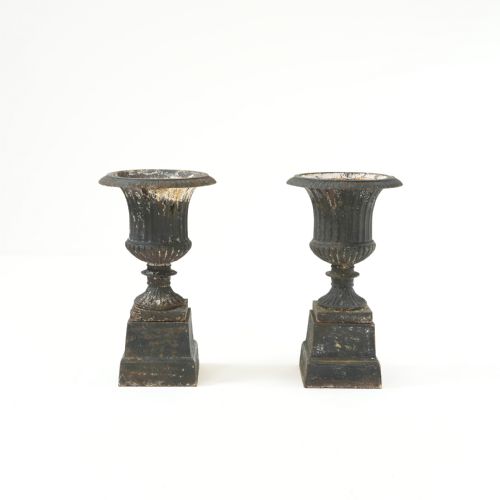
- Bell-shaped garden urn with a flared rim and tapering body. This form derives from classical antiquity and remains standard in Victorian ironwork.
- Plinth
- Base block supporting an urn or column. Plinths elevate the planting vessel to improve sightlines in a garden design.
- Terracotta
- Fired clay material ranging in colour from orange to buff. Porous terracotta supports healthy root growth for outdoor planting.
- Gadrooning
- Ornamental carving featuring convex curves or flutes in a parallel series. This decorative band often encircles the belly of an urn.
- Jardiniere
- Large ornamental pot or stand designed to hold plants. These vessels function as heavy planters for formal terrace displays.
Garden Urns on Pedestals: Frequently Asked Questions
How do I secure an urn to its pedestal?
Heavy pieces often rely on gravity and interlocking flanges or dowels to stay stable on the base.
Heavier iron and stone assemblies generally require no fixings, whereas lighter vessels benefit from discreet mortar or exterior adhesive to prevent movement in high winds.
Can cast iron urns stay outside in winter?
Cast iron handles frost well if the interior soil drainage remains clear and unblocked.
Water accumulation freezing inside the bowl poses the primary risk of cracking, so raising the base slightly off the ground helps prevent moisture retention during freezing months.
How do I clean weathered terracotta?
Soft brushing removes loose dirt and organic matter without damaging the porous clay surface.
Harsh chemical cleaners strip the beneficial patination accumulated over decades, so plain water and a gentle bristle brush suffice for routine maintenance.
Are these pedestals hollow or solid?
Most pedestals and plinths feature a hollow core to reduce total weight while maintaining structural strength.
Solid stone columns appear in neoclassical designs, whereas cast iron and composite stone plinths utilise hollow box or column construction for easier positioning.