


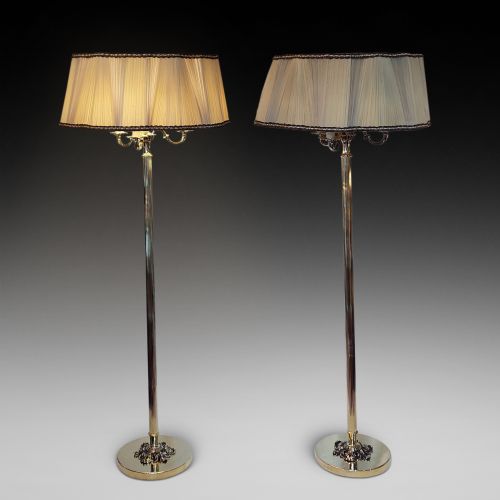


Pair of Standard Lamps
A pair of standard lamps brings symmetry and height to a room, offering functional lighting through turned timber and polished metal.

Pair of Standard Lamps
A pair of standard lamps consists of tall floor-standing lighting fixtures designed to illuminate a space from a vertical position. Buyers searching for a pair of standard lamps encounter matching columns in timber, brass, and iron from periods spanning the Victorian era through the 1930s.
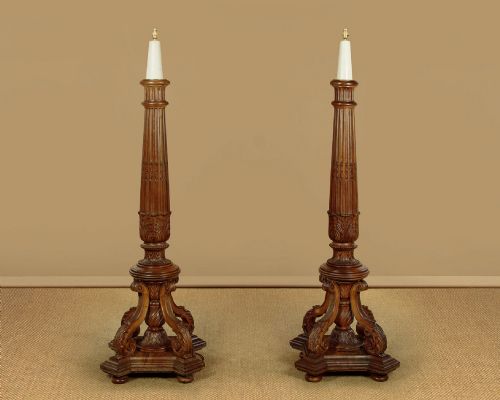
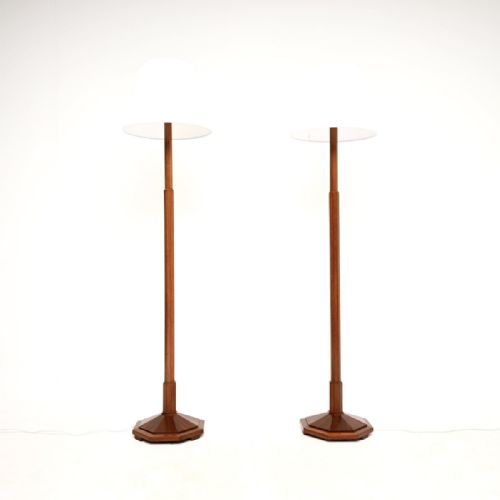
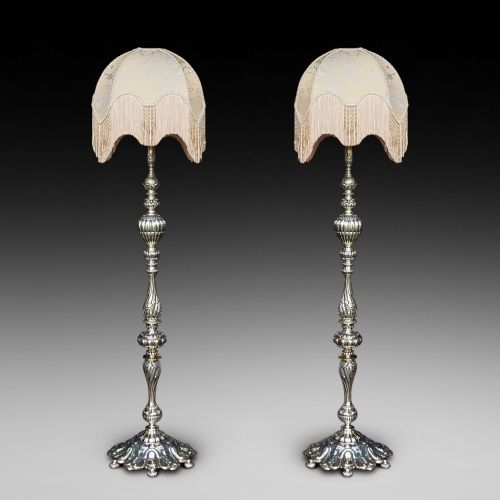
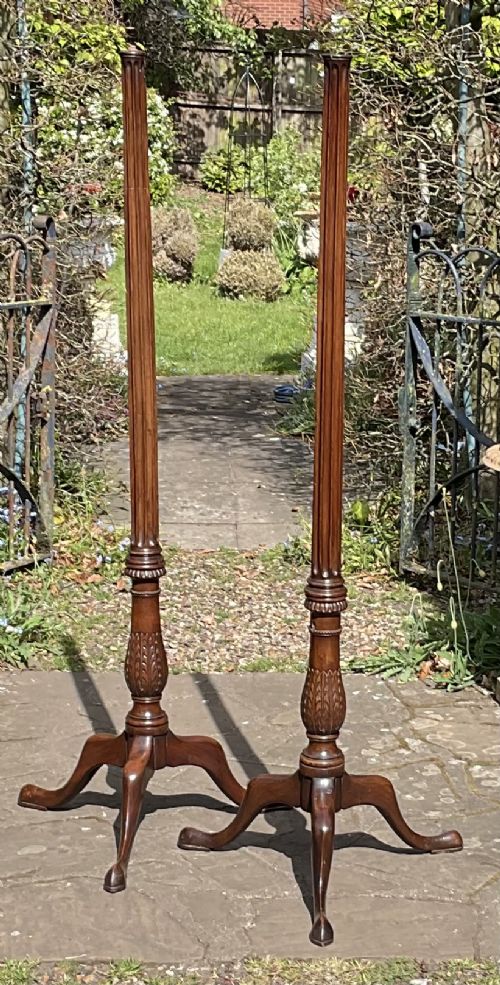
The selections include Georgian and Edwardian mahogany designs alongside heavy brass uplighters and Art Deco walnut floor lamps. Many examples incorporate adjustable mechanisms or telescopic shafts for height regulation.
Origin variations range from English domestic workshops to Italian baroque style giltwood and Chinese-influenced forms. These matching pairs provide balanced illumination on either side of a fireplace or seating arrangement.
Materials and construction
Makers utilised dense timbers such as mahogany, walnut, and rosewood, turning them on lathes to create slender fluted pillars or barley twist columns. Brass components, including cast bases, Corinthian capitals, and claw feet, provide structural weight and metallic contrast.
Ironwork appears in cast and wrought forms, frequently finished with gilding or lacquer to achieve decorative surfaces. Fabric shades complete the construction, paired with internal wiring or conversion adaptations from earlier gas and oil fittings.
Periods represented across the floor lighting inventory range from the Georgian and Victorian eras through Edwardian designs and the nineteen-thirties.
Judging standard lamp quality
Superior examples demonstrate substantial weight through solid cast brass bases or dense hardwood timber construction rather than hollow thin-walled tubing. The intricacy of hand-carved acanthus leaves, fluting, or cast brass ornamentation separates standard commercial items from finer productions.
Adjustable and telescopic mechanisms operate with precision, maintaining stability at various heights without slipping. Proportional balance between the weighted base and the slender column ensures the upright structure remains secure on the floor.
The Pair of Standard Lamps Glossary
- Corinthian column
- A cylindrical shaft topped by an ornate capital decorated with carved acanthus leaves. This classical architectural form appears frequently on brass lamp standards.
- Telescopic
- A shaft design featuring sliding sections that allow the overall height of the standard lamp to be adjusted. This mechanism often uses a screw key or internal friction fit.
- Uplighter
- A lamp configuration directing light upward toward the ceiling rather than downward through a shade. These fittings create ambient illumination.
- Torchere
- A tall ornamental stand originally designed to carry a candle or torch. In later periods, the term describes slender floor lamps sharing this elevated profile.
- Canterbury
- A low multi-partitioned stand for sheet music or books, occasionally combined with lamp standards in early twentieth-century library pieces.
Pair of Standard Lamps: Frequently Asked Questions
How tall are standard lamps?
Heights vary depending on the period and design, with many adjustable models allowing the total vertical reach to be altered.
Telescopic brass columns and tall timber pillars extend to cast light above head height, suitable for placing beside armchairs or sofas.
Were these lamps converted from oil or gas?
Several Victorian and nineteenth-century examples began as oil lamps or gas light candelabras before undergoing modern rewiring.
Adaptations allow historical floor standards to function safely with contemporary electrical systems while retaining their original metalwork.
What styles are available?
The selection encompasses Georgian and Edwardian mahogany styles, heavy brass Corinthian columns, Art Deco walnut designs, and Italian baroque giltwood.
Chinoiserie and Oriental influences also appear alongside wrought iron framework from the nineteen-thirties.