


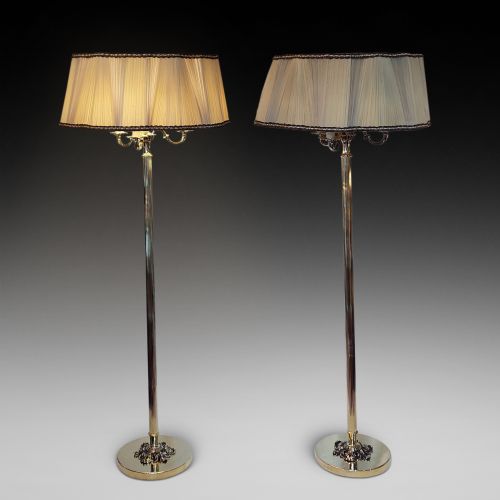


Pair Floor Lamps
Pair floor lamps bring symmetrical illumination and balanced proportion to a room, offering matched vertical presence in brass, wood, and giltwood.

What pair floor lamps are
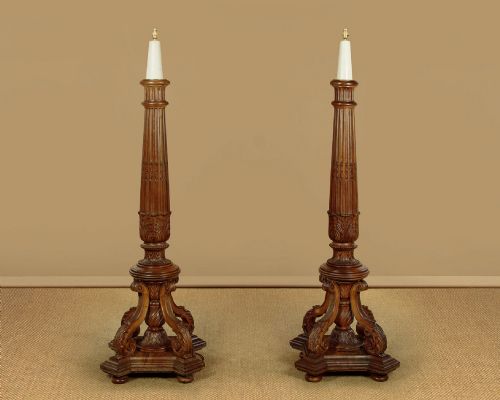
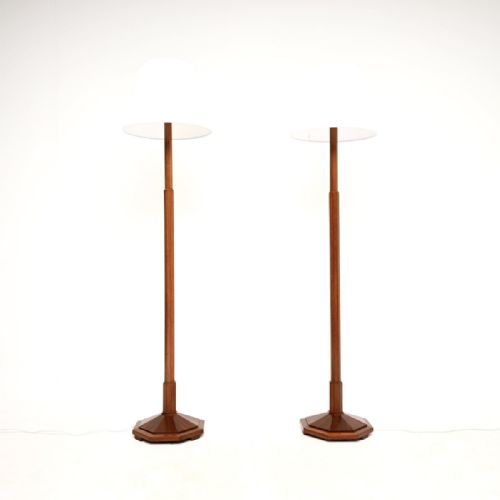
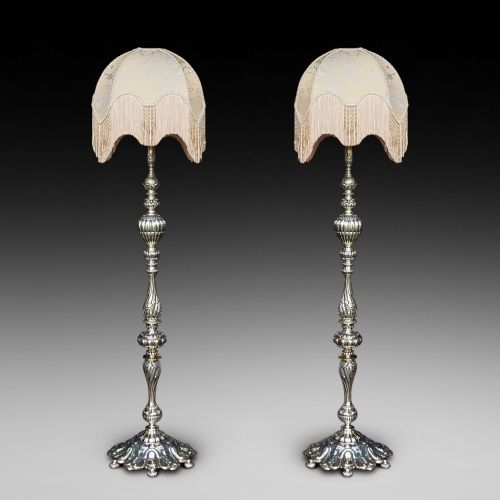
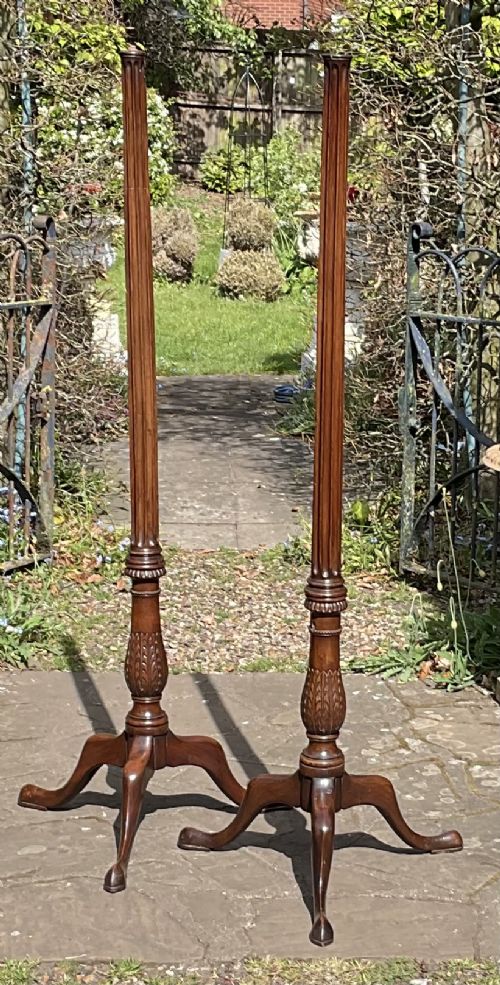
The evidence shows these matching lights span the Georgian period, the Victorian era, the Edwardian years, and the Art Deco movement. Materials range from solid walnut and mahogany to heavy cast brass, copper, ormolu, and giltwood.
Standard lamps and floor standing lamps appear frequently in formats such as adjustable Chinese standards, Corinthian columns, and dish uplighters. Many examples incorporate wooden tables or tiered bases designed for domestic convenience.
How they were made
Metal standards rely on heavy cast brass, copper, nickel, and ormolu, often built with rise and fall mechanisms or adjustable arms. Turning and casting created weighty structural columns that anchored tall poles safely to the floor.
Wooden examples utilise turned walnut, mahogany, hardwood, and giltwood, sometimes finished with red lacquer or chinoiserie detailing. Fabric elements, fringes, and velvet shades complete the construction of period lighting.
Retail Price Guide 2026
Typical UK retail prices for pair floor lamps, calculated from the Sellingantiques database of over a million retail prices indexed since 2003. This retail price guide relies exclusively on Sellingantiques data; no external sources or auction records are used, so the figures do not describe the wider market.
Some nineteenth-century floor lamps double as smoking stands, bringing unexpected utility to the parlour corner.
What varies in quality
Quality rests in the weight of the metal casting and the crispness of turned wood details like Corinthian fluting or reeding. Heavy brass bases provide essential stability for tall poles, whereas lighter gauge metals feel insubstantial.
Design ambition separates standard production from exceptional pieces, visible in specialised elements like integrated reading arms, attached small tables, or sculptural forms modelled as palm trees and neo-classical torcheres.
Faraday and Sons
The Pair Floor Lamps Glossary
- Standard lamp
- A traditional British term for a floor-standing lamp designed to illuminate a room from a standing position. These tall fixtures usually support fabric shades.
- Torchere
- An ornamental stand or tall floor-standing lamp originally designed to carry a candle or light source. They frequently adopt neo-classical styles with carved giltwood.
- Uplighter
- A floor lamp directing light upwards toward the ceiling to bounce ambient illumination through the space. Dish uplighters appear frequently in Art Deco designs.
- Ormolu
- Gilt bronze mounted onto furniture and metalwork to provide decorative metallic brilliance. This technique creates a rich decorative surface on nineteenth-century examples.
- Chinoiserie
- European artistic styles reflecting Chinese decorative motifs, often applied to lacquered wooden standards. Red lacquer and painted details characterise these decorative objects.
Frequently Asked Questions
Where should I place pair floor lamps?
These matching lights work well positioned on either side of a large sofa, fireplace, or architectural doorway to create symmetrical illumination. Their dual presence grounds the corners of a room effectively.
Positioning them behind armchairs also provides balanced reading light without cluttering table surfaces.
How do I date an older floor lamp?
Dating relies on stylistic clues, such as heavy brass Corinthian columns pointing to the late nineteenth or early twentieth century. Art Deco influences show through geometric chrome or walnut dish uplighters.
Materials like red lacquer chinoiserie or heavy mahogany indicate earlier Georgian or Victorian revival tastes.
Are these lamps safe to use today?
Many period examples arrive rewired to modern electrical standards by previous owners or dealers. Original wiring often requires updating by a professional before daily domestic use.
Checking the internal wiring ensures the heavy metal or wooden standards remain safe for modern sockets and bulbs.
What styles are available?
The selection includes traditional Georgian mahogany columns, ornate Victorian brass designs, and Edwardian reading lamps. Art Deco chrome and walnut models offer a more streamlined aesthetic.
French giltwood, palm tree figures, and red lacquer provide decorative options beyond standard metal or plain wood.