

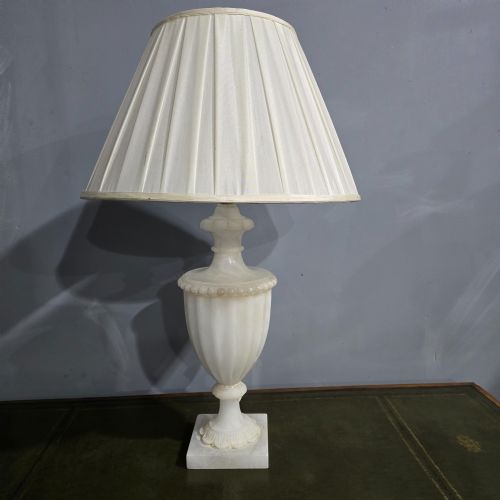


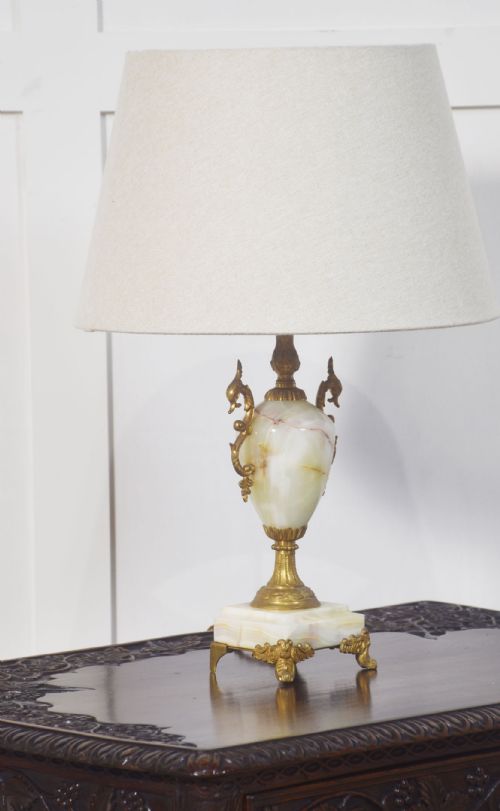


Neoclassical Alabaster Lamp
These neoclassical alabaster lamps bring classical dignity and warm light to a room, prized for their carved stone columns and urns.
Neoclassical Alabaster Lamp
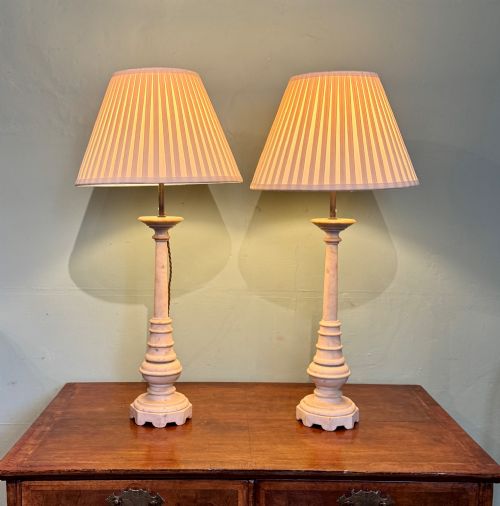
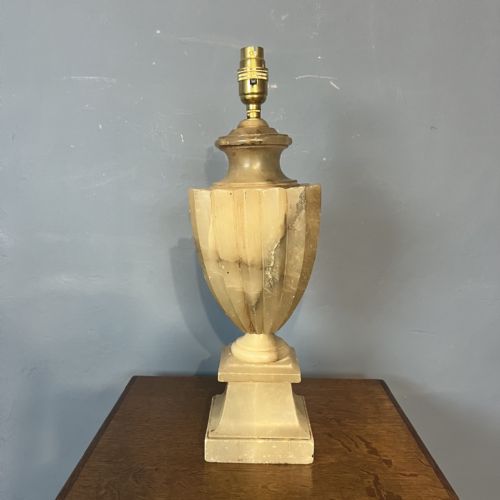
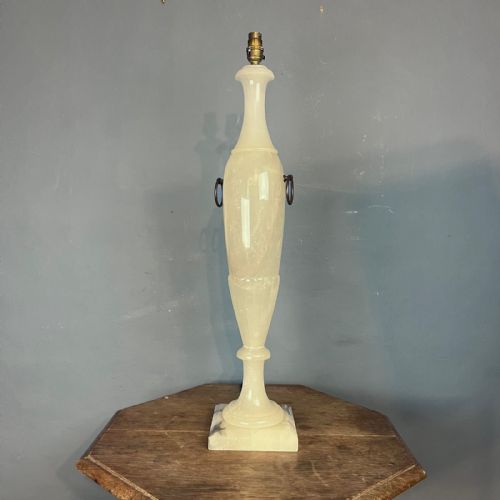
When searching for a neoclassical alabaster lamp, buyers encounter pieces that draw directly on classical forms such as columns, urns and vases. The selections on this page span the Victorian era, the Edwardian period and the early twentieth century, including the Art Deco years.
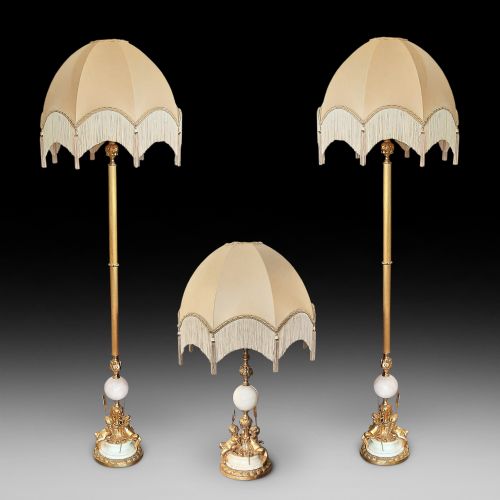
Most examples function as table lamps, though larger floor standing versions also appear. These objects merge classical revival styles with functional lighting, often taking the form of paired sets or substantial single pieces.
Origin details point towards Italian workshops alongside Swedish designs. The stone work frequently incorporates white marble or onyx alongside the primary alabaster material.
Materials and Construction
The primary construction relies on carved alabaster and marble, shaped into substantial columns, urn vases and figural bodies. Artisans turned and sculpted the soft stone to echo ancient architectural motifs.
Metal mounts in brass provide structural support and decorative accents to the stone bodies. Fabric shades, velvet and glass components complete the lighting assemblies from various decades.
Listings feature table lamps and floor lamps spanning the Victorian era through the 1930s, using alabaster, marble, onyx and brass.
Assessing Quality
Quality rests upon the purity and uniformity of the stone carving, where finely rendered details on columns and urns distinguish superior pieces. The integration of metal mounts and brass work also signals higher execution standards.
Scale and presence separate grander floor lamps and large table urns from smaller examples. The harmony between the stone body and the original mounts governs the overall aesthetic success of the piece.
The Neoclassical Alabaster Lamp Glossary
- Alabaster
- A fine-grained translucent stone used for carving lamps and urns. It diffuses light softly through its natural grain.
- Neoclassical
- A style reviving classical Greek and Roman architectural forms. It defines the columns and urn shapes seen in these lamps.
- Urn Vase
- A classical vessel shape frequently adapted into lamp bases. These forms mirror ancient burial or decorative urns.
- Figural Lamp
- A lighting piece incorporating a carved human or symbolic figure into the design. Swedish examples show this specific variation.
Neoclassical Alabaster Lamp: Frequently Asked Questions
What periods do these lamps come from?
The pieces span the nineteenth century, the Victorian era, and the early twentieth century. Many date specifically from the Edwardian period through the 1920s and 1930s.
Design influences stretch from traditional classical revival to later Art Deco interpretations.
How do I place a floor lamp?
Large floor standing models suit corners or beside seating areas where their height commands attention. They provide both ambient illumination and architectural presence.
Ensure the heavy stone base rests on stable flooring.
Are pairs common in these lamps?
Matched pairs appear frequently across nineteenth and early twentieth century listings. They offer symmetry for placement on sideboards or mantlepieces.
Single large pieces function well as focal points on standalone tables.
What materials make up the bodies?
Alabaster forms the primary carved body, often paired with white marble or onyx. Metal mounts and brass components provide structural framing.
Fabric shades and glass elements complete the upper portions.