



Pair of Spill Vases
A pair of spill vases is a matched duo designed to hold wooden matches for lighting candles, offering practical charm for a mantelpiece.
Pair of Spill Vases
A pair of spill vases serves as a matched duo originally intended to hold slender wooden spills or matches for lighting fires, candles, and lamps. These decorative dual containers sit balanced on either side of a fireplace or shelf, bringing symmetry to a room.
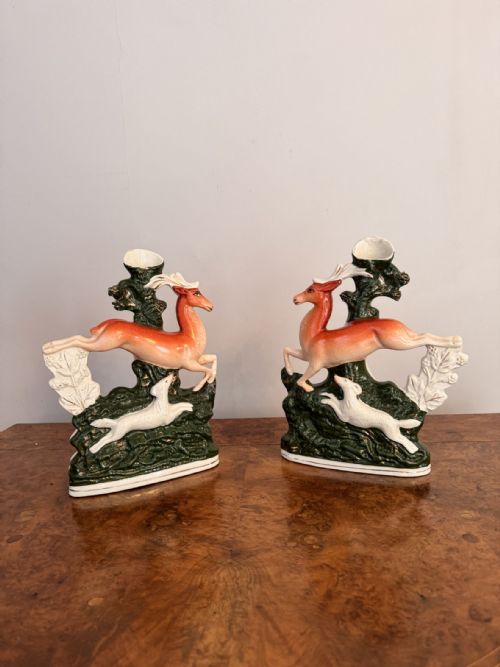
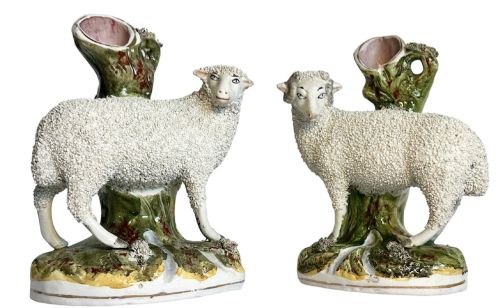
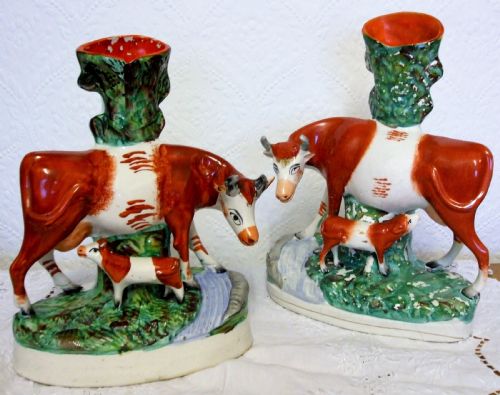
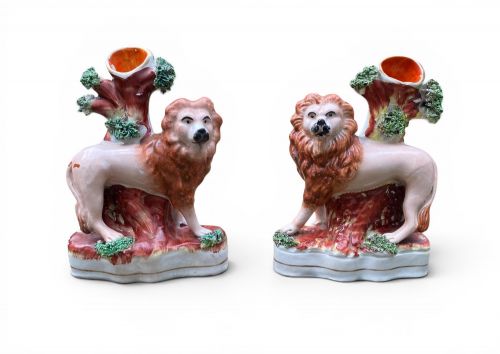
The most common examples encountered on this page belong to the Victorian era, particularly shaped as Staffordshire pottery figures of animals or pastoral scenes. Alongside earthenware pottery, buyers frequently find porcelain, turned wood, and hallmarked silver versions dating from the nineteenth and early twentieth centuries.
Materials and Construction Techniques
Pottery examples start as moulded earthenware or porcelain, painted by hand with coloured enamel highlights and glazed before firing. Staffordshire pieces rely on traditional slip casting and hand-finishing, leaving subtle individual brush marks and variations on each paired vessel.
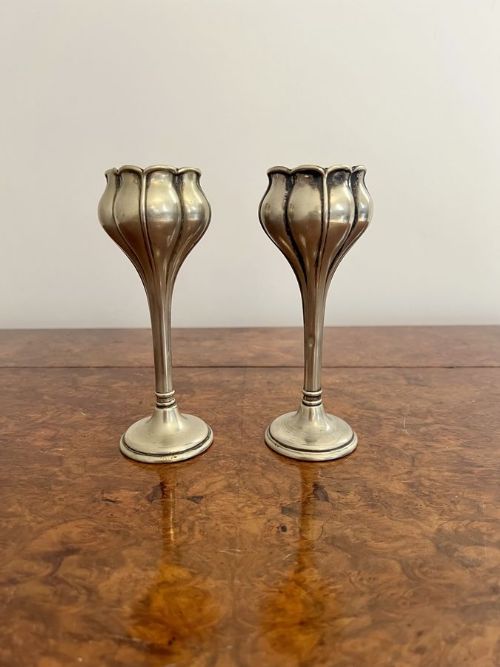
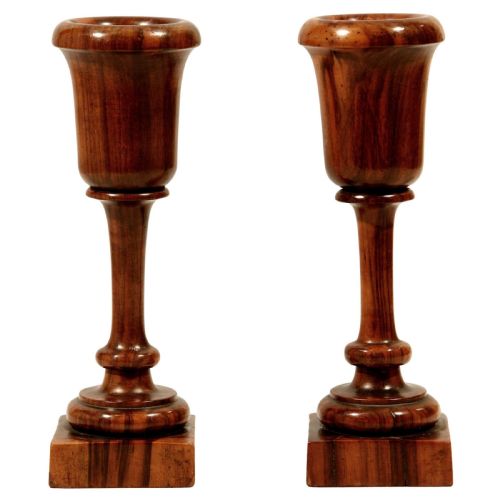
Metal versions utilise sterling silver, silver plating, copper, or brass, often shaped through spinning or casting techniques. Wooden spill stems employ precision turning on a lathe to create symmetrical urn shapes from dense timbers like lignum vitae and oak.
Listings feature ceramics, porcelain, earthenware, turned wood, and solid silver across the Victorian, Edwardian, and Art Deco periods.
Assessing Craftsmanship and Finish
For metal and wooden items, weight, gauge of silver, and precision in the turned profile distinguish standard production from superior workshop output. Matched pairs that retain their original gilding or crisp hallmarks demonstrate better preservation over time.
Locke & Co.·Royal Worcester·Wedgwood·William Comyns & Sons·Wang Hing
The Pair of Spill Vases Glossary
- Spill
- A thin slip of wood or rolled paper used to transfer a flame from a hearth to a candle or pipe. These matches sat neatly inside the hollow cylinder of each vase.
- Staffordshire Figure
- A ceramic sculpture produced in the potteries of Staffordshire depicting animals, people, or pastoral scenes. Many incorporate a hollow vertical tube alongside the figure to function as a spill holder.
- Blush Ivory
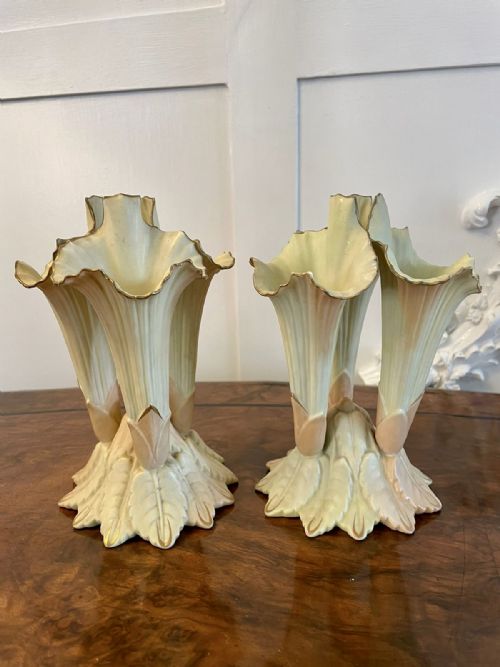
- A cream-coloured porcelain ground developed by manufacturers like Locke & Co. and Royal Worcester, featuring soft pink and floral overglaze decoration. This finish creates a warm, matte aesthetic popular during the late nineteenth and early twentieth centuries.
- Jasperware
- A fine-grained, unglazed stoneware pioneered by Wedgwood, typically featuring white classical relief figures applied against a coloured background. Blue remains the most frequently encountered ground colour.
- Lignum Vitae
- A dense, heavy tropical hardwood used by turners to craft durable turned objects. Its natural oily resin gives the polished surface a subtle lustre.
Pair of Spill Vases: Frequently Asked Questions
What is a pair of spill vases used for?
These matched vessels held slender wooden spills used to transfer flames from a fireplace to candles, oil lamps, or pipes before safety matches became common.
Today, they function primarily as decorative mantelpiece ornaments or small flower holders that preserve traditional fireplace symmetry.
How do I date a ceramic pair?
Dating relies on assessing the style of the modelling, the type of ceramic body, and any printed factory marks underneath the base. Victorian Staffordshire pieces often feature flat unglazed backs and simple hand-painted enamel decoration.
Porcelain items from later decades frequently display specific maker stamps or artist signatures that narrow down the production period to a particular reign or decade.
Are silver pairs hallmarked?
Most solid silver examples carry full British hallmarks stamped into the metal, indicating the assay office, year letter, and maker's mark. These tiny stamped symbols provide precise dating for Edwardian and Victorian silver pieces.
Silver-plated items usually carry maker marks or manufacturer stamps rather than official sterling assay office hallmarks.
How do I care for antique ceramic vases?
Ceramic and porcelain vessels require gentle dusting with a soft, dry cloth to protect fragile overglaze enamels and gold leaf highlights. Avoid using water or liquid cleaners, particularly on older earthenware where moisture can penetrate hairline cracks in the glaze.