



Nineteenth Century Pottery Ornaments
Nineteenth century pottery ornaments bring character to a room through figures, animals, and spill vases shaped by Victorian hands.
Nineteenth Century Pottery Ornaments
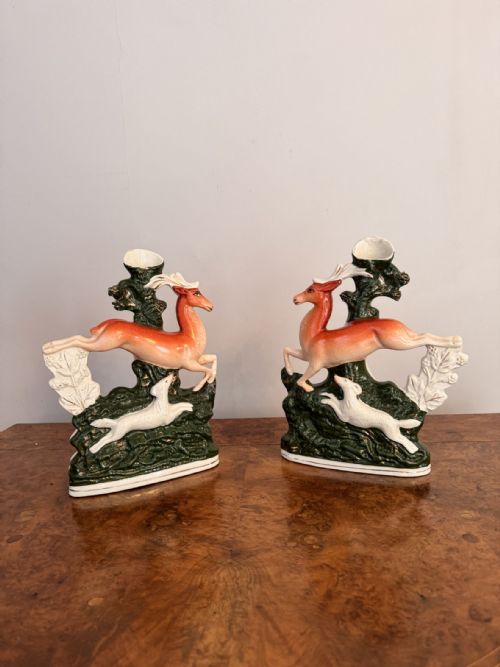
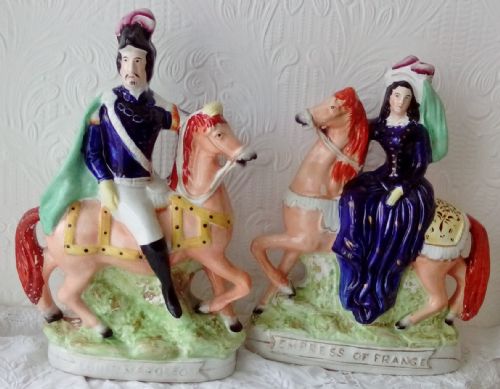
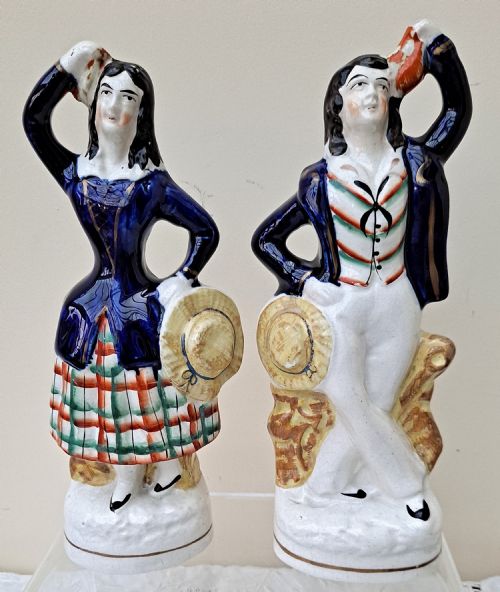
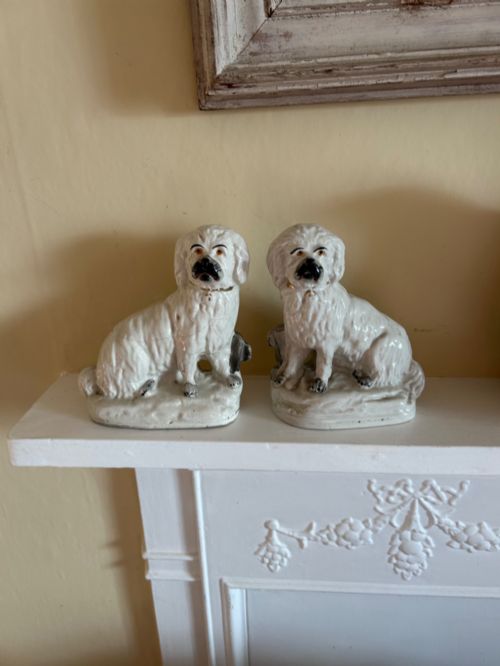
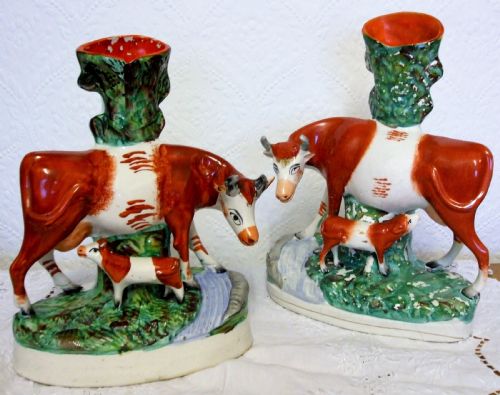
Nineteenth century pottery ornaments encompass decorative figures, spill vases, and portrait subjects produced across the Victorian era and adjacent decades. Buyers exploring this category most frequently encounter English Staffordshire earthenware figures, often modelled as pairs of dogs, cats, lions, or theatrical and historical personages.
The selection extends beyond domestic animal groups to include Dutch Delft blue and white cattle, Orientalist subjects, and large glazed figures from European and Asian kilns. These objects served primarily as chimney piece and mantel decorations in homes of the period, designed to catch the eye rather than hold contents.
Forms range from simple flat-back mantel ornaments intended to be viewed from the front to detailed spill vases that combined display with a practical function for holding matches or tapers. Dating relies on the specific styles of clothing, subject matter, and the transition from earlier pearlware bodies to heavier Victorian earthenware.
Materials and production methods
Makers shaped these ornaments using local earthenware, pearlware, or ceramic bodies, often formed in press moulds and finished with hand-applied details. The surfaces received lead glazes, tin glazes, or enamel colours, sometimes finished with treacle glazes or salt glazes depending on the regional workshop.
Colour application involved underglaze pigments or overglaze enamels fired multiple times in bottle ovens to fix the bright hues seen on parrots, dogs, and human figures. Bases commonly exhibit flat-backed construction or hollow interiors to reduce weight and prevent cracking during the firing process.
Period styles span Victorian Staffordshire, Dutch Delftware, and Orientalist forms.
Assessing quality in nineteenth century pieces
The sophistication of the subject matter and the presence of uncommon forms, such as specific literary pairings or complex architectural spill vases, elevate certain pieces above standard mantel ornaments. The weight of the ceramic body and the neatness of the unglazed base also indicate the care taken by the pottery.
Royal Dux·Rozenburg
The Nineteenth Century Pottery Ornaments Glossary
- Earthenware
- A porous ceramic fired at lower temperatures, commonly used for nineteenth century Staffordshire figures and glazed with lead or tin compounds.
- Spill vase
- A hollow decorative cylinder attached to a figure, designed to hold wooden tapers used for lighting fires and pipes.
- Pearlware
- A refined fine-grained earthenware developed in the late eighteenth century with a bluish glaze that pooled in recesses.
- Flat back
- A style of figure moulding where the rear is unadorned and flat, intended to stand directly against a wall or mantelpiece.
- Treacle glaze
- A dark, lustrous brown lead glaze that created a rich, glossy surface on Victorian lions, cats, and dogs.
Nineteenth Century Pottery Ornaments: Frequently Asked Questions
What are nineteenth century pottery ornaments?
They are decorative ceramic figures, animals, and spill vases produced during the eighteen-hundreds, predominantly in English Staffordshire potteries but also across Europe and Asia.
Most pieces were modelled as portrait subjects, theatrical characters, or household pets intended for mantelpiece display.
How were pottery ornaments used?
Families placed them on mantelpieces, sideboards, and brackets to brighten parlours and display patriotic, literary, or domestic tastes.
Spill vases doubled as holders for wooden taper spills used to transfer fire from the hearth to candles and lamps.
How do I identify a Staffordshire flat back?
Staffordshire flat backs feature an unglazed or minimally finished back because they were designed to sit flush against a wall.
They usually date from the Victorian era and often depict royal figures, actors, or pairs of domestic animals.