



Glazed Ceramic Spill Vase
A glazed ceramic spill vase is a chimney-side holder designed to store taper matches, bringing hand-painted folk character and period colour to a mantelpiece.
Glazed Ceramic Spill Vase
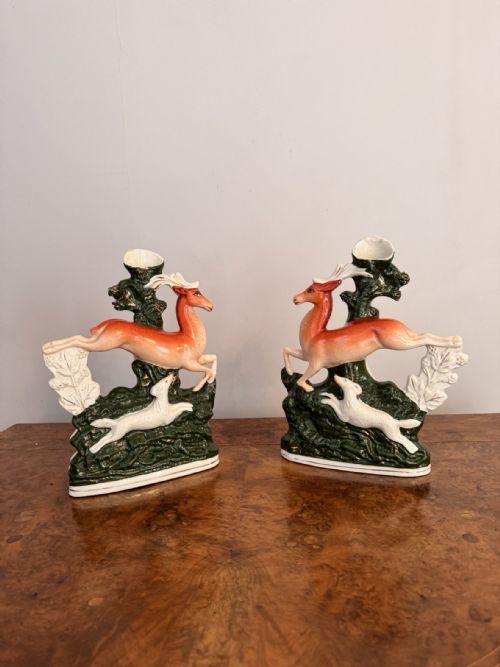
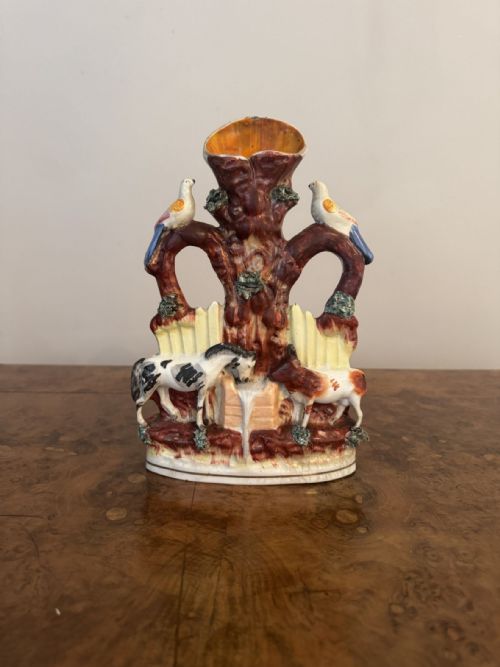
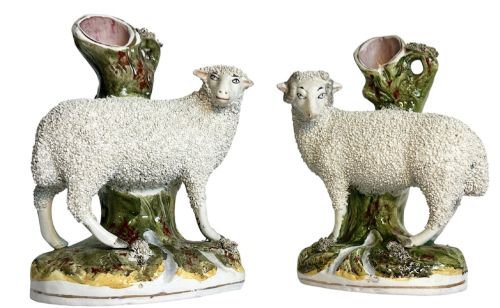
A glazed ceramic spill vase is a functional Victorian or Regency receptacle designed to hold thin wooden spills for lighting candles and fires. The pieces seen here include Staffordshire figures, pairs of sheep and deer, and architectural subjects like castles and bridges.
Most examples date from the nineteenth century, ranging from Regency pearlware through to late Victorian productions. They combine utilitarian purpose with whimsical sculptural forms, often depicting animals, rustic couples, or narrative scenes.
How they were made
Potters shaped these items using earthenware and pearlware bodies, finished with heavy lead glazes that created a glossy, reflective surface. Artisans then applied enamel colours by hand over the glaze, occasionally adding details in gold leaf.
Figures and spill tubes were cast in moulds and assembled before firing, which accounts for the hollow construction and flatback profiles found on many mantel ornaments. The distinct sheen comes from traditional glazing methods characteristic of nineteenth-century Staffordshire potteries.
Glazed Ceramic Spill Vase Retail Price Guide 2026
Typical asking prices for glazed ceramic spill vase among the pieces listed under this phrase on Sellingantiques today, from the lower quarter to the upper quarter. They describe what is for sale here now, not the wider market.
The listings show earthenware and pearlware bodies finished with lead glazes and enamel paint, spanning the Regency and Victorian eras.
What varies in quality
Pairs matching in scale and subject command greater interest than stray single pieces, particularly when the original lead glaze retains an even, unblemished finish across both objects.
The Glazed Ceramic Spill Vase Glossary
- Spill vase
- A hollow ceramic vessel designed to hold slender wooden matches used for transferring fire from hearth to candle. These objects sat on mantels in nineteenth-century homes.
- Pearlware
- A refined earthenware developed in the late eighteenth century featuring a thin glaze with a slight bluish tinge. It served as a smooth base for bright enamel painting.
- Flatback
- A style of ceramic figure modelled with a finished front and a plain, unpainted flat rear designed to stand against a wall. This saved materials and suited narrow mantelpieces.
- Lead glaze
- A glossy coating containing lead oxide applied to earthenware to waterproof the vessel and intensify surface colours. It gives nineteenth-century pottery its characteristic shine.
- Enamel
- Opaque glass-based paints applied over the fired glaze and fixed with a second, lower-temperature firing. This technique allowed makers to achieve vibrant blues, greens, and reds on Staffordshire figures.
Glazed Ceramic Spill Vase: Frequently Asked Questions
What is a spill vase?
A spill vase is a small nineteenth-century ceramic holder designed to keep wooden taper matches ready by the fireplace.
Victorian households used these wooden spills to light candles, oil lamps, and coal fires before safety matches became common.
How do I date a Staffordshire figure?
Dating relies on examining the clay body, glaze characteristics, and the style of painting. Earlier Regency pieces often feature pearlware glazes, while later Victorian examples show heavier earthenware bodies.
Flatback construction and specific subject matter also help narrow down the decade of production between eighteen-sixty and nineteen-hundred.
Where were spill vases placed?
These decorative containers sat predominantly on mantelpieces in nineteenth-century parlours and drawing rooms.
Because many feature flat backs, they were designed to rest securely against a wall or mirror frame on a narrow shelf.
Are these pieces functional?
While originally made to hold wooden tapers for lighting fires, today they serve mainly as decorative mantel ornaments and cabinet pieces.
Collectors appreciate them for their folk art appeal and hand-painted nineteenth-century character rather than daily utility.