


Staffordshire Pottery Hearth Figures
Staffordshire pottery hearth figures bring Victorian parlours to life with ceramic spaniels, poodles, cats, and Scottish figures.
Staffordshire Pottery Hearth Figures
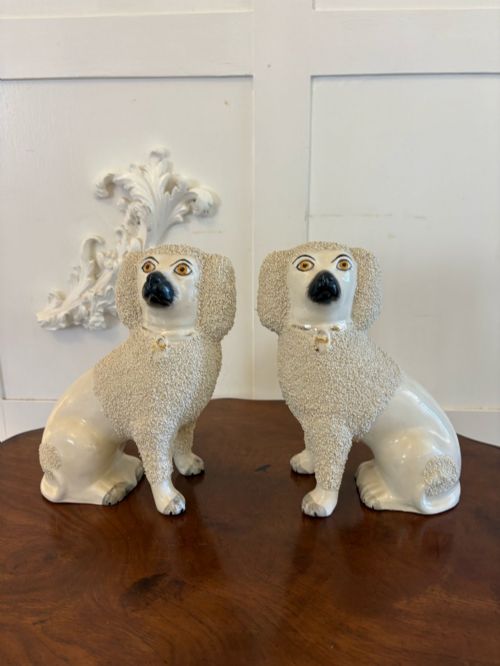
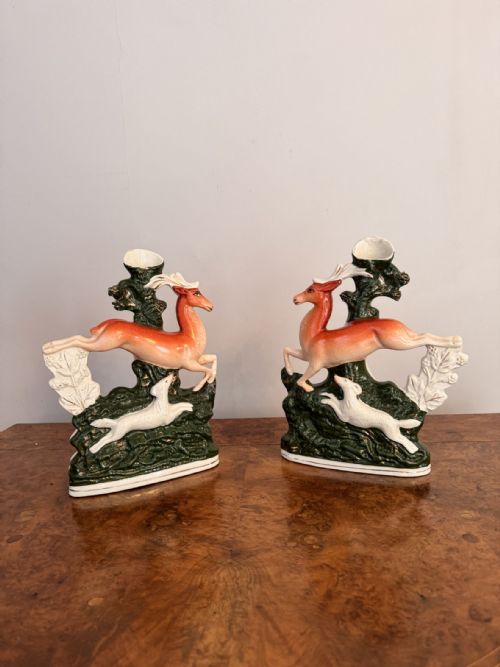
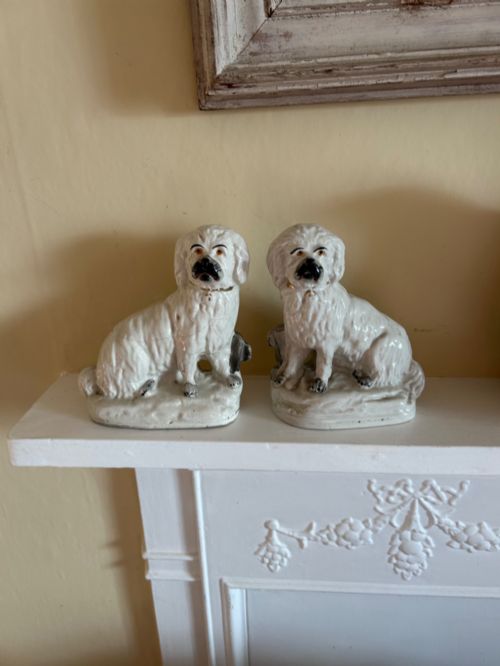
Staffordshire pottery hearth figures represent the quintessential mantelpiece and fireplace ornaments of the Victorian era, designed to sit in pairs gazing across a room. These earthenware pieces take the form of popular animals such as spaniels, poodles, terriers, deer, cats, and lions, alongside occasional human subjects like Scottish highlanders on horseback.
The objects seen here belong predominantly to the nineteenth century, spanning decades from roughly eighteen forty to nineteen hundred. Most examples survive as matched pairs, reflecting the symmetrical decorating tastes of nineteenth-century domestic interiors.
Makers shaped these ceramic figures for display on cottage and townhouse hearths alike. They range from small tabletop ornaments to large spill vases intended to hold taper matches.
How they were made
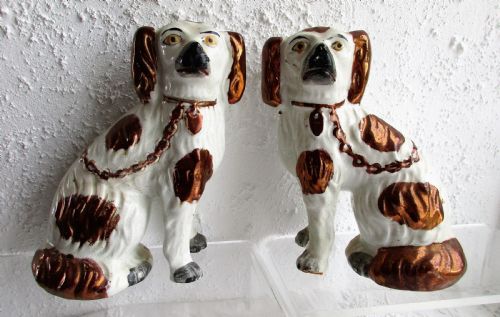
Potters shaped these earthenware pieces using ceramic clay, applying lead glazes and vibrant enamel colours to finish the surface. Many examples incorporate copper lustre highlights or touches of gilt to catch the flickering light of a coal fire.
Listings span the nineteenth century, utilising earthenware, glaze, enamel, and copper lustre across decorative figurines and spill vases.
What varies in quality
Quality in these ceramic figures rests primarily on the crispness of the mould and the care given to hand painting. Finer examples display cleanly defined fur textures and neatly applied enamel pigments that remain bright and steady.
The presence of secondary details such as modeled pups, copper lustre accents, or functional spill vase openings often distinguishes more ambitious studio output from standard utilitarian pairs.
Beswick
The Staffordshire Pottery Hearth Figures Glossary
- Flatback
- A figure moulded with a finished front and a flat, unadorned back designed to sit flush against a mantelpiece or wall.
- Spill vase
- A hollow ceramic vessel featuring an attached upright holder designed to store wooden taper matches for lighting fires and pipes.
- Copper lustre
- A metallic glaze technique imparting a reflective, iridescent copper sheen to the surface of earthenware pottery.
- Earthenware
- A porous pottery body fired at lower temperatures, commonly used for nineteenth-century decorative figures before being glazed.
- Enamel
- Opaque vitreous paint applied over a fired glaze and heated again to fuse permanent colour onto the ceramic surface.
Staffordshire Pottery Hearth Figures: Frequently Asked Questions
Why are these figures called hearth dogs?
These ceramic animals earned their name because Victorian households traditionally placed pairs of spaniels on either side of the fireplace hearth. They guarded the mantelpiece and served as cheerful companions in the main living spaces of the home.
Over time, this domestic placement became a defining characteristic of Staffordshire pottery animal figures, cementing their place in nineteenth-century interior decoration.
How do I style Staffordshire figures today?
Place pairs of spaniels or poodles symmetrically on a mantelpiece, bookshelf, or sideboard where they can anchor the visual space. Their traditional placement allows them to bring historic charm and colour to contemporary or eclectic rooms.
Keep them at eye level or slightly below so the hand-painted details and copper lustre highlights catch the room's ambient light effectively.
Are these figures always found in pairs?
Many nineteenth-century Staffordshire animals were produced and sold as matching pairs to satisfy Victorian demands for symmetrical interior decoration. Each dog or cat looked inward toward its partner across the mantel space.
While pairs dominate the selection, single figures and collections of four pieces also appear in nineteenth-century Staffordshire pottery.
What is a spill vase?
A spill vase is a hollow ceramic cylinder integrated into the figure's design, originally used to hold thin wooden spills or tapers. Victorian households used these spills to transfer flames from the hearth fire to oil lamps and candles.
In Staffordshire figures, the vase often sits behind a standing animal like a deer or dog, combining practical fireside utility with decorative sculpture.