



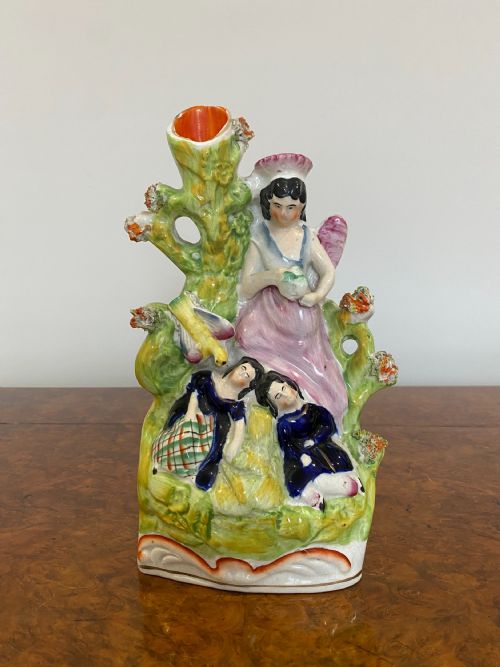
Green Staffordshire Spill Vase
These green staffordshire spill vase pieces bring Victorian animal groups and architectural figures to mantelpieces with bright earthen glazes.
Green Staffordshire Spill Vase
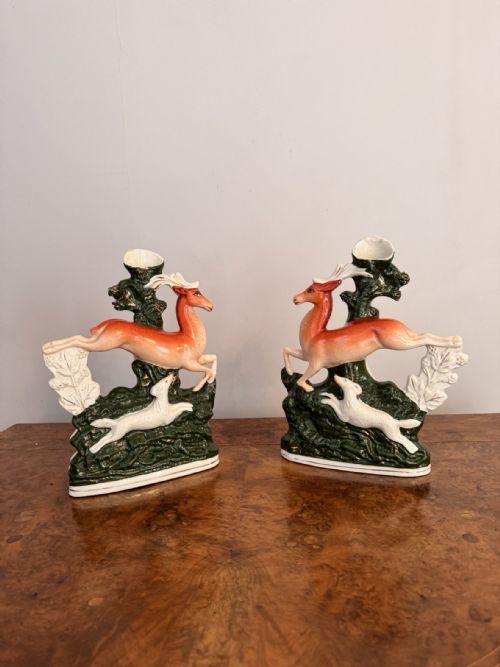
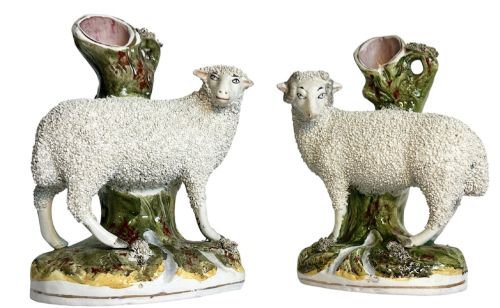
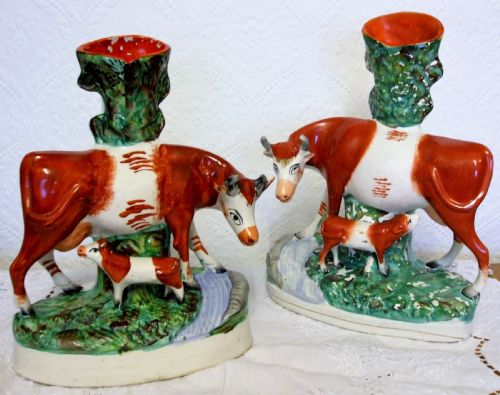
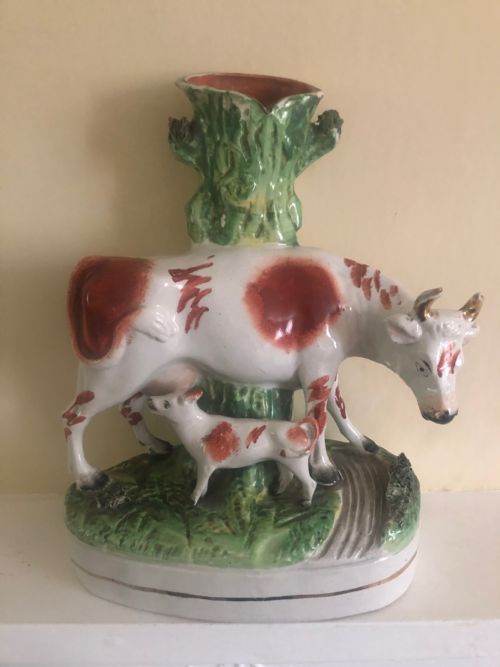
A green staffordshire spill vase is a modelled earthenware vessel designed to hold taper matches alongside ornamental figures. The listings here consist largely of 19th century pairs depicting sheep, deer, and cows with calves, alongside occasional architectural follies.
Most examples hail from the Victorian era, though earlier Regency influences appear through pearlware glaze finishes and turret motifs. These ceramic groups balance functional utility with rustic narrative charm.
How they were made
Potters shaped these figures from earthenware clay using press moulding techniques before applying lead glazes and enamel pigments. The characteristic green coloration often defines the base or foliage surrounding the central ceramic figures.
Pearlware glaze variants provide a paler, blue-tinted surface beneath the painted enamel details, pointing to earlier Georgian and Regency production methods. Artisans fired these pieces in kilns to set the colourful surface decoration.
Green Staffordshire Spill Vase Retail Price Guide 2026
Typical asking prices for green staffordshire spill vase among the pieces listed under this phrase on Sellingantiques today, from the lower quarter to the upper quarter. They describe what is for sale here now, not the wider market.
Current listings feature earthenware bodies finished with lead glazes, pearlware glazes, and hand-applied enamel pigments across 19th century forms.
What varies in quality
Quality rests upon the crispness of the modelled detail in the animal coats and facial expressions. Superior pieces display carefully hand-painted enamel highlights rather than flat, heavy washes of pigment.
Scale also dictates standing, with larger pairs and complex architectural groupings demanding greater sculptural skill from the potter. The richness and evenness of the lead glaze determine visual appeal across the surface.
Walton
The Green Staffordshire Spill Vase Glossary
- Spill vase
- A hollow cylindrical holder designed to store wooden tapers used for lighting pipes and candles. These vessels often form part of a larger figural group.
- Pearlware glaze
- A refined earthenware glaze containing a small amount of cobalt to create a pale bluish tint. It bridges the gap between creamware and later white earthenwares.
- Lead glaze
- A glossy coating containing lead oxide applied to ceramic bodies to waterproof the clay and brighten colours. It creates a smooth, reflective surface.
- Flat back
- A moulding technique where the rear of a ceramic figure is left unglazed and flat so it sits flush against a wall or mantelpiece.
Green Staffordshire Spill Vase: Frequently Asked Questions
What is a spill vase used for?
These vessels held wooden spill matches on the mantelpiece before the invention of safety matches.
Households used them to transfer fire from the hearth to candles and lamps.
How old are these pottery pieces?
The available selection dates primarily from the nineteenth century, spanning the Regency and Victorian periods.
Stylistic cues like pearlware glazes help distinguish the earlier examples from later Victorian production.
Why are animals common on them?
Victorian potters drew inspiration from pastoral life, farm animals, and rural wildlife for domestic decoration.
Pairs of sheep, deer, and cows with calves proved particularly popular for mantelpiece displays.
Are these figures glazed all round?
Many nineteenth century examples feature flat backs designed to stand directly against a wall.
This construction method saved on glaze and modelling effort for pieces placed on narrow mantel ledges.