






Pair of Miniature Paintings
A pair of miniature paintings offers small-scale artistry, bringing intimate portraits and detailed scenes into focused domestic spaces.
Pair of Miniature Paintings
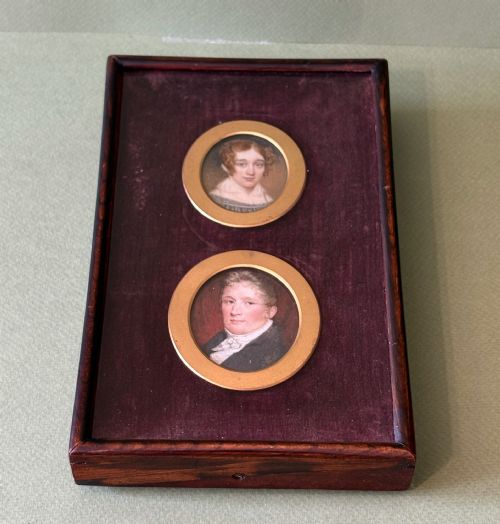
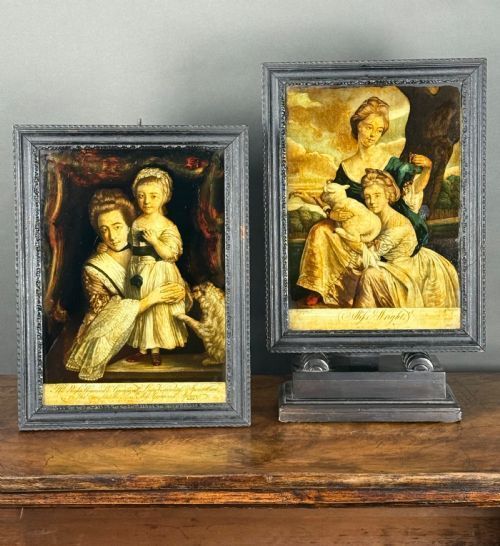
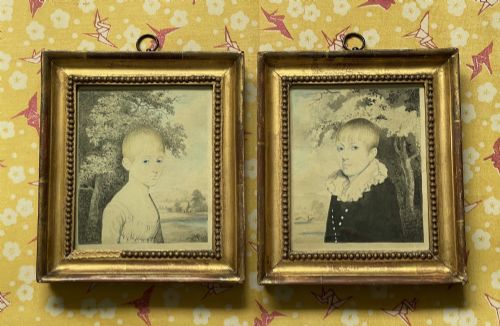
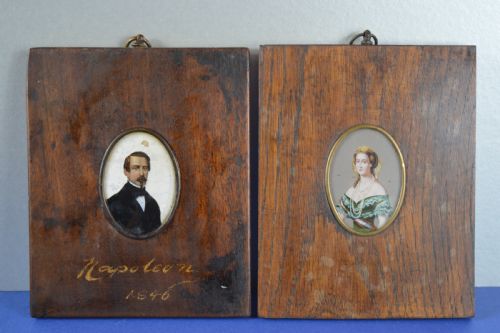
A pair of miniature paintings comprises small-scale works executed in media such as watercolour, oil, and enamel, designed to be displayed together as companion pieces. The evidence shows formats ranging from Georgian watercolours of children to 18th-century reverse glass mezzotints and 19th-century portrait miniatures.
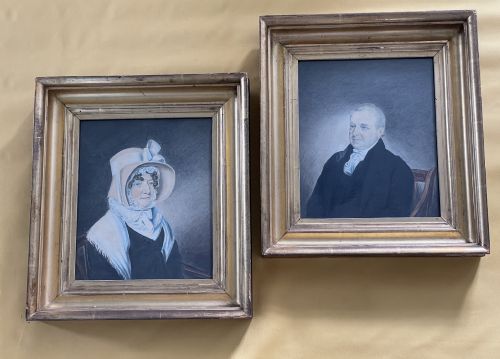
Buyers seeking this phrase encounter works spanning several centuries, notably the Georgian and Victorian eras, alongside 18th-century enamel ovals and Indian album pages from circa 1700. Portrait miniatures of husbands, wives, and notable figures dominate the selection alongside still life flower paintings and romantic ruin scenes.
The physical scale of these works requires careful framing, often utilising glass, wood, brass, and giltwood to protect delicate surfaces. Surviving examples frequently retain original annotations, signatures, or historical notes on the reverse, linking specific sitters and dates to the physical objects.
Materials and execution
Artists worked on diverse surfaces including paper, board, tinplate, and piano keys, applying watercolour, oil paint, or enamel to achieve fine detail on a reduced scale. Glass and gold leaf frequently appear as protective or decorative elements within the construction of the frame.
Frames utilise wood, brass, and giltwood, enclosing the delicate paintings behind glass to preserve the paper or painted surface from environmental damage. Enamel plaques undergo high-temperature firing to fuse vitreous colours onto a metal base, creating durable glossy finishes.
Current listings feature works created using watercolour, oil paint, and enamel on surfaces including paper, glass, wood, and tinplate.
Distinctions in quality
The finesse of the brushwork distinguishes finer portrait miniatures and still life paintings from simpler naive or folk art examples. Precision in facial expression, fabric rendering, and anatomical proportion elevates the standing of an individual work within its period.
The integrity of the original framing, encompassing period wood, brass, and glass, influences the completeness of the object. Documentation such as artist signatures, dates, and rear annotations confirming the history of the subjects adds substantive context.
James Sharples·George Hargreaves·Thomas Woolnoth·K P M·Patrick Wybrant·John Dean RMS·Henry Edridge ARA
The Pair of Miniature Paintings Glossary
- Portrait miniature
- A small-scale painting, typically executed in watercolour or enamel, capturing the likeness of an individual. These works were often housed in protective cases or framed for wall display.
- Reverse glass mezzotint
- A print or painting applied directly to the underside of glass, viewed through the transparent pane. This technique produces a distinct glossy surface finish.
- Enamel plaque
- A smooth surface created by fusing powdered glass to a metal plate through kiln firing. These plaques retain vibrant colour without fading over time.
- Album page
- A historic sheet bearing manuscript painting or calligraphy, often sourced from bound volumes originating in regions such as India. They typically feature intricate borders and pigment layers.
- Naive school
- Art produced by painters with little formal academic training, characterised by direct perspective and simplified forms. These works offer a distinct regional charm.
Pair of Miniature Paintings: Frequently Asked Questions
How were miniature paintings displayed?
These small works were typically framed in wood, brass, or giltwood and hung closely together in pairs to balance interior wall spaces. Their intimate scale suited smaller rooms and private chambers.
Many examples were also designed to be portable, resting on surfaces or kept within protective desk cases before later finding permanent wall placement.
What subjects appear most often?
Portraits of individuals, couples, and children form the majority of surviving examples, often recording specific family histories and marriages. Companion pieces frequently pair a lady with a gentleman.
Beyond portraits, subjects include still life arrangements of flowers, romantic architectural ruins, and landscape scenes executed in oil or watercolour.
How do I date a miniature painting?
Dating relies on stylistic clues in the clothing, hair styling, and framing methods typical of periods like the Georgian or Victorian eras. Signatures and dates written directly on the front or annotated on the rear provide precise chronological markers.
Material choices, such as early tinplate or specific types of glass and backing boards, also help place the object within a defined century.
Why are these paintings found in pairs?
Companion pieces were commissioned to commemorate marriages, family relationships, or partnerships, ensuring husband and wife or related subjects remained visually linked. Artists deliberately produced matching compositions in size, frame style, and palette.
Displaying them together maintains the original narrative intention of the commissioner and artist.