

19th Century Miniature Painting
A 19th century miniature painting brings remarkable portraiture and landscape art into domestic spaces through delicate, small-scale works.
What 19th century miniature painting involves
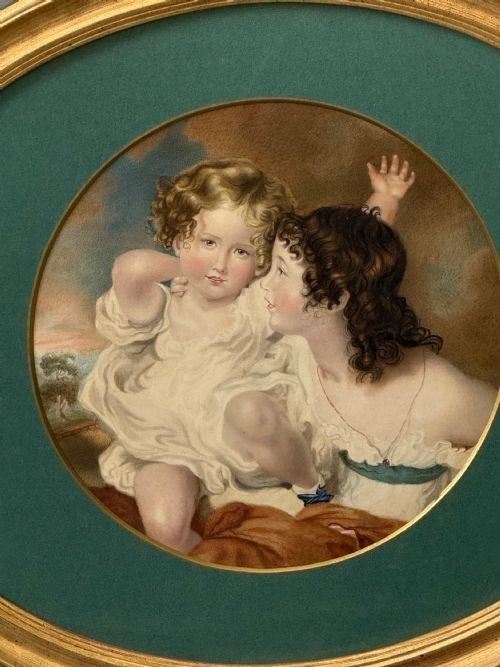
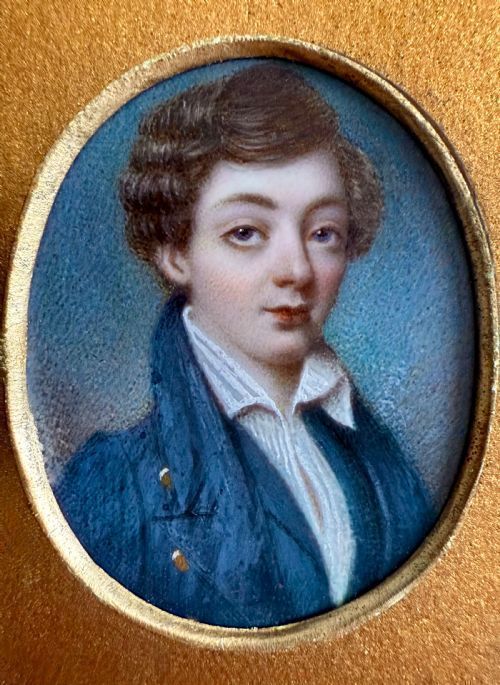
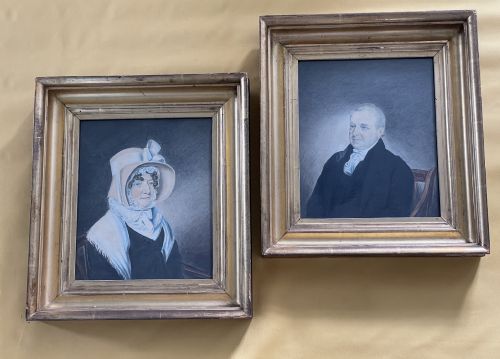
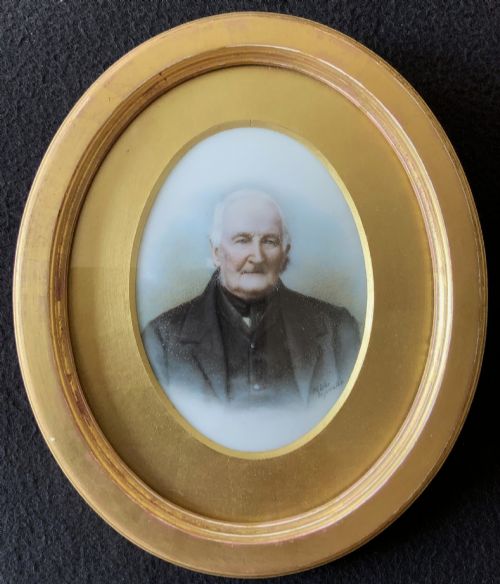
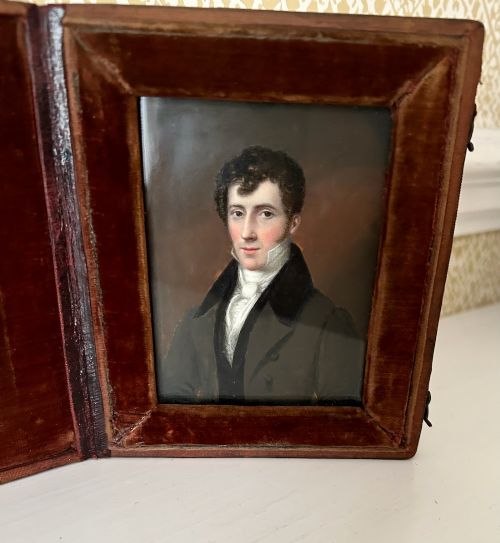
A 19th century miniature painting comprises small-scale portraits, landscapes, and narrative scenes produced during the nineteenth century. These works capture likenesses of gentlemen, ladies, and historical figures, alongside landscape views and Italian capriccios.
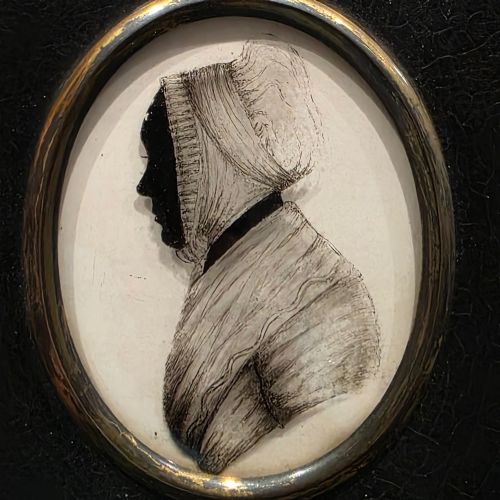
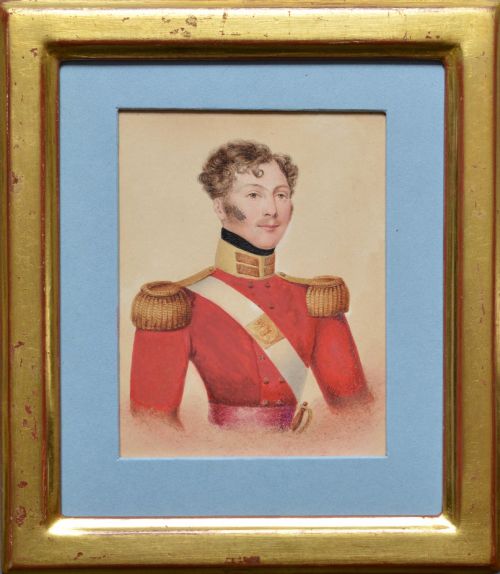
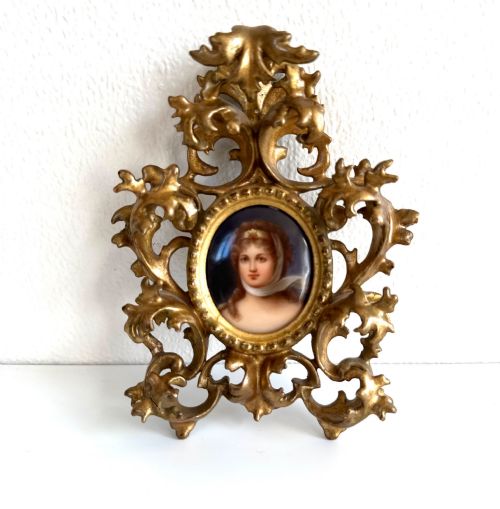
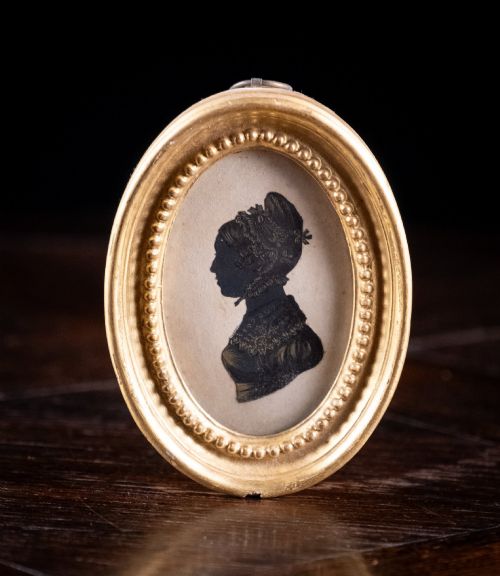
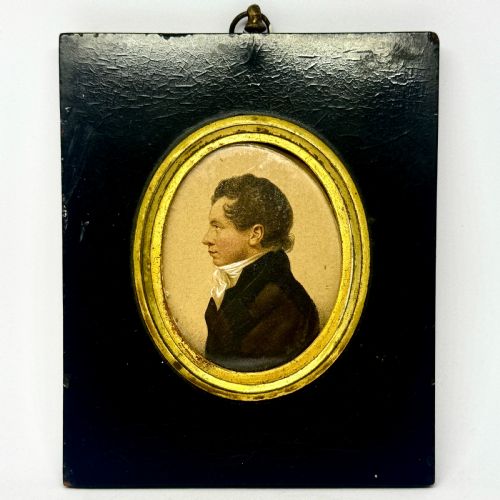
The most common examples on this page are portrait miniatures depicting individuals from the Regency and Victorian eras. These portraits frequently present subjects in profile or head-and-shoulder format, executed with precise detail.
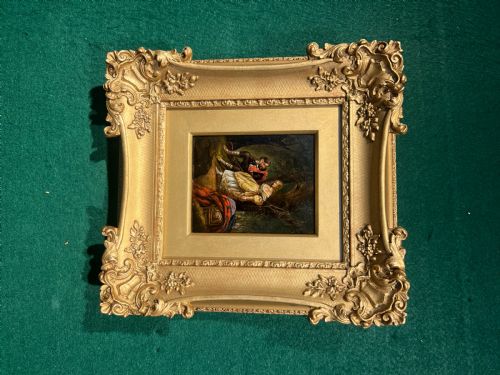
Beyond portraits, the category encompasses landscapes, seascapes, and mythological scenes derived from earlier masters. Works range from English country views to complex Italian architectural compositions painted on diverse supports.
Materials and techniques
Makers utilised watercolour on paper and watercolour paper, alongside gouache and oil paint applied to specialised surfaces. Oil paintings appear on copper panels, wood panels, metal panels, and board.
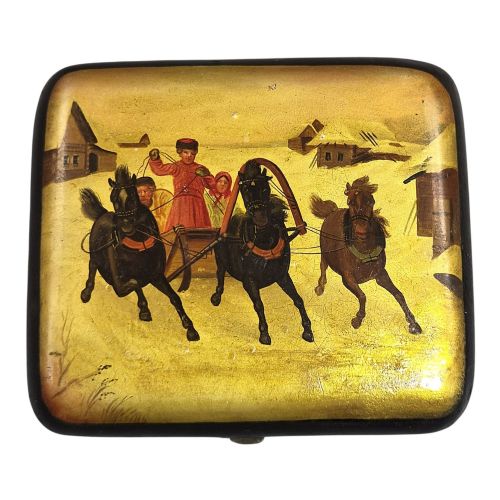
Supports for these delicate works include ivory and paper mache frames, often complemented by protective glass, ebonised wood, and gilt metal or gilt frames. Many pieces retain original framing with annotations detailing the subjects.
Retail Price Guide 2026
Typical UK retail prices for 19th century miniature painting, calculated from the Sellingantiques database of over a million retail prices indexed since 2003. This retail price guide relies exclusively on Sellingantiques data; no external sources or auction records are used, so the figures do not describe the wider market.
Subjects range from stern Victorian husbands to watch dogs chained to kennels and Italian landscapes.
Distinctions in quality
Quality rests upon the precision of the brushwork and the lifelike capture of the subject's expression and costume details, such as lace caps or coral beads. Finer pieces demonstrate superior control over minute scale without losing anatomical proportion.
The choice of materials and the integrity of the mount influence the character of the piece. Works incorporating specialised supports like ivory, paired with original ebonised or gilt frames, display greater material ambition.
Henri Fradelle·Henry Jacob Burch·Hugh Vane Turner·Edoardo De Martino·George Paterson Yeats
The 19th Century Miniature Painting Glossary
- Portrait Miniature
- A small-scale painting depicting a specific person, executed with fine detail. These works were often designed to be worn as jewellery or kept in private spaces.
- Capriccio
- An architectural fantasy placing together buildings, ruins and other architectural elements in a fictional combination. Artists utilised this genre for Italian landscape scenes.
- Grisaille
- A painting executed entirely in shades of grey or neutral greyish monochrome. This technique often mimics the appearance of sculpture or serves as an underpainting.
- Ebonised Wood
- Timber treated to resemble ebony, typically through staining or finishing processes. It provides a dark, contrasting border for miniature artworks.
- Gilt Metal
- Metal treated with a gold-coloured finish or gilt application. It frequently forms the mount or frame surrounding small portraits.
Frequently Asked Questions
How were 19th century miniature paintings displayed?
These small works were frequently housed in protective ebonised frames, gilt metal mounts, or paper mache cases designed for desks or walls. Some portrait miniatures were created specifically to be worn as brooches or kept close in personal settings.
Owners often grouped several miniatures together in shared frames to display family members or collections of landscape views. Their compact dimensions allowed them to be easily moved between rooms or carried during travel.
What subjects appear in these miniature paintings?
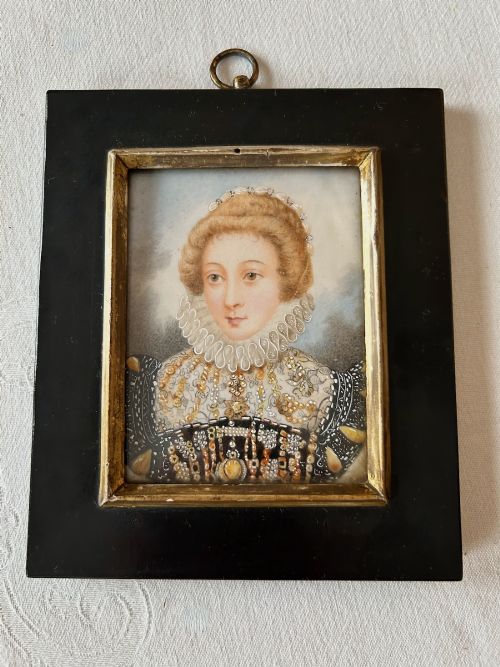
Portraits dominate the category, showing gentlemen in side whiskers, ladies in evening dresses, and historical figures like Mary, Queen of Scots. These likenesses record the fashion and appearance of the Regency and Victorian periods.
Beyond portraits, the works include Italian landscape scenes, pastoral views of Wales and England, and mythological subjects after earlier masters. Narrative scenes such as Mughal harem settings also occur within the broader selection.
How do I distinguish Regency pieces from Victorian ones?
Regency examples often feature specific clothing styles like high-waisted dresses for women and distinct cravats or side whiskers for men. The framing and mounting techniques, such as paper mache frames, often align with early nineteenth-century production.
Victorian pieces frequently display later hairstyles, lace caps, and mourning or commemorative annotations to the rear. The materials and framing styles shift over the course of the century to reflect changing domestic tastes.
What surfaces were used for miniature paintings?
Artists painted on a variety of small surfaces depending on the medium and period. Watercolour and gouache were typically applied to paper, watercolour paper, or delicate ivory panels.
Oil paints required firmer supports, leading artists to utilise copper panels, wood panels, metal panels, and small boards. Each surface influenced the level of detail the painter could achieve.