
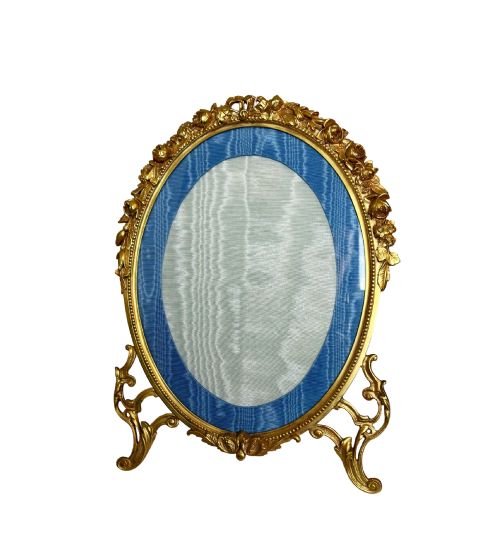
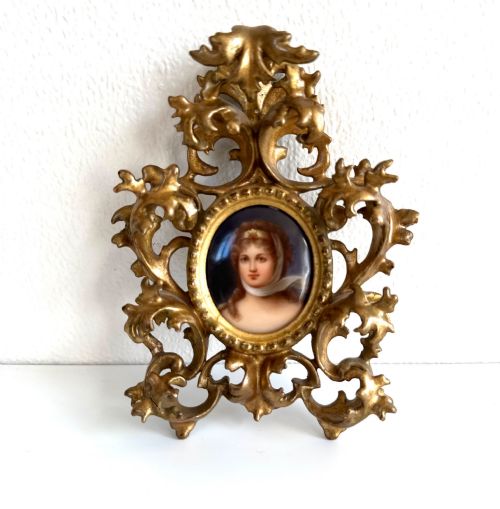
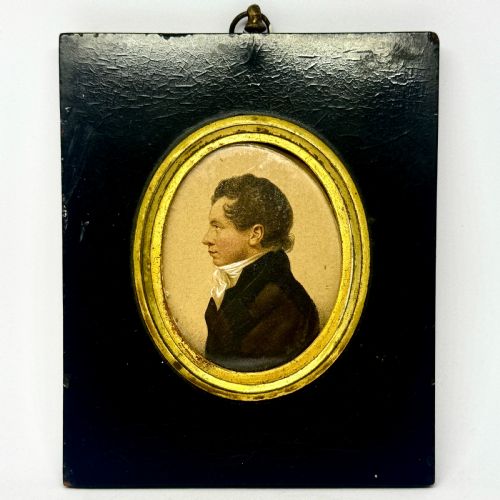
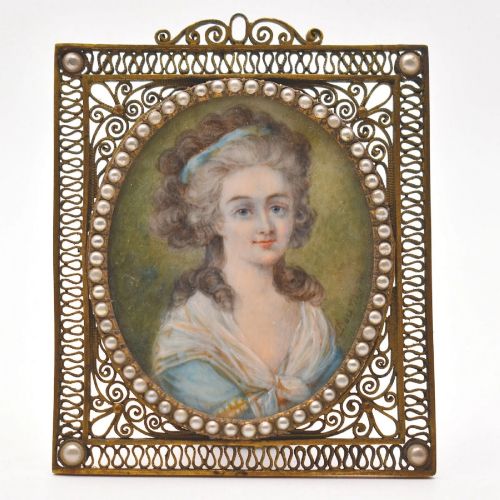
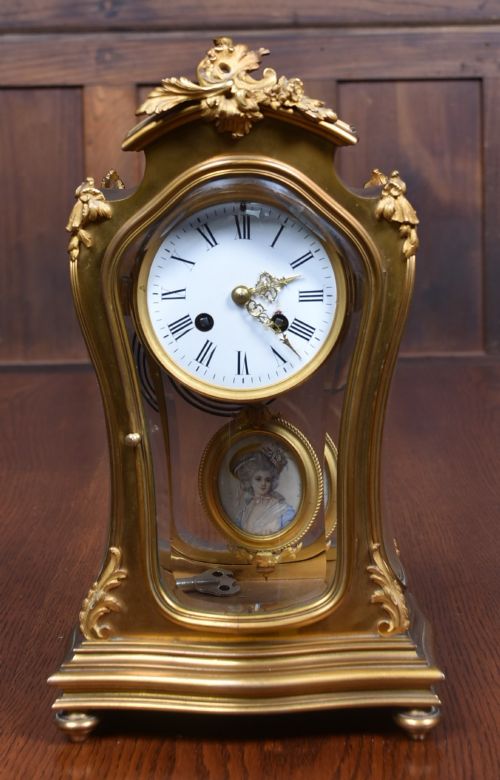


Gilt Brass Portrait Miniature
These gilt brass portrait miniature pieces offer small-scale likenesses set in metal frames, prized for their intimate craftsmanship and historical charm.
What They Are
A gilt brass portrait miniature represents a portable likeness of an individual, typically housed within a decorative metal surround. These small works of art appear in forms such as framed portraits, porcelain plaques, and jewellery caskets.
The pieces on this page span the Georgian, Regency, and nineteenth century periods. Buyers encounter subjects including ladies in white dresses, ringlets and caps, and historical figures like Lady Godolphin.
Forms range from traditional wall art portrait miniatures to oval porcelain plaques and fitted boxes. The material framework invariably centres on brass, gilt metal, or ormolu settings.
How They Were Made
The housings combine brass, gilt metal, ormolu, and glass to protect the fragile painted surfaces. Metalworkers cast or stamped the frames before applying gilding or mounting them with convex glass.
Retail Price Guide 2026
Typical UK retail prices for gilt brass portrait miniature, calculated from the Sellingantiques database of over a million retail prices indexed since 2003. This retail price guide relies exclusively on Sellingantiques data; no external sources or auction records are used, so the figures do not describe the wider market.
Some nineteenth century makers tucked locks of hair safely behind the miniature portrait, turning a simple painting into a deeply personal relic.
What Varies in Quality
The refinement of the painted portrait distinguishes finer examples from naive or simpler works. Superior pieces capture facial expression and fabric texture with precision, whereas simpler items display more rudimentary brushwork.
The execution of the metal frame also influences overall merit. Crisp chasing in ormolu or heavy cast brass surrounds elevate the presentation compared to plain or heavily worn metal mounts.
Jeremiah Steele
The Gilt Brass Portrait Miniature Glossary
- Gilt brass
- Brass treated with a thin layer of gold or gold-coloured finish to give a bright metallic sheen. This material forms the durable outer structure for many portable likenesses.
- Ormolu
- Finely ground high-carat gold applied to a bronze or brass base using a mercury amalgamation process. It provides a rich, warm decorative border for plaques and paintings.
- Portrait miniature
- A small-scale painting depicting a specific person, often created as a keepsake. These works developed from illuminated manuscripts and gained popularity before the widespread use of photography.
- Porcelain plaque
- A flat ceramic tablet fired at high temperatures and painted with enamel colours. These surfaces provide a smooth, durable alternative to ivory for detailed portraiture.
Frequently Asked Questions
How were these miniatures displayed?
Owners typically hung them on walls as art or placed them on surfaces within domestic spaces. Some examples were integrated into jewellery caskets or kept as personal pocket items.
The protective glass covers and robust brass frames ensured the delicate watercolours and porcelain surfaces survived decades of handling and display.
How do I date a miniature?
Dating relies upon the costume of the sitter, the hairstyle, and the construction style of the frame. Regency pieces often display specific dress codes like white gowns and elaborate caps.
Materials such as ormolu or specific types of glass mountings also provide chronological markers that align with nineteenth century manufacturing techniques.
What materials are used?
The primary components include brass, gilt metal, ormolu, and glass for the frames. The interior works utilise watercolour, ivory, porcelain, and enamel.
Combinations vary between pieces, with some featuring heavy cast ormolu surrounds while others rely on simpler pressed brass mountings.