



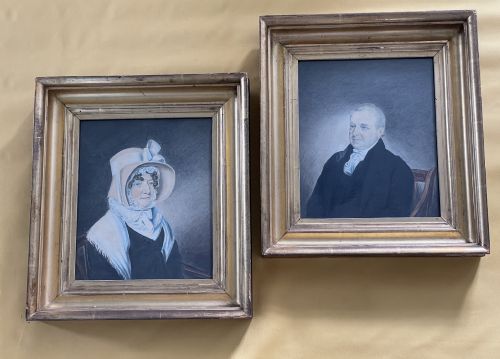
Watercolour Miniature Portrait
A watercolour miniature portrait captures a likeness in miniature, prized for personal intimacy and meticulous skill.
Identifying a watercolour miniature portrait
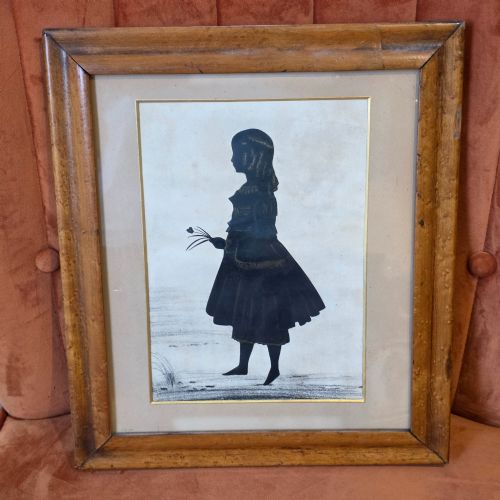
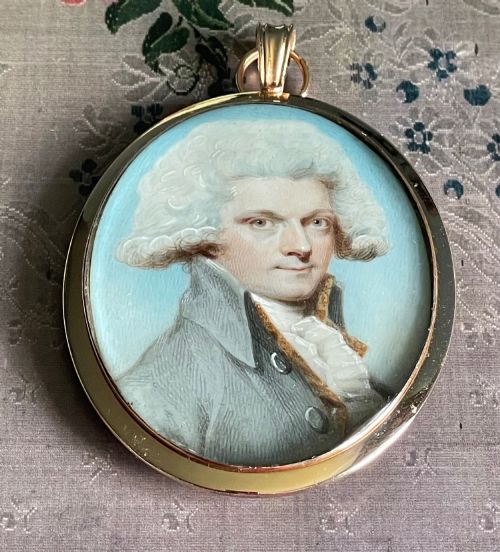
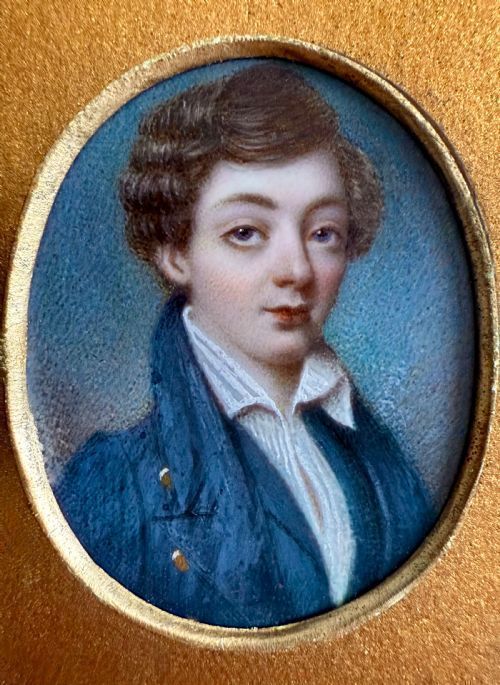
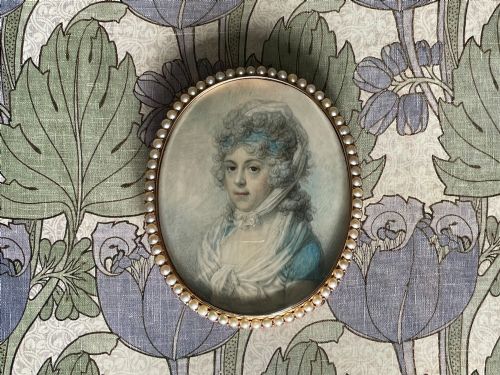
A watercolour miniature portrait is a portable likeness executed with fine brushwork on paper, card, or other small supports. These pieces emerge from periods spanning the Georgian era, Regency, and Victorian decades into the early twentieth century.
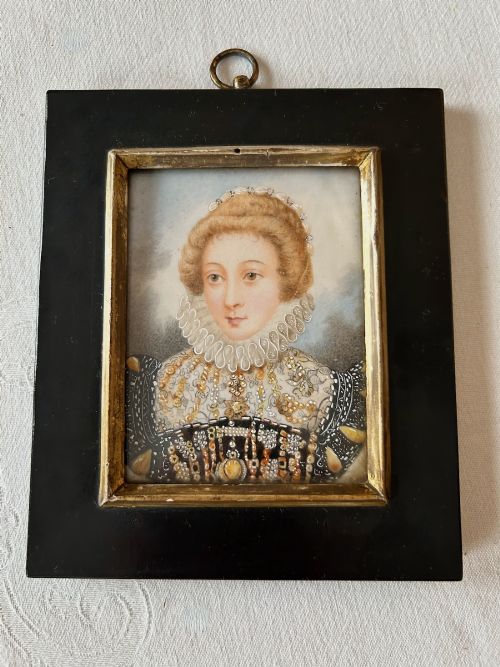
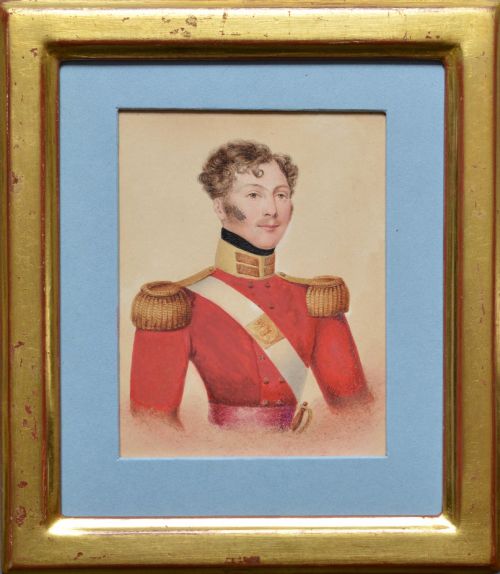
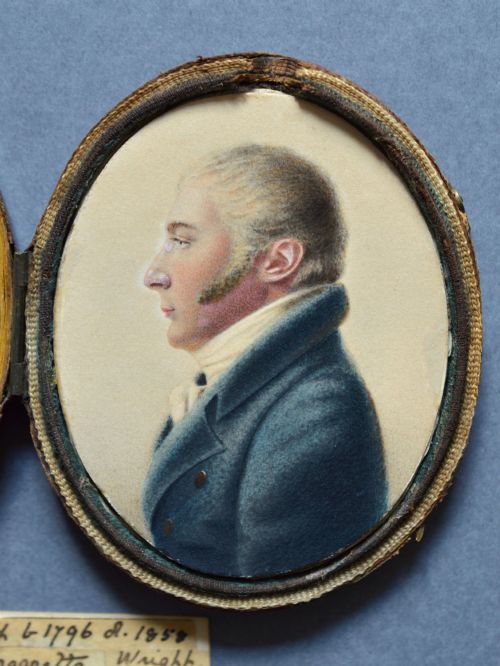
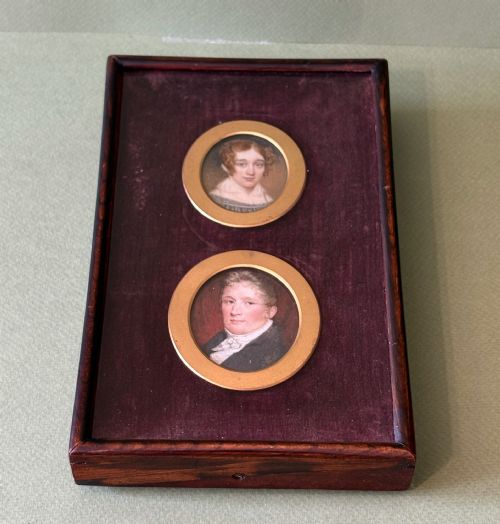
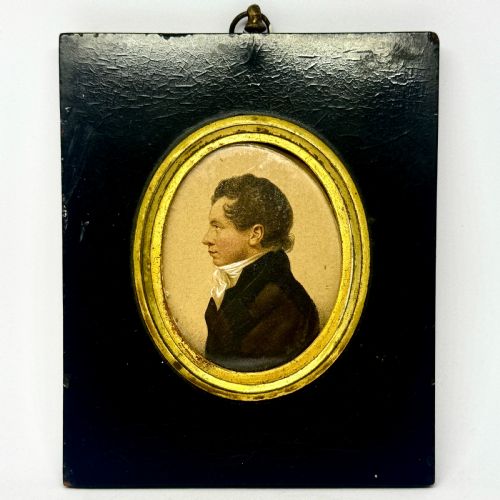
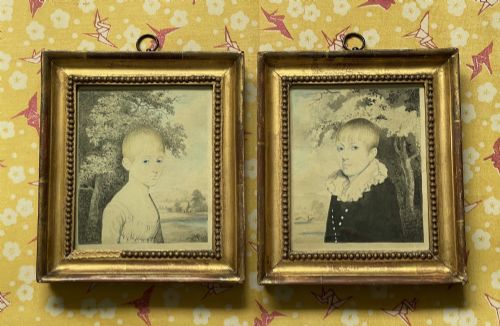
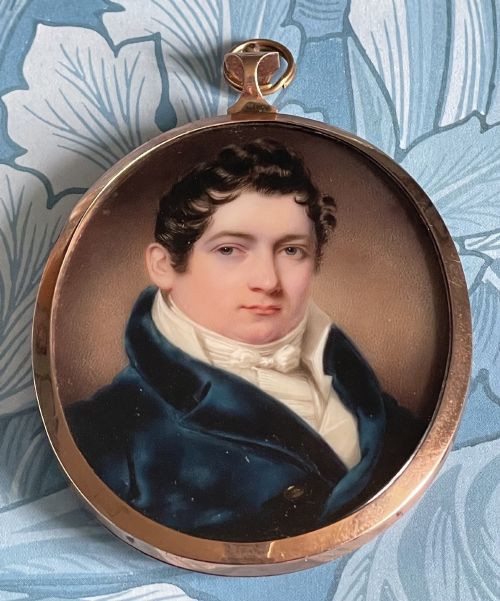
Collectors encounter oval or circular formats housed in ebonised wood frames, brass fittings, gilt metal, or brooch mounts. Subjects range from gentlemen and ladies in period dress to children and historical figures.
The selection includes signed works by named artists alongside pieces from the English and French schools. Formats vary from simple head and shoulder profiles to detailed costume studies.
Materials and construction
Artists painted watercolour and sometimes gouache or pastel onto thin paper, card, or occasionally celluloid. The fragile pigment surface required protection behind glass.
Encasing structures utilise ebonised wood, rosewood, brass, gilt metal, or gold, occasionally taking the form of lockets or brooches. Backings often incorporate hanging rings or miniature wooden stands for display.
Retail Price Guide 2026
Typical UK retail prices for watercolour miniature portrait, calculated from the Sellingantiques database of over a million retail prices indexed since 2003. This retail price guide relies exclusively on Sellingantiques data; no external sources or auction records are used, so the figures do not describe the wider market.
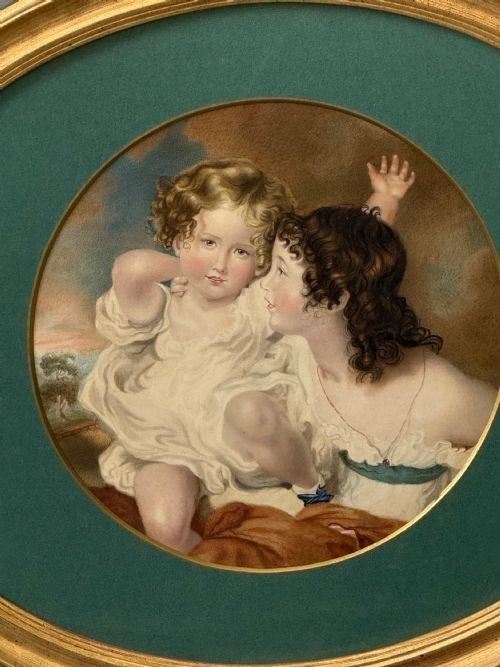
One young subject shares the frame with a favourite doll, preserving a childhood companion across the centuries.
Assessing quality and execution
Execution depends on the precision of the brushwork and the psychological depth of the facial expression. Finer examples capture textiles, lace collars, and coral beads with remarkable clarity despite the small scale.
The integrity of the original frame and glass mounting contributes significantly to the piece. Contemporary mountings or well-preserved ebonised timber and brass elements maintain the historical context of the artwork.
Charles Shirreff·Susie Lassam·Henry Jacob Burch·W Mason·Patrick Wybrant
The Watercolour Miniature Portrait Glossary
- Ebonised wood
- Timber stained or treated to imitate dense ebony, frequently utilised for dark contrasting frames.
- Gouache
- An opaque watercolour medium that provides solid colour application and highlights in detailed miniature work.
- Gilt metal
- Base metal treated with a gold-coloured finish, common in small frames and brooch mounts.
- Support
- The physical foundation material, such as paper or card, upon which the miniature painting is executed.
Frequently Asked Questions
How were watercolour miniature portraits displayed?
These small portraits were frequently hung on walls in tight groupings within parlours or carried on the person. Many featured integrated loops or stands for tabletop placement.
Others functioned as jewellery, set into brooches or lockets worn close to the heart to remember family members.
How do you date a miniature portrait?
Dating relies heavily on the style of clothing, hairstyles, and the specific cut of a collar or cravat. Hairstyles and headwear change rapidly across the Georgian and Victorian eras.
Frame styles and mounting techniques also provide firm chronological clues, matching the shifts from timber surrounds to ornate metal lockets.
Are these portraits signed by artists?
Many surviving pieces remain unsigned, representing anonymous work from regional English and French schools. These are attributed through style and period context rather than a signature.
Signed works do exist, identifying professional painters and dedicated miniaturists who recorded notable individuals and local families.
What materials sit beneath the glass?
The primary medium is watercolour pigment, occasionally enhanced with gouache for opaque highlights or pastel for soft facial tones. The support surface is typically paper, card, or prepared board.
Some unusual examples incorporate delicate textile embroidery alongside the painted details to render costumes or hair.