
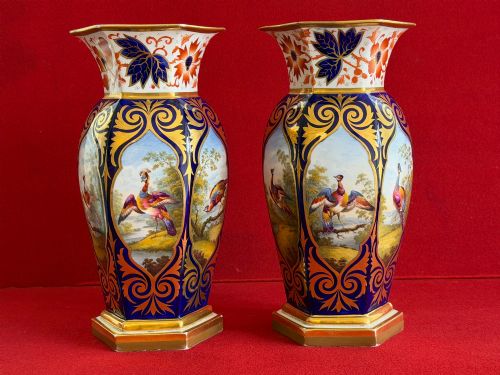
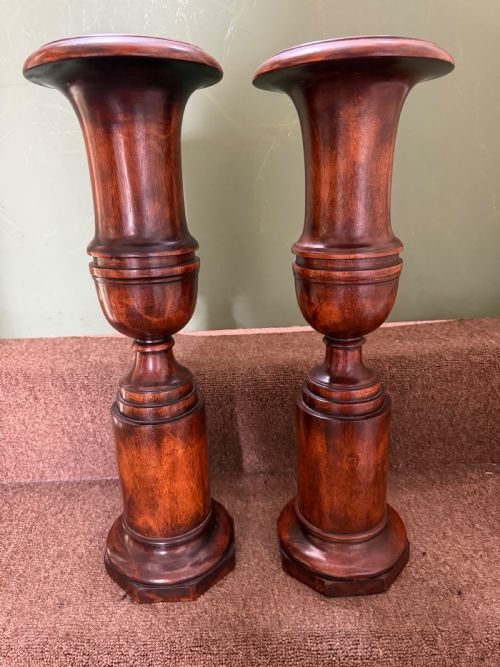
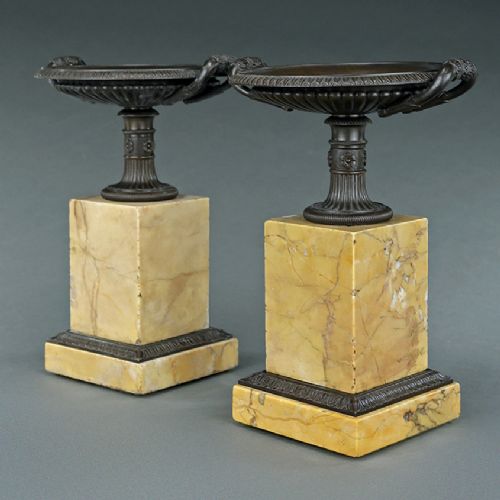
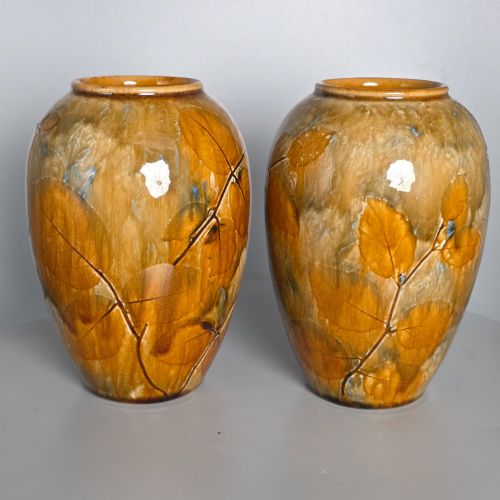
Pair of Mantel Urns
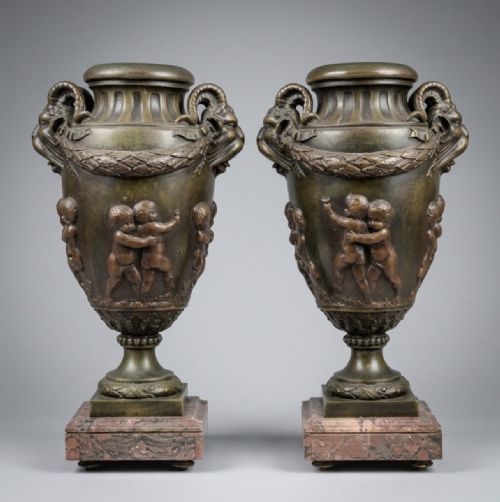
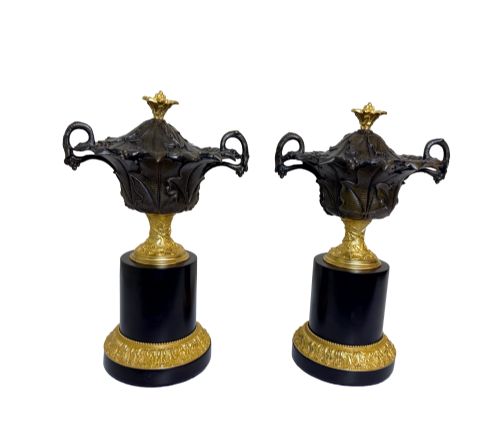
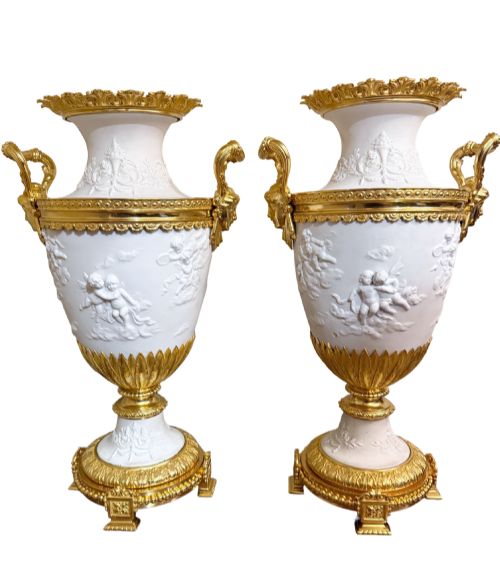
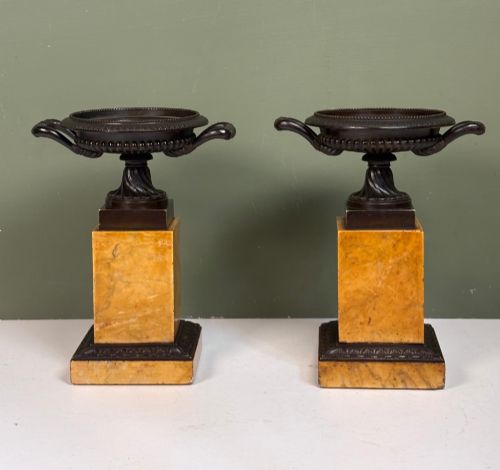
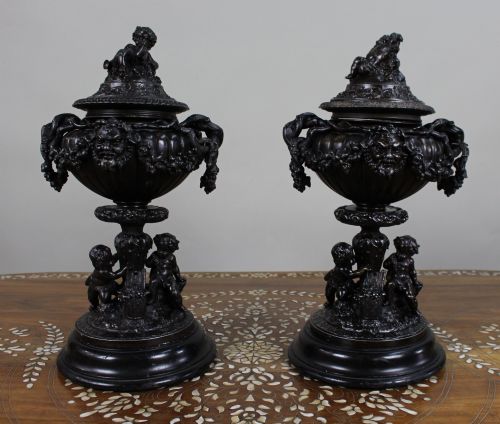
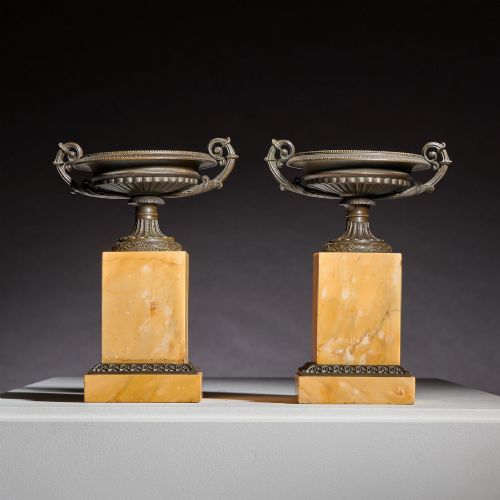
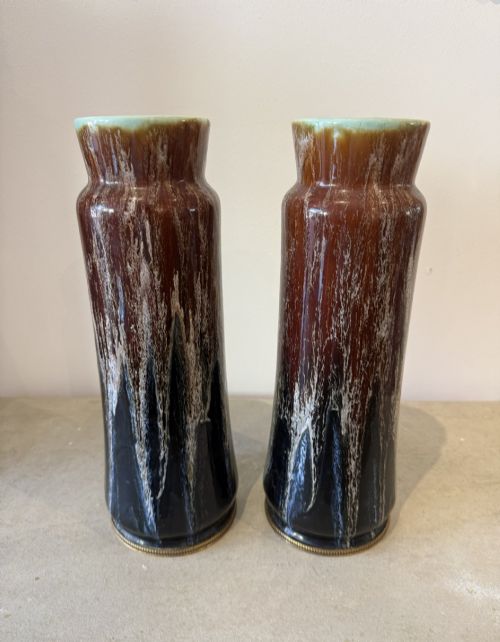
These pair of mantel urns bring sculptural symmetry to a room, crafted from bronze, marble, and porcelain to anchor a chimneypiece.
Pair of Mantel Urns
A pair of mantel urns comprises matched decorative vessels placed symmetrically upon a fireplace mantelpiece, shelf, or sideboard. These objects originate largely from the nineteenth century, drawing upon classical forms and revival aesthetics.
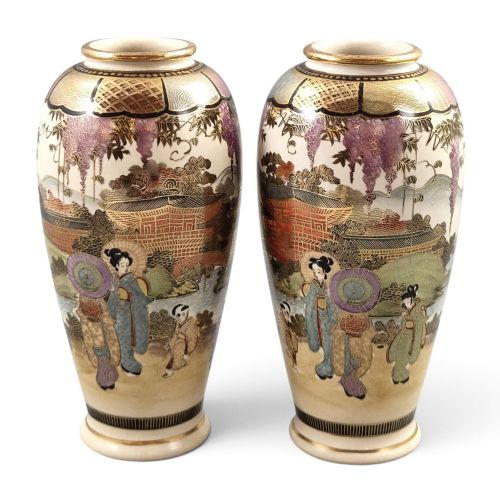
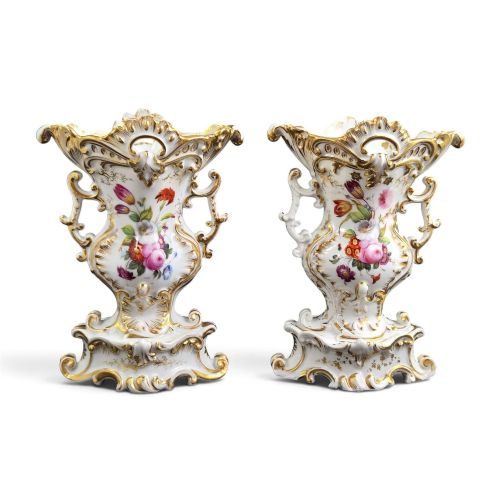
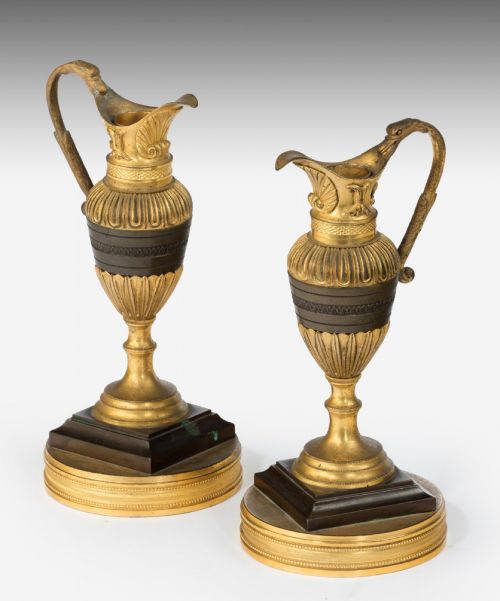
The selections available here range from French gilt bronze and white onyx pedestals to Japanese Satsuma and Chinese porcelain vessels. Many pieces reflect Neoclassical, French Empire, and Victorian tastes, often functioning independently or alongside matching clock garnitures.
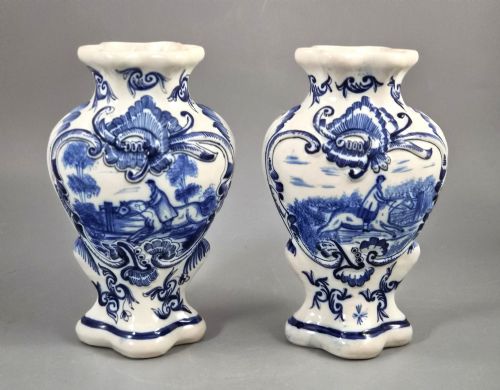
Buyers encounter grand tour bronzes, faience earthenware, and cast spelter urns mounted on marble bases. Each matched pairing provides balanced ornamentation designed to command attention in a formal interior.
How they were made
Makers utilised cast bronze, brass, and spelter, frequently combining metalwork with carved white marble, onyx, or Siena marble bases. Ormolu and gold leaf were applied to highlight intricate surface details on metal mounts.
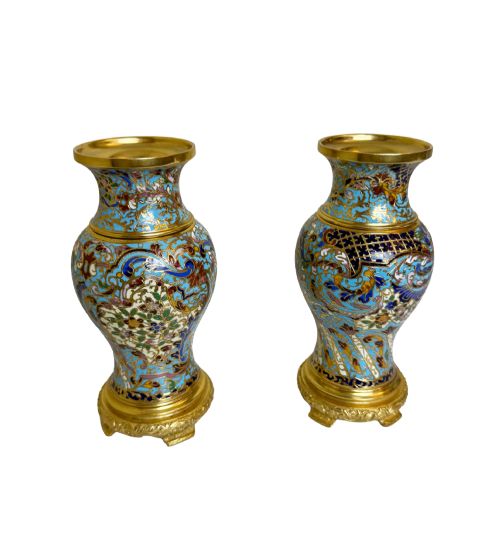
Ceramic examples combine porcelain and faience bodies decorated with hand-painted enamels, gilding, and copper-wire cloisonne work. Skilled artisans employed turning, casting, and hand-finishing techniques to create symmetrical companion pieces.
What varies in quality
The refinement of the casting and chiselling separates standard decorative pieces from exceptional works, particularly in bronze and gilt metal mounts where crisp chasing defines the foliage and figures. Superior porcelain versions exhibit precise hand-painted detail and heavier, more resonant ceramic bodies.
Material selection dictates overall caliber, with solid marble bases and heavy patinated bronze commanding greater presence than lighter spelter alternatives. The harmony and completeness of the matching pair, including original gilding and undamaged mounts, determine the integrity of the ensemble.
Flight Barr And Barr·Royal Doulton·Jacob Petit·Sevres·Fourmaintraux Courquin·Boch Freres·Royal Worcester·Manpei
The Pair of Mantel Urns Glossary
- Ormolu
- Gilded bronze, where finely ground gold is amalgamated with mercury and applied to a bronze base through heat.
- Garniture
- A set of matched ornamental vessels, typically comprising a central clock flanked by a pair of urns or vases.
- Campana urn
- A bell-shaped vessel with a flared rim and footed base, derived from ancient Roman pottery forms.
- Tazza
- A shallow saucer-like cup or vase mounted upon a stem and foot, frequently cast in bronze or carved from marble.
- Champleve
- An enamelling technique where troughs are dug into a metal surface and filled with vitreous paste before firing.
Pair of Mantel Urns: Frequently Asked Questions
How were pair of mantel urns used?
These vessels served primarily as decorative ornaments placed symmetrically on a mantelpiece, often framing a central clock or mirror.
In grand nineteenth-century interiors, they added architectural gravity and reflected the classical tastes of the household.
Are these urns waterproof for flowers?
Most antique metal and heavy stone urns were designed strictly as decorative display objects rather than functional vases for water.
Ceramic versions can hold dried stems, but care should be taken to protect antique interiors from moisture.
How do I style them on a mantel?
Place the matched pair at either end of a mantel shelf to create visual balance and frame the hearth below.
They pair effectively with overmantel mirrors or alongside matching garniture clocks from the same period.
How do I identify the period of an urn?
Look to the combination of materials, such as nineteenth-century patinated bronze paired with Siena marble bases or distinct maker marks.
Stylistic cues like Neoclassical swags, Art Nouveau flowing lines, or Meiji period motifs point directly to their era of manufacture.