


Pair of Garden Lions
These heavy pair of garden lions bring classical presence to grounds and entrances, standing guard in stone, terracotta and cast iron.
Pair of Garden Lions
A pair of garden lions acts as monumental guards for gates, steps and entrances, drawing on classical and neoclassical traditions. Buyers searching for a pair of garden lions will encounter imposing figures designed to sit on plinths or directly on the ground.
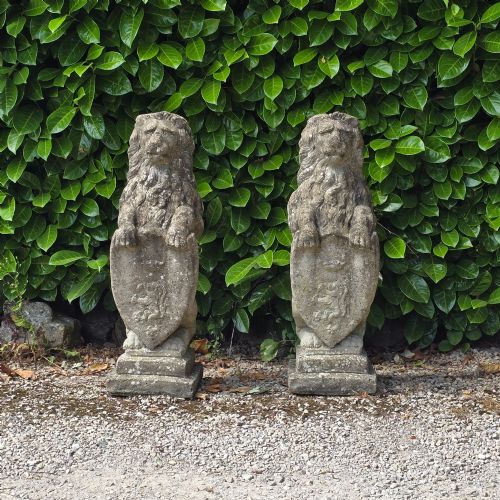
The selections span the nineteenth century up through the interwar period, including Victorian examples alongside Italianate and English country house interpretations. Forms range from seated guardians and standing beasts to those adapted for architectural placement on walls and gates.
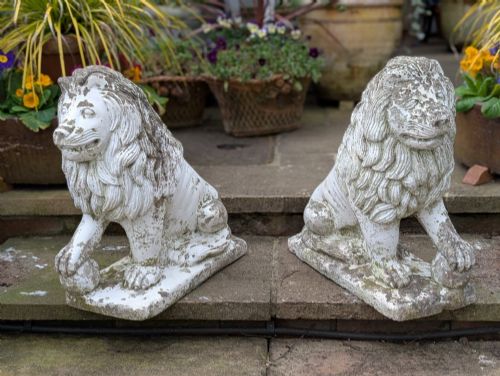
Origin points stretch from Britain and France to Italy and China, utilising traditional motifs like the Medici posture. These sculptures serve both decorative and symbolic roles in formal and informal gardens alike.
How they were made
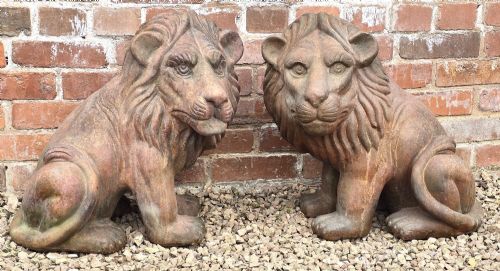
Makers shaped these sculptures from enduring outdoor materials including terracotta, reconstituted stone, natural stone, cast iron and marble. Terracotta examples often involve hand sculpting or moulding in buff clay, while stone varieties are carved or cast.
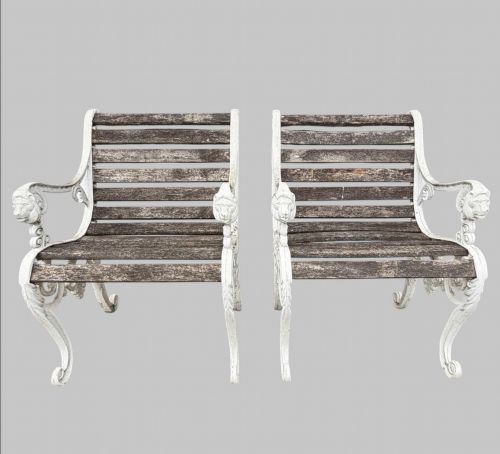
Cast iron production utilises metal moulds to create robust figures and associated items like armchairs or urns. Weathering processes and occasional paint applications complete the surface treatment of these exterior ornaments.
Listed forms extend beyond statues to include garden armchairs, urns, plant stands and gate finials.
What varies in quality
Quality rests in the anatomical proportion and the crispness of the carving or casting, separating spirited sculptural work from static reproduction. Scale dictates presence, with massive figures and substantial plinths commanding greater architectural authority.
The integrity of the material, whether heavy terracotta, carved marble or solid stone, determines how gracefully the sculpture ages outdoors. Surface weathering adds genuine character when it arises from age rather than artificial distress.
Hurlford Kilmarnock
The Pair of Garden Lions Glossary
- Medici Lions
- A pair of symmetrical lions modeled after the antique marble sculptures in Florence, typically with one paw resting on a sphere. This classical pose remains a benchmark for formal garden statuary.
- Terracotta
- Fired clay material valued for its warm earthy tones and capacity to hold sharp sculptural detail. It responds to weathering by developing a rich, porous patina over decades outdoors.
- Reconstituted Stone
- A durable composite material made from crushed stone and cement binders, moulded into classical forms. It offers the weight and appearance of natural stone for garden ornaments.
- Post Finials
- Decorative architectural elements mounted on top of gate piers or boundary walls. These smaller guardian figures mark property entrances and structural terminations.
- Italianate
- A stylistic influence reflecting Renaissance and classical Italian gardens, often characterised by grand scale and theatrical presence. This style informs many nineteenth-century terracotta and marble pieces.
Pair of Garden Lions: Frequently Asked Questions
How do I protect terracotta lions from frost?
Terracotta absorbs moisture which can expand during freezing temperatures and cause surface spalling if drainage is poor.
Elevate the bases slightly off the ground on bricks or feet during winter to prevent moisture absorption from standing water.
Can these garden lions stay outside all year?
Most materials like natural stone, reconstituted stone, cast iron and salt-glazed pottery tolerate outdoor exposure quite well.
Over decades of weather, these surfaces develop a natural patina that enhances the antique character of the sculpture.
How do I tell nineteenth-century figures apart from later pieces?
Nineteenth-century examples often display deeper hand-sculpted tool marks, heavier scale and more porous clay or weathered marble structures.
Twentieth-century iterations frequently utilise reconstituted stone or cleaner casting techniques with uniform surface patination.