
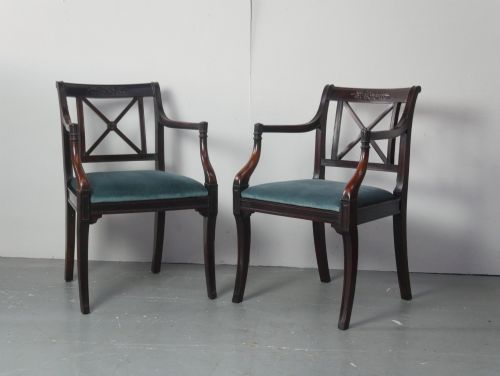
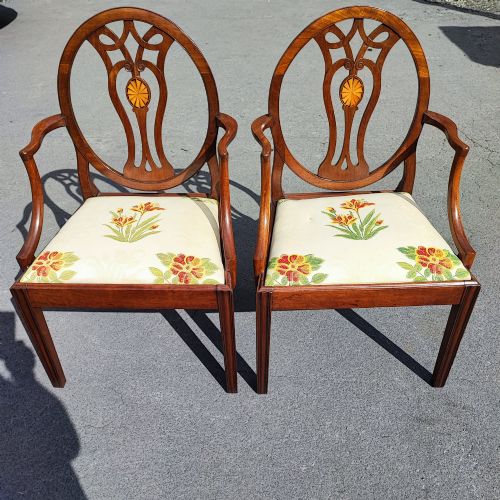
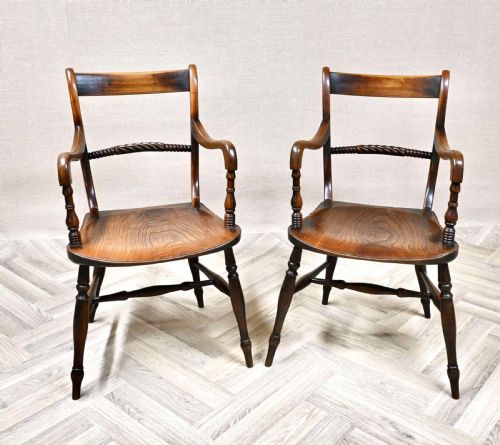
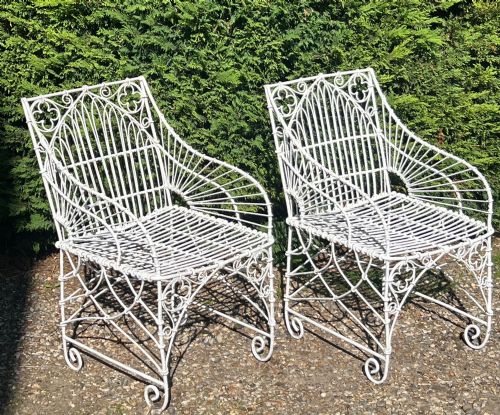
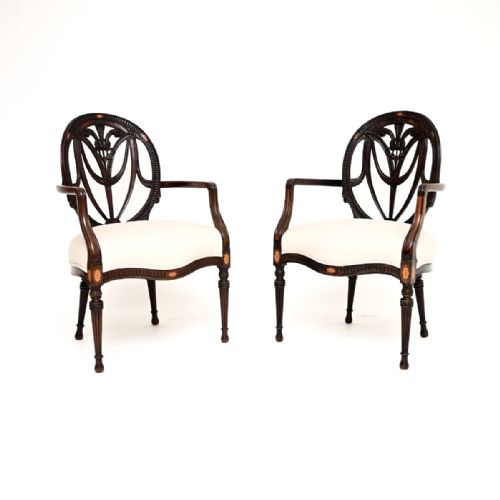
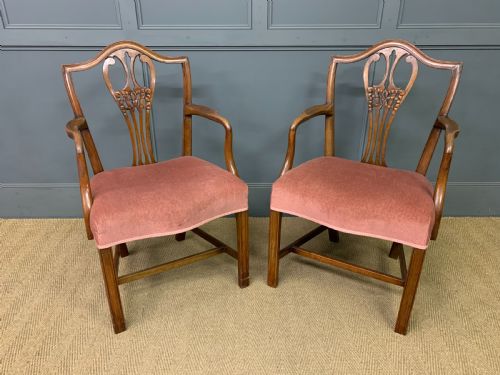
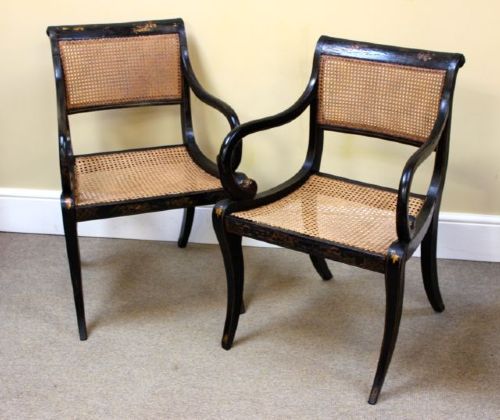
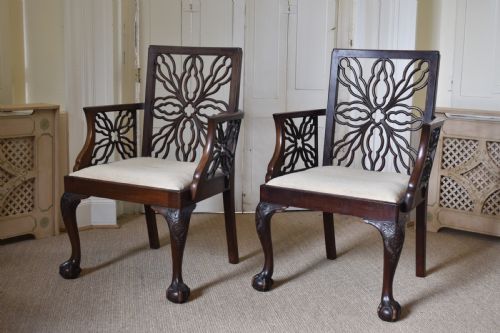
Pair of Dining Armchairs
A pair of dining armchairs brings symmetry to the table, offering supportive elbow rests at each end for family meals or long dinners.
Pair of Dining Armchairs
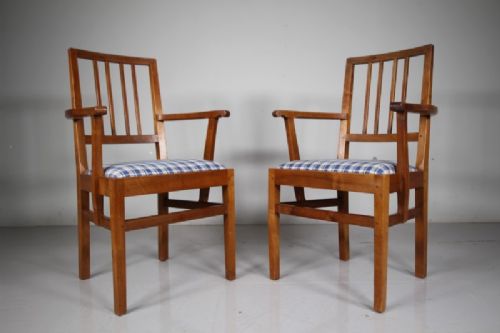
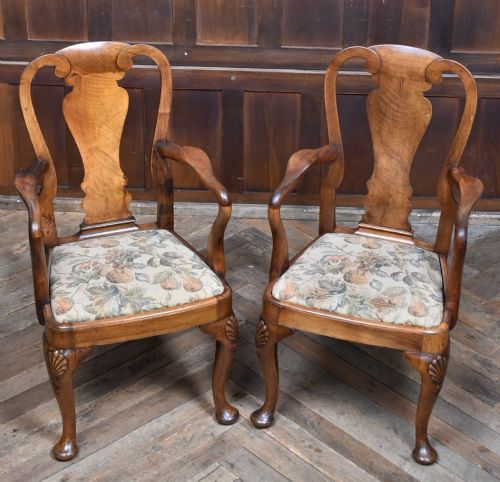
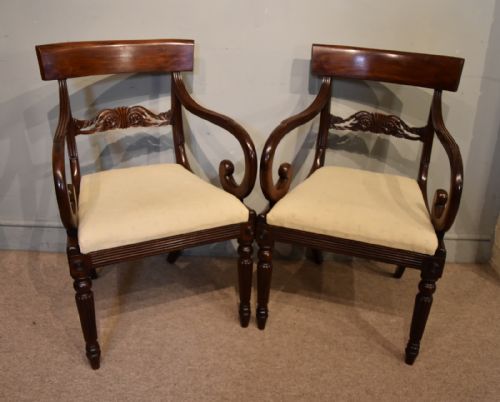
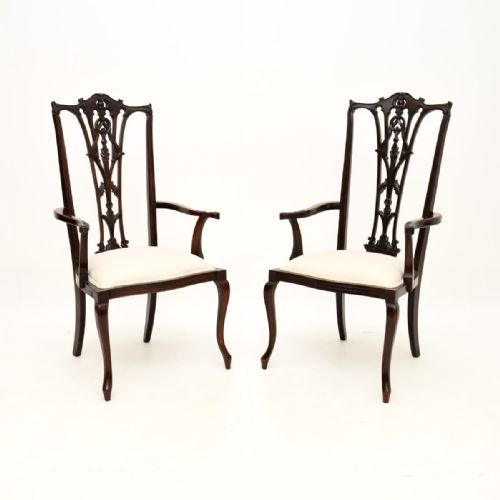
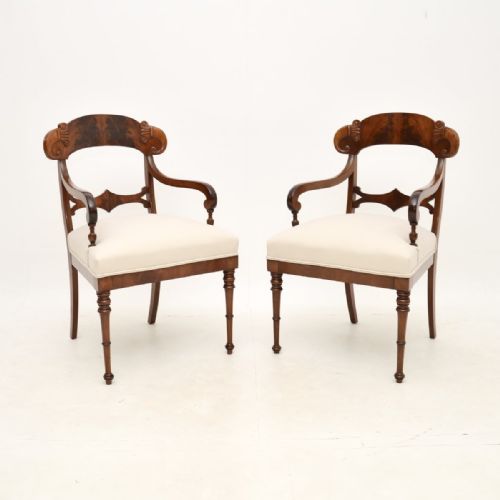
When you search for a pair of dining armchairs, you encounter seated furniture designed to sit at the head and foot of a dining table or to match a set of smaller side chairs. These pieces frequently appear in mahogany, oak, and elm, originating from periods spanning the Georgian era through the early twentieth century.
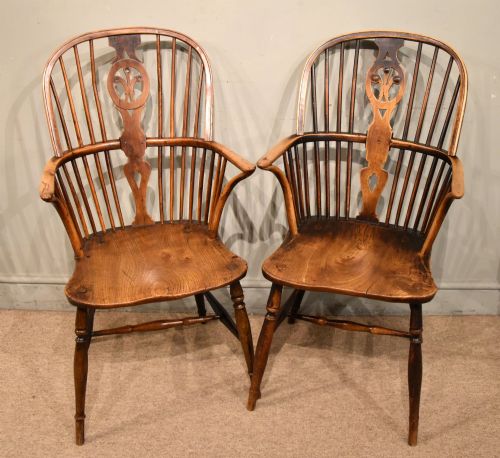
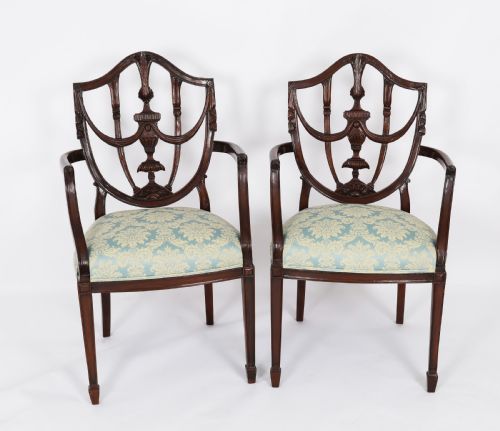
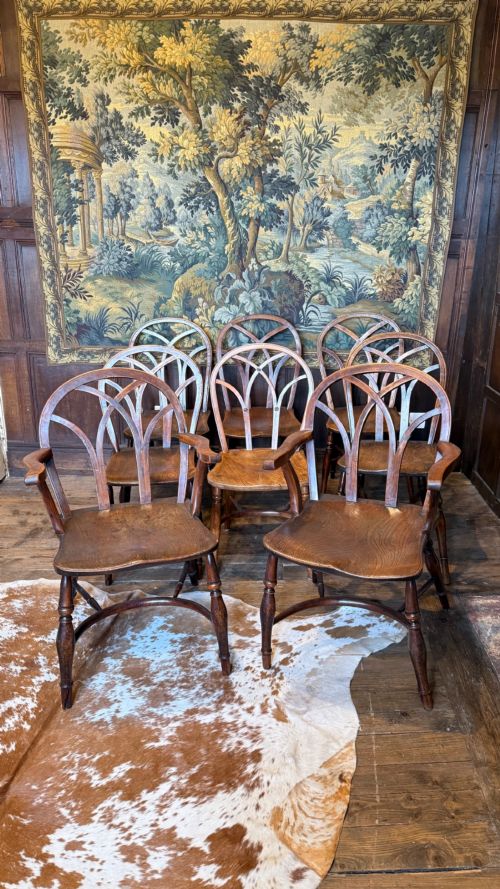
The selection on this page centres on sturdy timber carvers and open armchairs. You will regularly find formal mahogany styles influenced by Chippendale and Hepplewhite alongside vernacular Windsor designs in elm and ash.
How they were made
Cabinetmakers constructed these frames using dense hardwoods like mahogany and oak, often joining the components with mortise and tenon joints to withstand daily dining use. Country vernacular pieces relied on turned elm or ash spindles, utilising steam-bending techniques for curved backs and armbows.
Upholstered versions feature drop-in seats or webbed foundations covered in leather, velvet, or woven fabric, sometimes finished with brass studding along the borders.
Several Windsor armchairs retain generations of old wax polish deep within their elm grain from farmhouse kitchens.
What varies in quality
The distinction between ordinary and exceptional pairs lies in the crispness of carved details, such as ribbon-backs, acanthus leaves, or reeded legs executed by skilled hands. Timber selection also dictates value, where finely figured mahogany grain or carefully matched yew and elm elevate the piece.
Proportion and structural integrity define the higher tier, ensuring the arms sit at a comfortable height relative to the seat without compromising the balance of the frame.
Edward Barnsley·Heals·Mouseman·Gillows
The Pair of Dining Armchairs Glossary
- Carver chair
- An armchair designed to match a set of smaller dining chairs, traditionally placed at the ends of the table.
- Elbow chair
- An alternative term for an armchair, referencing the supportive rests for the arms.
- Windsor chair
- A wooden seating form constructed with a solid sculpted seat into which the legs, back spindles, and arms are separately wedged and joined.
- Bar-back
- A chair design featuring a horizontal wooden slat or splat across the upper backrest, common during the Regency period.
- Shield-back
- A graceful chair back shaped in the outline of a heraldic shield, popularised during the late eighteenth century.
Pair of Dining Armchairs: Frequently Asked Questions
How do I use armchairs with side chairs?
Place the pair of armchairs at the two head positions of your dining table to anchor the arrangement. Use matching or complementary side chairs along the longer flanks to complete the setting.
This traditional placement creates a balanced look and provides comfortable seating for hosts or guests of honour.
Will these armchairs fit my modern table?
Measure the height of your table apron against the arm height of the chairs to ensure they slide underneath when pushed in. Many antique dining armchairs have lower arms designed specifically to clear standard table edges.
Checking these dimensions prevents clearance issues in tighter dining spaces.
How do I care for antique leather seats?
Maintain leather upholstery by dusting gently with a dry cloth and applying a neutral leather balm periodically to prevent drying. Avoid placing the chairs near direct heat sources or strong sunlight.
Proper conditioning keeps the material supple and preserves the original finish.
How can I tell a Georgian chair from a revival piece?
Examine the timber underneath and the joinery methods used inside the seat frame. Georgian pieces show period-specific tool marks and timber shrinkage consistent with age.
Revival pieces, such as those from the Edwardian era, often feature cleaner machine-cut joints and lighter internal woods.