






Pair Glass Urns
Pair glass urns are matching ornamental vessels that bring symmetry and period character to a mantelpiece or side table.
Pair Glass Urns
When you search for pair glass urns, you encounter matching decorative vessels spanning the nineteenth and early twentieth centuries. These objects primarily function as ornamental centerpieces rather than functional flower containers, often featuring lids and decorative stands.
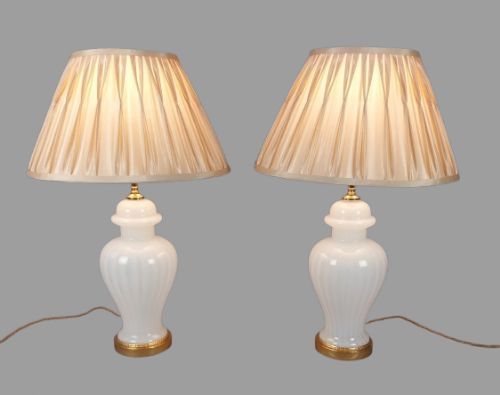
The selection on this page demonstrates various forms, including lidded jars, sweetmeat containers, and classical ewers adapted into lamps. Victorian examples sit alongside Edwardian, Art Deco, and Neoclassical iterations, reflecting changing interior tastes across the decades.
Most pieces date from the nineteenth century, encompassing Victorian production alongside earlier George III revivals and later Edwardian designs. Their matching nature makes them suitable for balancing mantelpieces or flanking larger mirrors and furniture.
How they were made
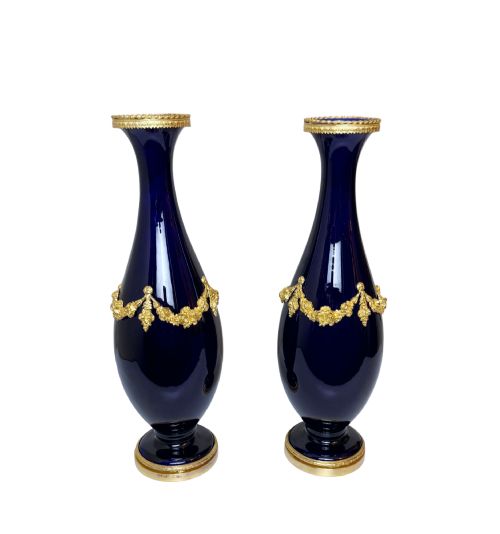
Glass production relies on traditional blowing and moulding techniques, utilising materials such as lead crystal, opaline, cobalt, and peachblow glass. Makers achieved varied hues by adding metallic oxides to the molten batch during manufacturing.
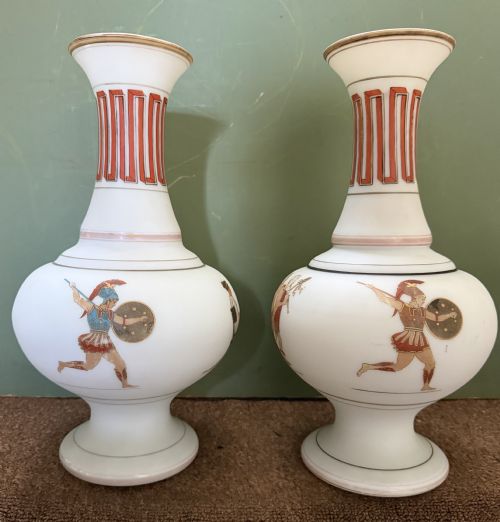
Surface decoration frequently involves wheel-cutting, acid-etching, and enamelling, sometimes paired with giltwood, gesso, or ormolu mounts. Certain vessels incorporate decalcomania transfers or hand-painted classical scenes to enhance the exterior finish.
Pair Glass Urns Retail Price Guide 2026
Typical asking prices for pair glass urns among the pieces listed under this phrase on Sellingantiques today, from the lower quarter to the upper quarter. They describe what is for sale here now, not the wider market.
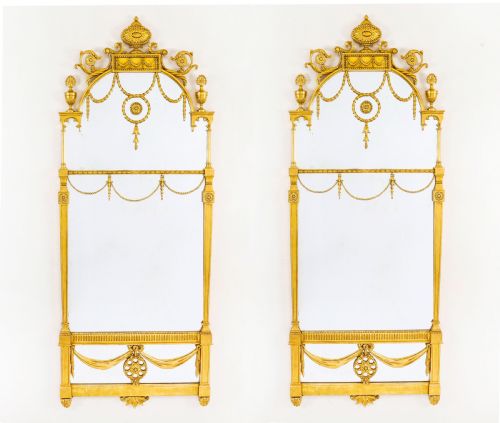
The documented materials include cobalt glass, peachblow, and enamel, alongside giltwood mirror frames and fabric shades.
What varies in quality
Quality rests upon the crispness of the glass-cutting, the weight of the metal mounts, and the precision of any hand-applied gilding or enamel work. Heavy lead crystal exhibits superior clarity and light refraction compared to standard moulded glass.
The integrity of the pair remains central, as matching depth of colour and identical proportions distinguish superior sets from assembled companions. Surviving original lids and undamaged metal fittings also elevate the standard of the piece.
Richardson·Harrach
The Pair Glass Urns Glossary
- Opaline glass
- An opaque, translucent glass developed in pale shades of white, blue, or green during the nineteenth century. It often imitates porcelain while retaining a soft lustre.
- Peachblow glass
- A Victorian art glass type that shades from a pale peach colour to a deeper red or pink. It gained popularity in the late nineteenth century for decorative table wares.
- Sweetmeat jar
- A covered glass vessel originally intended for holding confectionery or sweet preserves. They frequently feature decorative cutting and pedestal bases.
- Ormolu
- Gilded bronze mounts applied to the rims, bases, or handles of decorative glass objects. This French technique adds metallic contrast to the transparent material.
- Decalcomania
- A transfer decoration technique used on nineteenth-century glass and ceramics. It involves applying printed images to the surface and sealing them with varnish.
Pair Glass Urns: Frequently Asked Questions
What were glass urns used for?
These vessels served primarily as decorative ornaments on mantelpieces, consoles, and sideboards throughout the Victorian and Edwardian periods. Some variations, such as sweetmeat jars, held confectionery, while others functioned purely to display colour and craftsmanship.
Over time, certain urns and ewers were converted into table lamps to suit changing domestic lighting needs. Their matching pairs provided visual balance in formal interior decoration schemes.
How do I date a pair of glass urns?
Dating relies upon observing the manufacturing techniques, glass colours, and stylistic motifs present in the piece. Victorian examples often display deep cut patterns or opaque opaline bodies, while later Edwardian and Art Deco pieces show simplified geometric lines.
Associated metal mounts, such as ormolu trim or gilt bronze, also correspond to the prevailing design tastes of the nineteenth or early twentieth century. Comparing the pontil mark on the base provides further clues regarding production methods.
Are all glass urns matched pairs?
Most items offered under this description were manufactured as matched pairs to sit symmetrically on either side of a fireplace or mirror. Artisans blew and cut the vessels concurrently to ensure uniform dimensions and colour saturation.
Buyers should examine both pieces closely to confirm identical heights, base diameters, and decorative details. Minor hand-blown variations can occur, but overall proportions must align.
How do I care for antique glass urns?
Antique glass requires gentle cleaning with a soft, dry cloth to remove dust from the surface and intricate cuts. Avoid immersing pieces with painted decoration, enamel work, or gilt mounts in water, as moisture can damage fragile finishes.
Placement should avoid direct sunlight and areas subject to sudden temperature fluctuations. Stable shelving prevents accidental tipping, protecting both the glass vessels and any attached metal components.