
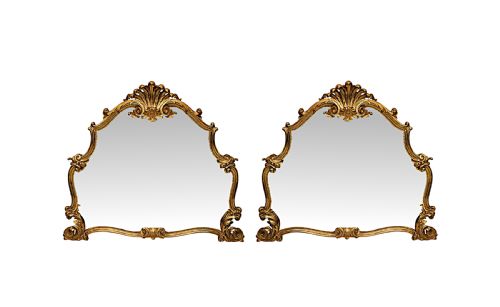
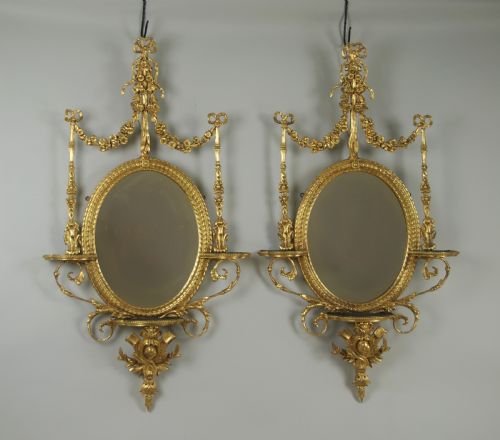
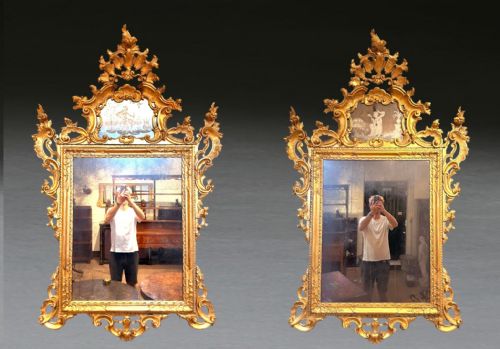
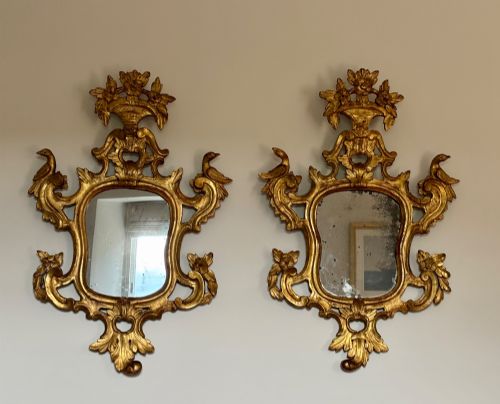
Pair Gilded Wall Mirrors
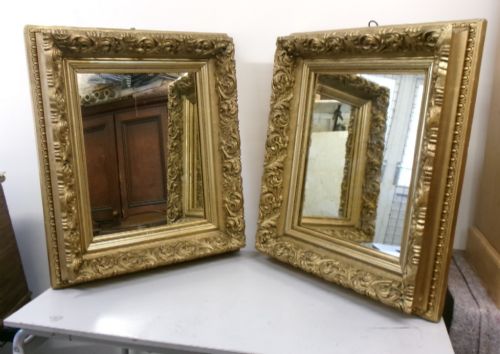
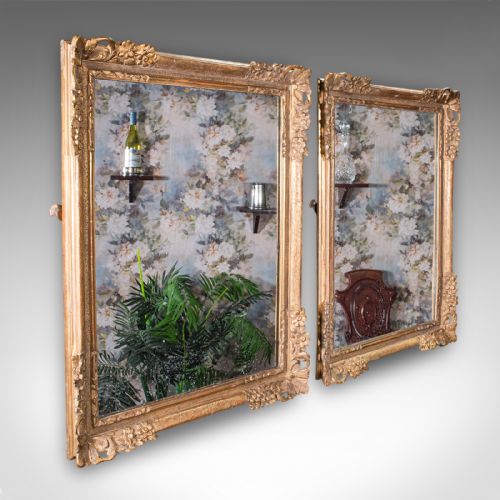
Pair gilded wall mirrors bring symmetry and reflected light to a room, drawing the eye with their polished surfaces and ornate frames.
Pair Gilded Wall Mirrors
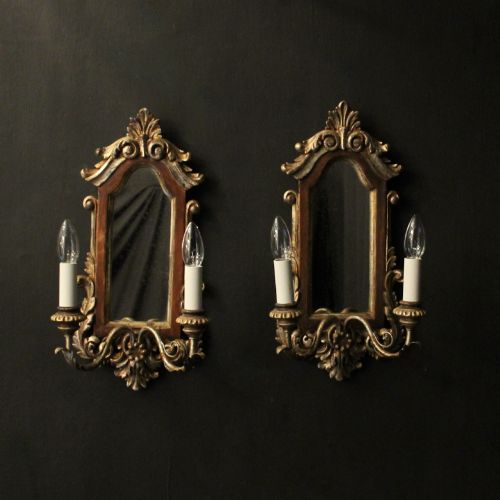
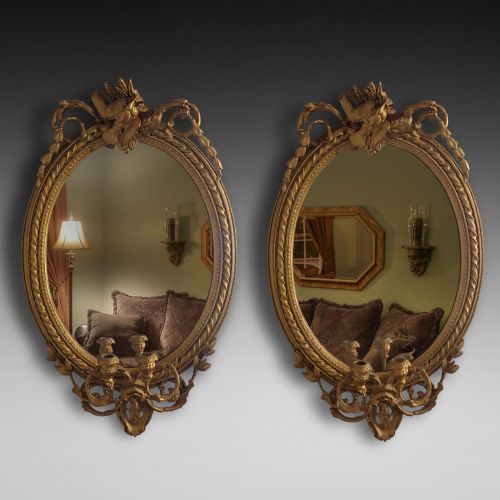
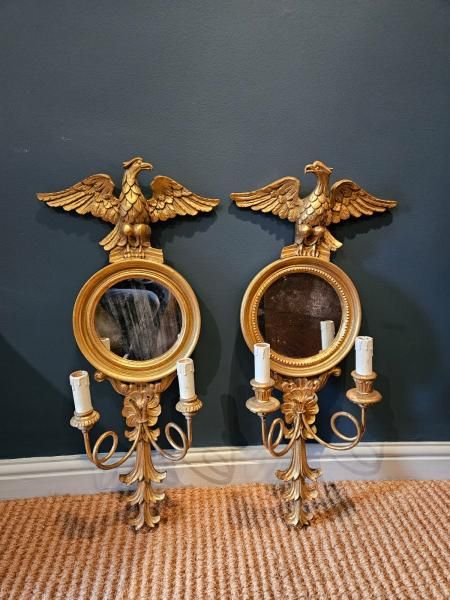
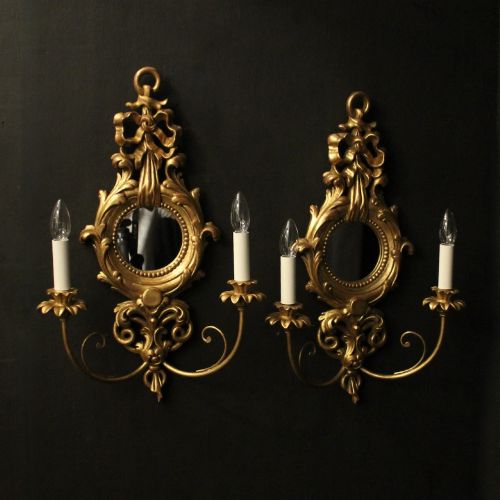
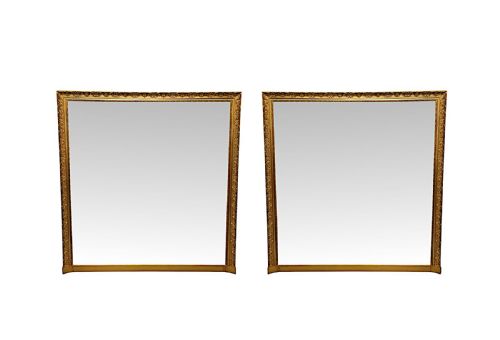
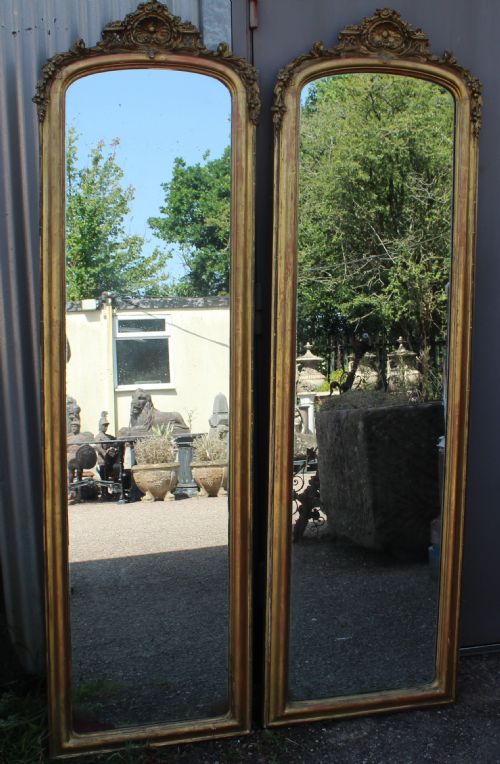
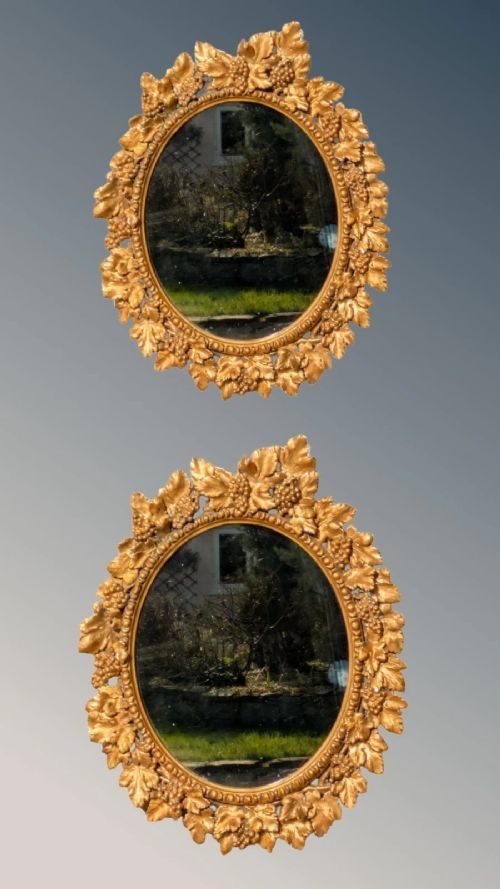
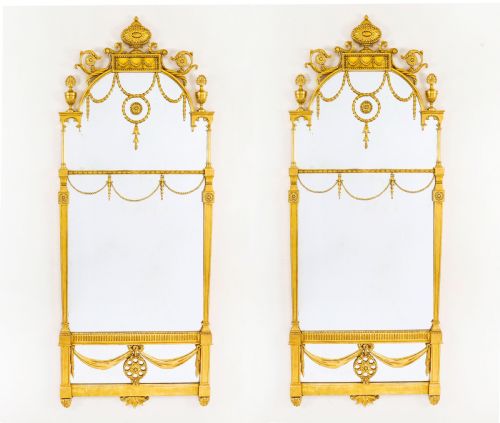
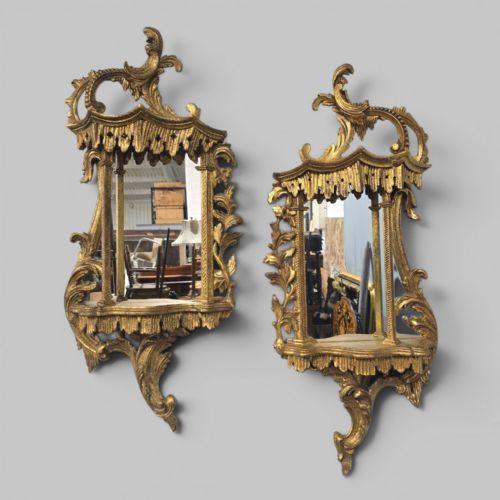
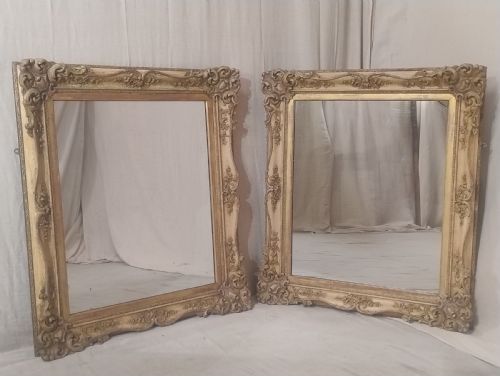
A buyer seeking pair gilded wall mirrors encounters matching twin reflective pieces designed to hang together, often originating from the eighteenth, nineteenth, and early twentieth centuries. These objects take various forms including pier mirrors, overmantels, girandoles with candle arms, and smaller oval or rectangular wall hanging formats.
The selection ranges from neoclassical and regency designs to elaborate rococo revival and baroque styles, drawing upon English, French, and Italian origins. Many examples utilise carved wooden frames or moulded compositions finished in gold leaf or gilt paint.
Most pieces seen here reflect formal interior decorative traditions where symmetry dominated room design, placing matching looking glasses between windows or above mantelpieces.
How they were made
Makers constructed the structural frames of these mirrors using timber such as pine or walnut, upon which they applied layers of gesso to build up intricate carved details like vine leaves and scrollwork. Artisans then applied thin sheets of gold leaf to the prepared surfaces, often burnishing the metal to achieve a brilliant sheen.
Alternatively, some pieces utilise composition, a moulded mixture of whiting, resin, glue, and linseed oil pressed into decorative motifs while pliable and fixed to the wooden substrate. Glass plates, typically thinner and slightly irregular in historical pieces compared to modern alternatives, were set into the rabbet from behind and secured with backing boards.
Listings span multiple centuries, uniting eighteenth-century Georgian and Venetian work with nineteenth-century Victorian pieces and early twentieth-century revival styles.
What varies in quality
The standard of carving and the crispness of moulded detail set the better examples apart, as skilled artisans produced deeper, more sharply defined foliage and ornament than those working on mass-produced commercial pieces. Water gilding over fine gesso demonstrates a higher level of craftsmanship than simple oil gilding or plain gilt paint applied directly to wood.
The condition and clarity of the original mirror glass also influence the overall character, alongside the structural integrity of the frame joints and the retention of the original backing materials and gilding layers.
The Pair Gilded Wall Mirrors Glossary
- Giltwood
- Wood that has been coated with gold leaf or gilt paint. This material forms the primary structural and decorative framework for the majority of these mirrors.
- Gesso
- A plaster-like mixture applied to wooden frames to create a smooth surface for carving and gilding. Artisans use this substance to build up low relief ornamentation.
- Girandole
- A wall mirror fitted with one or more candle sconces attached to the frame. These fixtures allowed the polished glass to multiply the illumination from candles in a room.
- Pier glass
- A tall mirror designed specifically to hang on the wall space between windows, known as the pier. These pieces frequently match console tables placed below them.
- Water gilding
- A traditional technique where gold leaf is applied to a wet bole base and subsequently burnished to a high gloss. This method produces a deeper and more lustrous finish than oil gilding.
Pair Gilded Wall Mirrors: Frequently Asked Questions
Where should I hang pair gilded wall mirrors?
These pieces traditionally hang in matching positions on opposite walls, flanking a fireplace, or placed symmetrically between windows to balance natural light across the space. Placing them opposite a light source maximises their ability to brighten a room.
Ensure the wall fixings are robust enough to support the combined weight of the wooden frames and glass plates, particularly with larger nineteenth-century examples.
How do I clean antique gilt frames?
Dust the carved surfaces gently using a soft, dry brush to prevent accumulation in the recesses of the gesso or wood carving. Avoid liquid cleaners and chemical solvents, which can strip away delicate gold leaf or damage the underlying composition.
Professional conservation is recommended if the gilding shows active flaking or requires stabilization to prevent further loss of the historic surface.
Are original mirror plates always clear?
Historical mirror glass frequently displays characteristic foxing, minor silver loss, and small blemishes resulting from age and atmospheric exposure. These traits are normal and indicate genuine period manufacture rather than modern replacement glass.
Buyers preferring a pristine reflection should check whether the plates are original or later replacements, as many antique mirrors retain their early glass.
How do I tell rococo revival from neoclassical styles?
Rococo revival frames exhibit asymmetrical C-scrolls, shell motifs, and naturalistic foliage like vine leaves arranged in flowing, dynamic compositions. Neoclassical examples feature strict symmetry, straight lines, urns, and classical architectural motifs.
Examining the overall silhouette and decorative vocabulary helps identify the specific design influence and the period in which the mirror was produced.