



Victorian Giltwood Mirror Pair
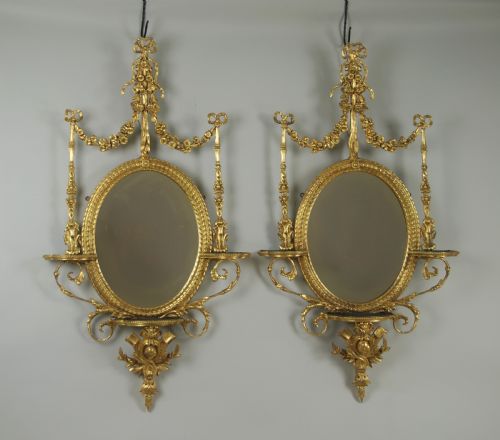
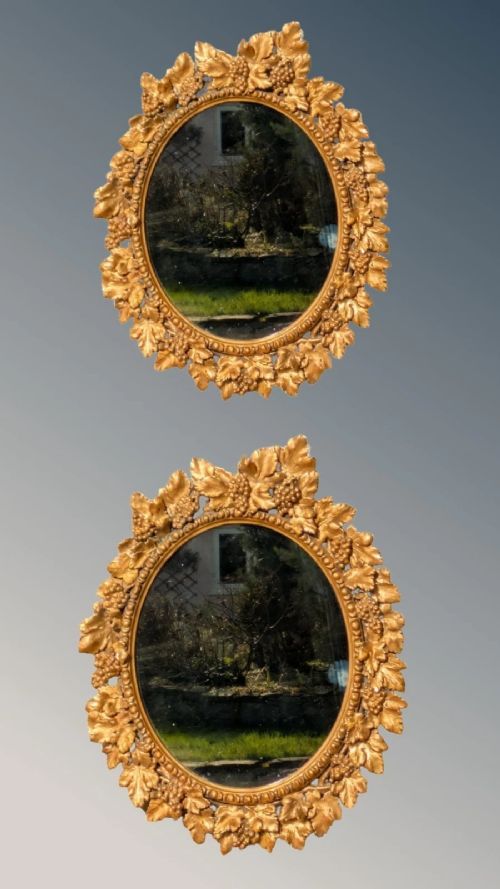
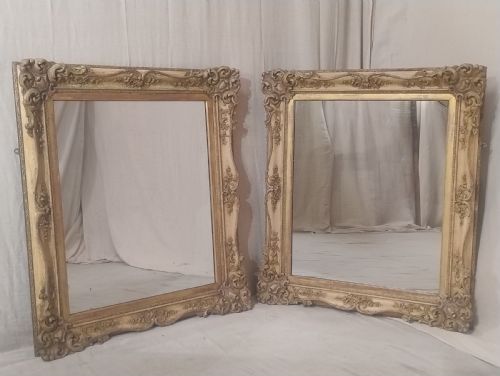
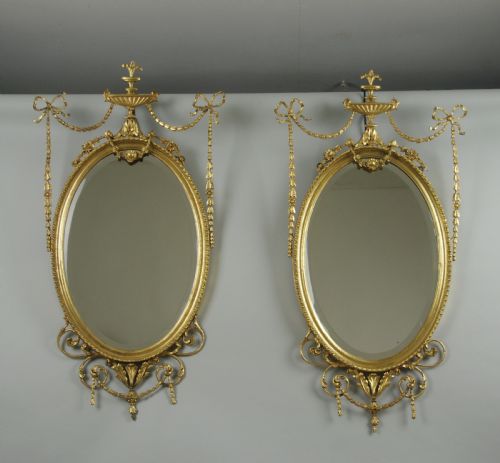
These matching wall pieces deliver balanced decorative symmetry, offering the classic warmth of a victorian giltwood mirror pair to brighten a room.
Victorian Giltwood Mirror Pair
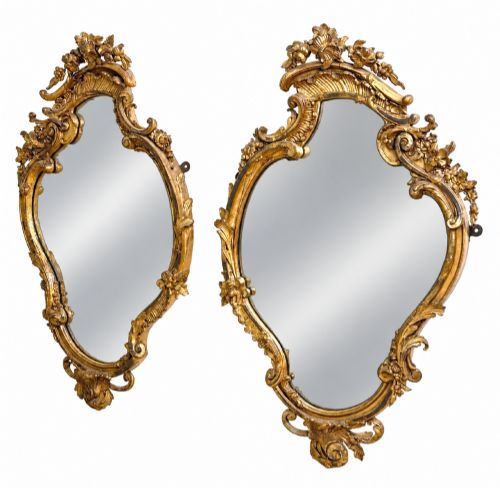
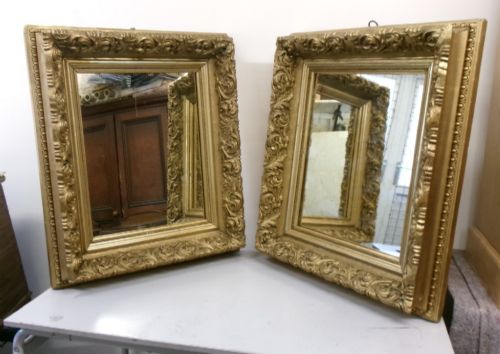
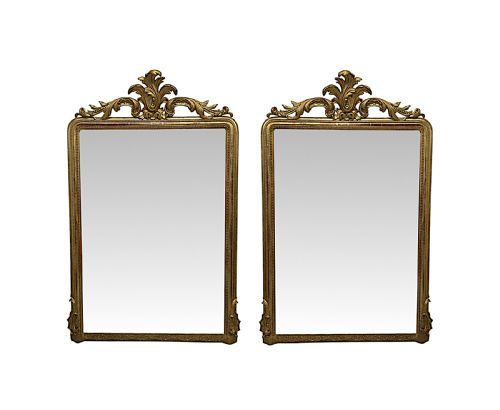
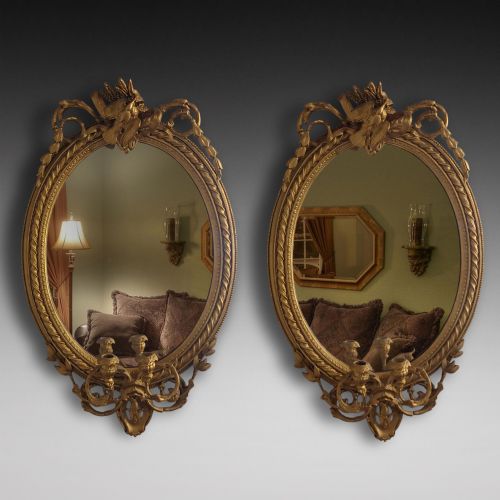
A victorian giltwood mirror pair brings matched reflective elegance and period character to domestic spaces. These matching items typically take the form of wall mirrors, overmantel mirrors, or girandoles designed to hang in symmetrical balance.
The selections on this page span the nineteenth century, including specific years like 1850, 1870, 1880, and 1890 alongside broader Victorian eras. Common shapes include oval formats, cartouche forms, and rectilinear frames equipped with display brackets or shelves.
Stylistic influences range widely across the items shown, incorporating Rococo Revival, French Chateau, Chippendale Revival, and Adam style designs. Buyers meet everything from carved pier glass mirrors to mirrored sconces intended for formal interiors.
Materials and construction methods
Makers built these frames using timber foundations enriched with gesso, plaster, and composition ornament. Artisans carved intricate details into the wood or moulded composition elements to achieve high relief before finishing.
Surface gilding involved applying gold leaf or gilt paint over the prepared base layers to create a luminous metallic sheen. Mirror glass was then fitted securely into the completed frames to complete the reflective surface.
Victorian Giltwood Mirror Pair Retail Price Guide 2026
Typical asking prices for victorian giltwood mirror pair among the pieces listed under this phrase on Sellingantiques today, from the lower quarter to the upper quarter. They describe what is for sale here now, not the wider market.
Listings feature items dated across the nineteenth century, including specific years like 1850, 1870, 1880, and 1890 alongside broader Victorian eras.
Assessing quality in matched mirror sets
The crispness of the carved or moulded ornamentation dictates visual success, where sharply defined foliage and scrollwork separate superior examples from softer castings. Depth and relief in the frame construction add dimension that holds the eye across a wall.
The integrity of the underlying gesso and the warmth of the original gilding surface determine authenticity and aesthetic appeal. Uniformity between both pieces in a matched set remains crucial, ensuring proportional harmony when hung together.
The Victorian Giltwood Mirror Pair Glossary
- Giltwood
- Wood that has been coated with gold leaf or metal leaf. This surface treatment provides a durable and reflective metallic finish characteristic of nineteenth-century frames.
- Gesso
- A plaster-like mixture applied to wooden frame bases to create a smooth surface for carving and gilding. It allows artisans to shape intricate decorative details.
- Composition
- A moulded mixture of whiting, resin, glue, and oil pressed into ornaments. Makers used this material for repetitive decorative motifs on frames.
- Girandole
- A branched wall mirror fitted with candle sconces. The reflective glass multiplies the candlelight within a room.
- Pier glass
- A tall mirror designed to hang on the wall between windows. These pieces often matched console tables placed underneath.
Victorian Giltwood Mirror Pair: Frequently Asked Questions
Where should I hang a matched mirror pair?
These pieces look best mounted symmetrically on either side of a fireplace, doorway, or large window to create balance.
Ensure they are hung at eye level so the reflective glass opens up the surrounding wall space effectively.
How do I identify a Victorian frame?
Look for characteristic revival styles such as Rococo, Chippendale, or Adam executed within nineteenth-century manufacturing methods.
Examine the construction materials behind the gilding, where gesso and composition layers indicate the period of production.
Can these mirrors be cleaned safely?
Dust the gilded frame gently with a dry, soft brush to avoid disturbing the delicate metallic leaf surface.
Clean the mirror glass using a standard glass cleaner applied to a cloth rather than sprayed directly near the frame.
What styles are common in these sets?
The available selection leans heavily into revival aesthetics, including French Rococo, Italian Florentine, and Chinese Chippendale designs.
These varied stylistic choices reflect the eclectic tastes popular during the nineteenth century.