


Pair English Armchairs
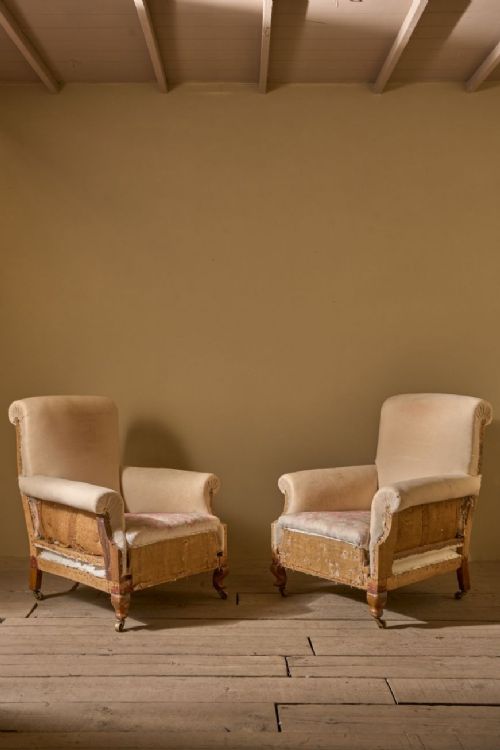
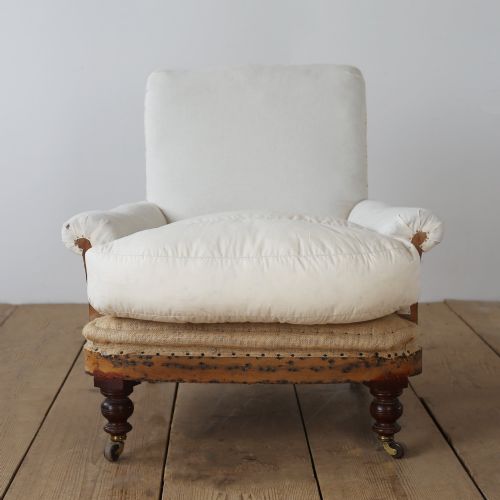
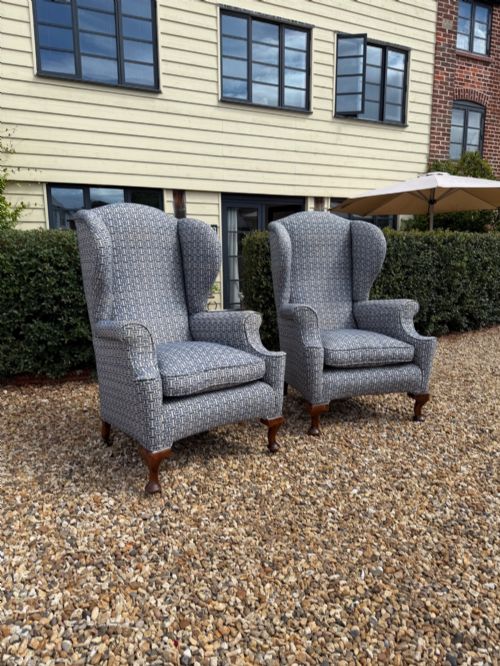
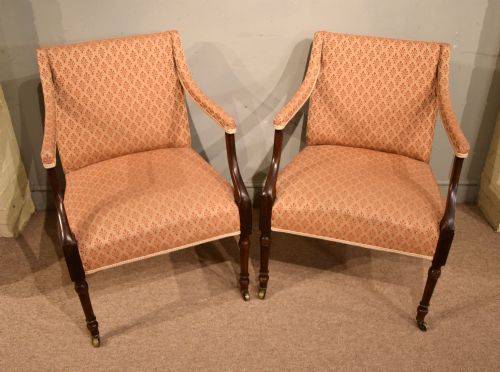
Pair english armchairs anchor a room with symmetry and presence, offering matched seating crafted across centuries of design.
Pair English Armchairs
Pair english armchairs span formal library seating, country house comfort, and vernacular Windsor forms shaped from native timbers.
The selections recorded here range from eighteenth-century Georgian masterpieces to twentieth-century club chairs and lounge suites.
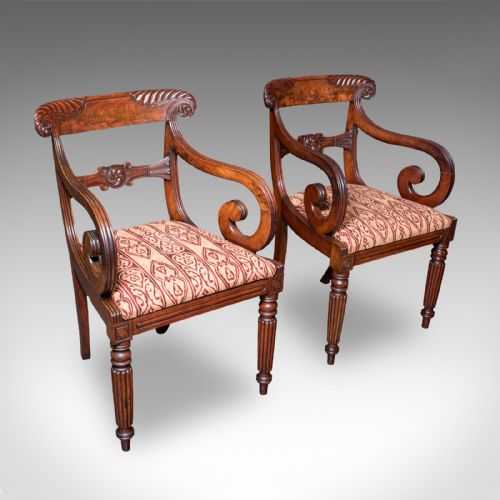
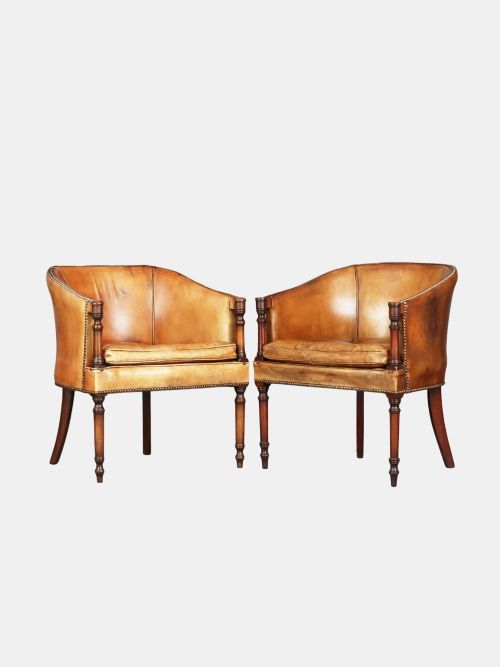
Buyers encounter upholstered low-back library chairs, carved mahogany carvers, and spindle-backed country dining seats in equal measure.
How They Were Made
Traditional framing relies on native hardwoods such as mahogany, walnut, oak, elm, and yew, joined through time-tested cabinetmaking techniques.
Upholstered variants utilise durable leather, heavy ticking, crewelwork, and cane seat inserts supported by internal webbing and stuffing.
Turned components, carved scroll backs, and gilded surfaces reveal the handwork of period workshops across England.
Listings feature eighteenth-century Georgian masterpieces alongside nineteenth-century Windsor forms and twentieth-century club chairs.
What Varies in Quality
Superior examples demonstrate timber selection with striking grain patterns, such as figured yew, burr walnut, or dense mahogany.
The integrity of original frames, uncompromised joinery, and surviving upholstery materials separate exceptional workshop output from standard production.
Proportion, carving depth, and the harmony between matched pairs dictate the standing of individual seating within historical hierarchies.
Howard and Sons·Holland and Sons·Gillows·John Gee·Robert Mouseman Thompson
The Pair English Armchairs Glossary
- Carver chair
- An armchair designed with arms, traditionally used at the head of a dining table or as a single parlour seat.
- Bergère
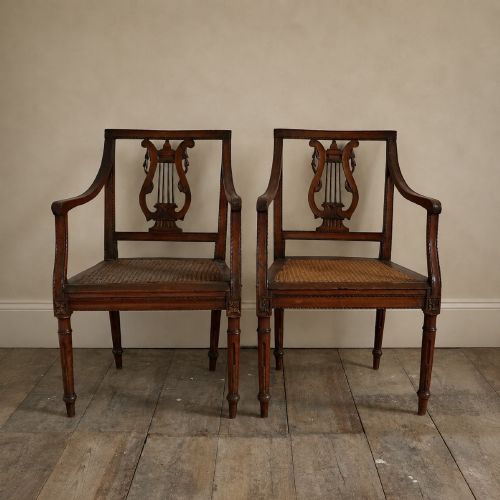
- An enclosed upholstered armchair with exposed wooden framing and cane-work sides or back panels.
- Windsor
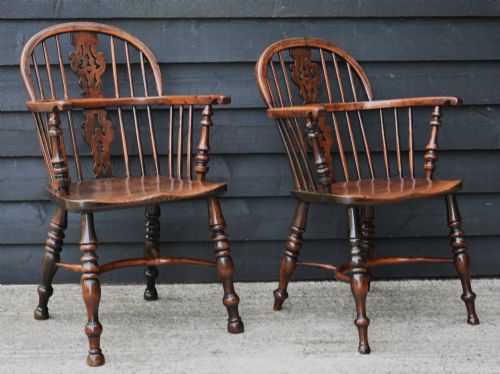
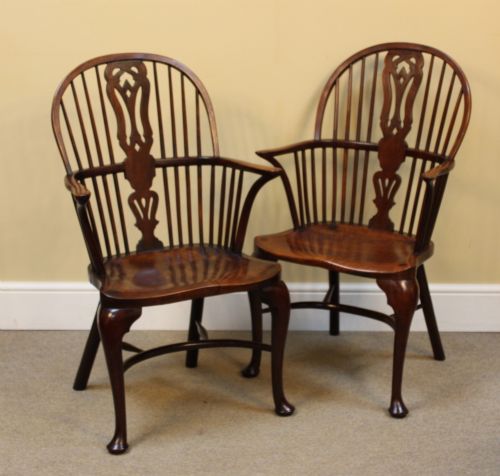
- A traditional wooden chair featuring a solid saddle-shaped seat into which turned legs and spindles are wedged.
- Scroll back
- A chair back featuring an outward curving scroll termination at the top rail or arm terminals.
- Chesterfield
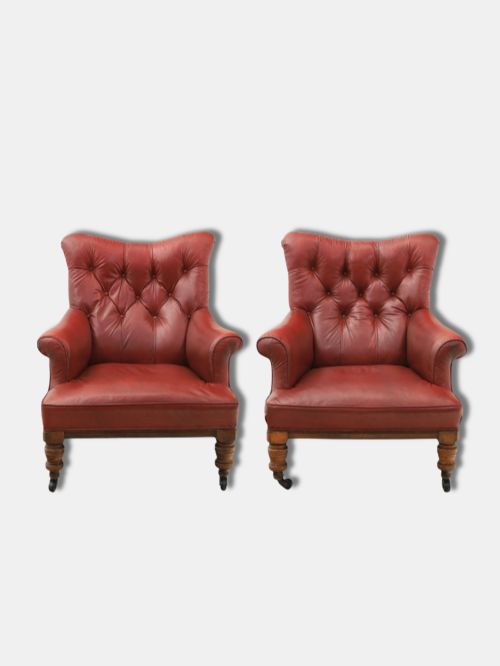
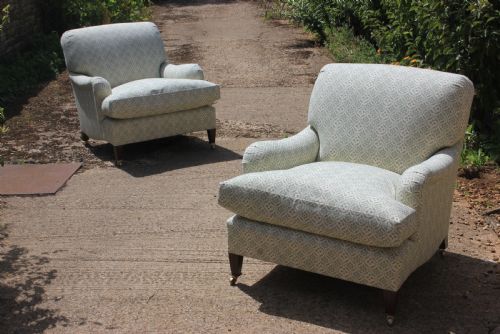
- A heavily upholstered low-set armchair characterised by deep buttoning and rolled arms of equal height.
Pair English Armchairs: Frequently Asked Questions
How do I match period armchairs?
Matching period seating requires careful attention to timber species, leg profiles, and overall height dimensions rather than strict chronological dates. Many historical pairs were assembled by combining related workshop models of similar proportion.
Inspect the secondary woods underneath and the turning details on the legs to confirm that both chairs share a unified origin and construction method.
Are these chairs suitable for daily use?
Most antique upholstered and wooden armchairs are robust enough for everyday seating when the internal framing and joints remain secure. Twentieth-century club chairs and deep-seated country models offer particularly generous proportions for modern living spaces.
Period frames built from solid mahogany, oak, or elm provide exceptional structural stability after centuries of service.
What is a smoker's bow?
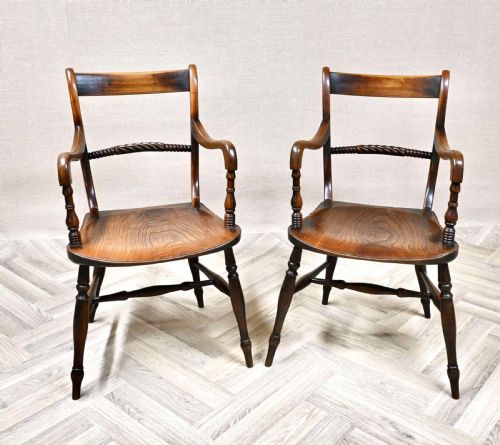
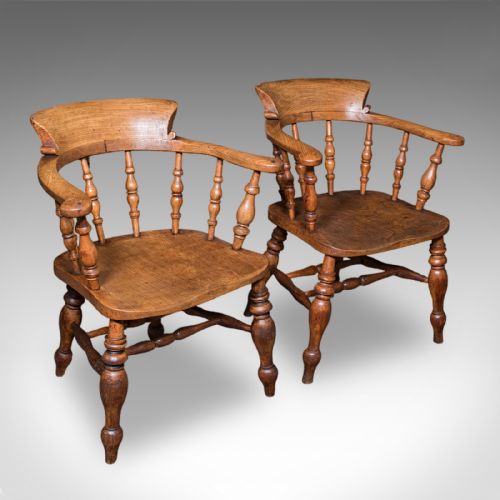
A smoker's bow is a sturdy nineteenth-century vernacular armchair featuring a low rounded back rail supported by turned spindles above a thick wooden seat. These comfortable seats were common in country houses and rural settings.
They typically combine an elm seat with ash or beech framing components.
How do I identify a Windsor armchair?
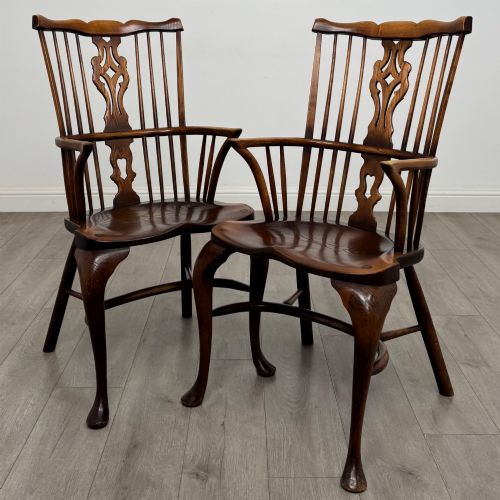
Windsor armchairs are immediately recognised by their distinctive construction, where the legs and back spindles fit directly into holes bored through a solid wooden seat slab. They frequently incorporate yew or elm timbers displaying rich natural grain.
Regional variations include barback, low-back, and comb-back configurations developed across English rural workshops.