





Floral Fabric Armchair
A floral fabric armchair brings pattern and substance to a room, offering comfortable seating through robust wooden frames and traditional upholstery.
Identifying a floral fabric armchair
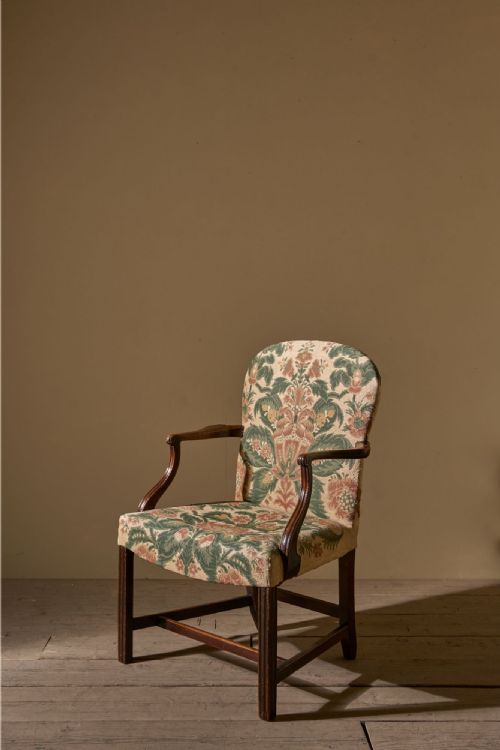
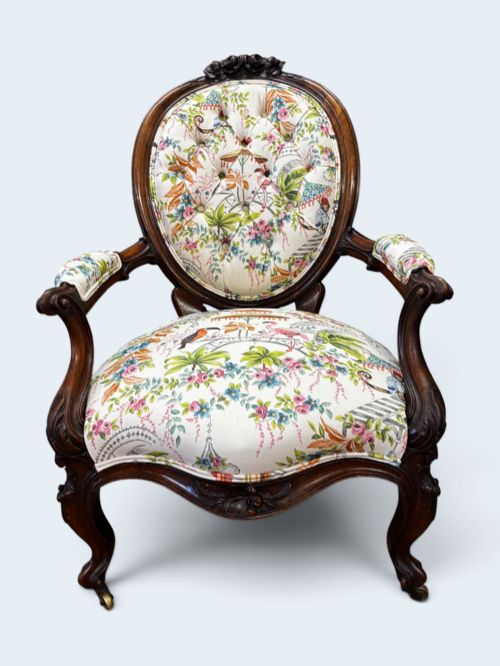
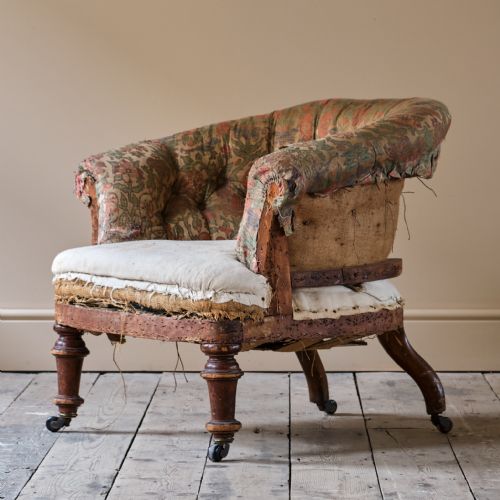
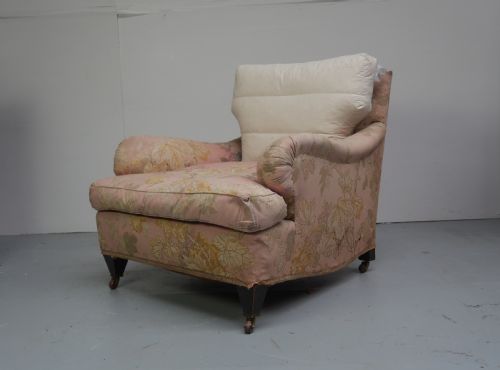
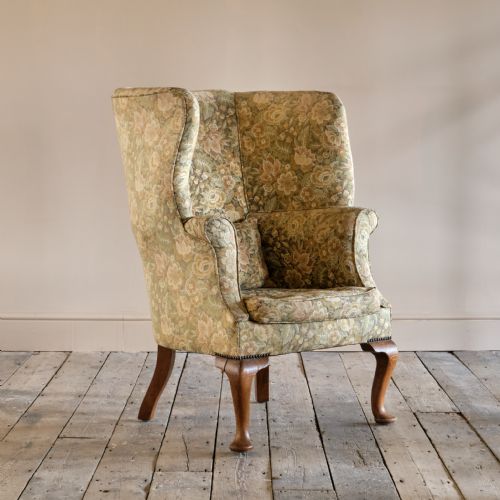
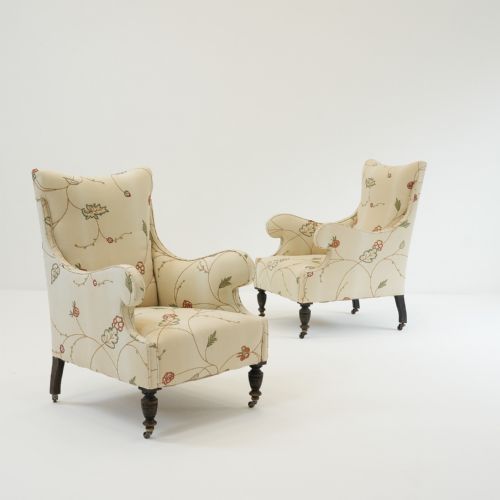
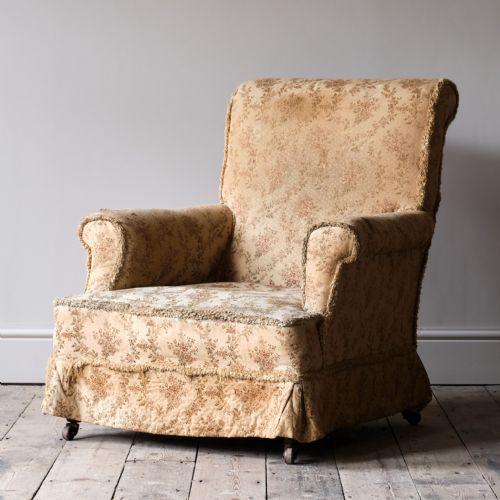
A floral fabric armchair is a seating piece covered in patterned textile featuring botanical motifs. The examples found here span the Victorian, Edwardian, and nineteenth-century periods, showing diverse forms from tub chairs to open-armed gentleman's chairs.
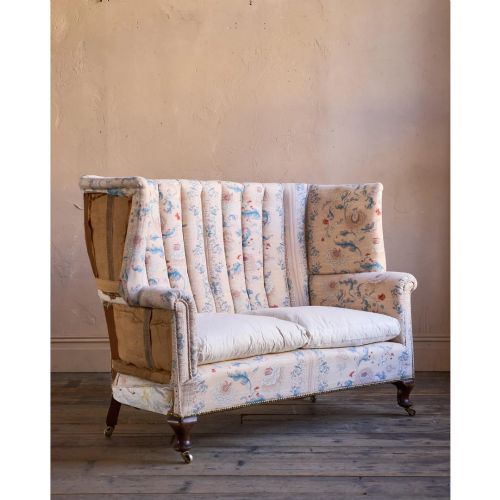
The most common versions met on this page are Victorian designs built from mahogany or walnut frames, often featuring open arms or button backs. Edwardian pieces also appear, alongside nineteenth-century tub chairs and Howard-style open armchairs.
Makers and designers from the past utilised various timber frames such as mahogany and walnut, paired with metal castors for mobility. Original coverings preserved in archive sales demonstrate early white and patterned floral fabric choices.
Construction and materials
These armchairs rely on solid timber frames fashioned from mahogany, walnut, and general timber. Structural support frequently incorporates iron framing, particularly within Victorian button-back designs.
Upholstery relies upon woven and standard upholstery fabric featuring floral patterns, secured to the wooden substructure. Metal castors are fitted to the base of the legs for ease of movement across floor surfaces.
Retail Price Guide 2026
Typical UK retail prices for floral fabric armchair, calculated from the Sellingantiques database of over a million retail prices indexed since 2003. This retail price guide relies exclusively on Sellingantiques data; no external sources or auction records are used, so the figures do not describe the wider market.
Metal castors peek out from beneath these heavy Victorian frames, ready to roll at a moment's notice.
Judgements of quality
Quality rests upon the selection of timber for the frame and the refinement of the carved details. Walnut and mahogany structures with sophisticated Victorian Rococo Revival or Sheraton Revival shaping stand apart from simpler forms.
The sophistication of the upholstery work and the survival of original floral fabric influence the standing of a piece. Armchairs retaining early or original patterned textiles demonstrate a higher degree of historical integrity.
The Floral Fabric Armchair Glossary
- Tub chair
- A curved armchair where the back and arms form a continuous semi-circular enclosure. This form provides a compact and enclosing seat.
- Button back
- An upholstery style where depressions are formed in the padding by stitching buttons through to the frame at regular intervals. This technique secures the deep stuffing in place.
- Castor
- A small wheel mounted on a swivel attached to the foot of a furniture leg. These permit heavy armchairs to be moved smoothly.
- Open armed
- An armchair construction featuring uncovered wooden armrests rather than fully upholstered padded arms. This style exposes the polished timber frame.
Frequently Asked Questions
How do I date a floral fabric armchair?
Dating relies upon examining the timber species, the style of the frame, and construction methods. Victorian pieces often display heavy walnut or mahogany frames with distinctive revival carving.
Later Edwardian examples or pieces from around nineteen-ten tend to show lighter proportions and different upholstery treatments compared to mid-nineteenth-century items.
What woods were used for these armchairs?
Makers utilised hard timbers such as mahogany and walnut for visible frames, alongside general timber for internal structures. Iron frames also appear within specific Victorian upholstered designs.
These materials provided the necessary strength to support deep padding and daily use.
Are original floral fabrics common?
Original textiles survive on select pieces from nineteenth-century and Edwardian periods, though many armchairs have been re-upholstered over time.
Finding a chair with its original floral fabric offers a direct view into period interior decoration and textile design.
How do I care for antique upholstery?
Care involves gentle vacuuming with a soft attachment to remove dust from the woven and upholstered fabric surfaces. Direct sunlight should be avoided to prevent fading of the floral patterns.
Protecting the timber frame with appropriate polish maintains the wood finish alongside the fabric.