
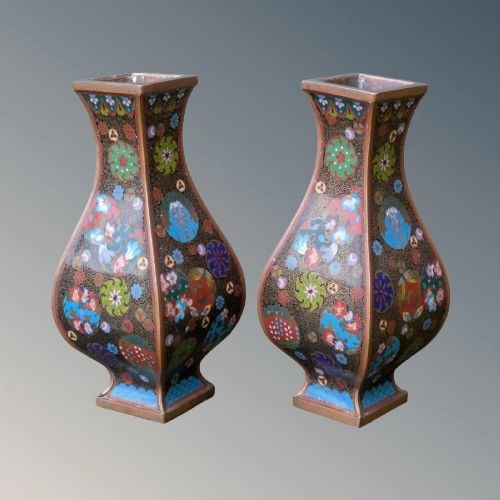


Pair Cloisonne Urns
These pair cloisonne urns are decorative vessels bringing vibrant enamels and intricate metalwork to any interior.
Pair Cloisonne Urns
When you search for pair cloisonne urns, you encounter matching vessels produced across the nineteenth and twentieth centuries. These objects frequently take the form of traditional vases, lidded ginger jars, and occasionally larger palace pieces.
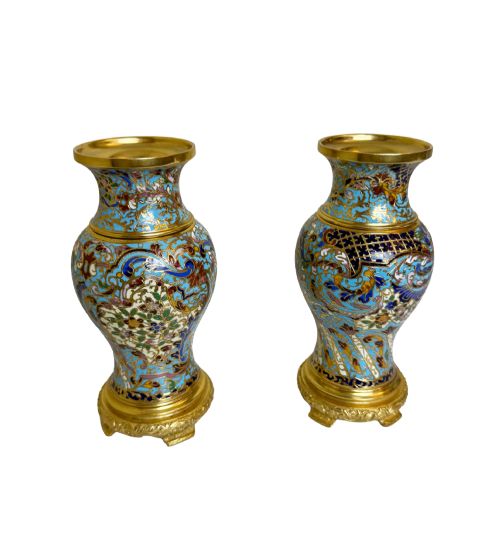
The selections on this page span diverse origins including Japanese Meiji period workshops and Chinese Qing dynasties, alongside French interpretations. Buyers most commonly meet examples utilising traditional enamel techniques paired with brass, copper, or bronze mounts.
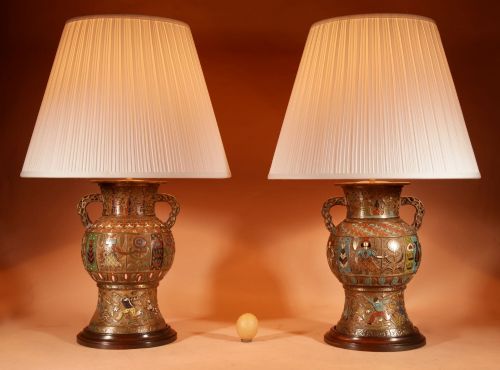
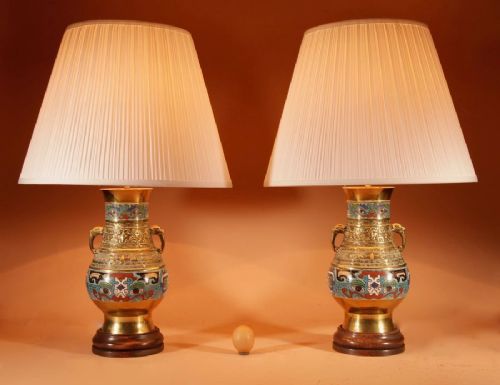
Forms range from miniature cabinet pieces up to massive palace vases standing nearly a metre tall. Many of these matching pairs have been adapted over time into table lamps while retaining their core decorative enamel bodies.
What varies in quality
The distinction between standard examples and superior work rests on the precision of the wirework and the depth of the enamel palette. Finer pieces display exceptionally tight, complex cellular patterns with minimal pitting across the glassy surface.
Weight and metal thickness also define the hierarchy of these items, as heavier foundational bronze or brass communicates greater substance. The harmony between the matching pair determines desirability, particularly when subtle colour variations occur between the two vessels.
Listings feature items spanning the Victorian era through the 1940s, incorporating brass, copper, and bronze materials.
Jules Vieillard
The Pair Cloisonne Urns Glossary
- Cloisonne
- An enamelwork technique where thin metal strips are soldered to a base to create compartments for coloured paste. This method produces intricate linear patterns across vases and urns.
- Champleve
- An enamelling process where troughs or cells are carved directly into the thick metal surface rather than using soldered wires. It appears frequently on nineteenth-century Japanese table lamps and French vessels.
- Meiji Period
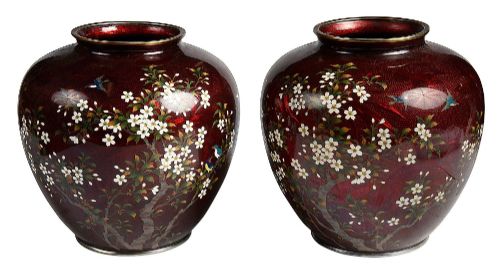
- The era in Japanese history spanning from 1868 to 1912, known for prolific output of highly detailed decorative arts exported to the West. Works from this time often feature naturalistic bird and floral motifs.
- Edo Period
- The period of Japanese history lasting from 1603 to 1867, preceding the Meiji era and associated with large-scale palace works. Pieces surviving from this time demonstrate early mastery of grand decorative scale.
- Ginger Jar
- A decorative lidded container originally designed for storage in China, later adopted across various periods as a standard ornamental vase shape. Pairs often retain their original matching domed lids.
Pair Cloisonne Urns: Frequently Asked Questions
How do I clean my pair cloisonne urns?
Dust these vessels gently with a soft, dry cloth to prevent any accumulation of grime within the wire channels. Avoid using harsh chemical polishes or water on the enamel surface.
Keep them away from direct sunlight and excessive moisture to protect both the metallic frames and the coloured glass pastes from long-term degradation.
Were these urns originally made as lamps?
Many matching pairs started life purely as decorative vases or lidded ginger jars before being converted into table lamps during the nineteenth or twentieth centuries. Such adaptations often incorporated bronze bases and electrical fittings while preserving the original enamel bodies.
Examine the base and internal mounts to determine whether the conversion was done professionally without damaging the core structure of the vessels.
How do I distinguish Chinese from Japanese pieces?
Japanese examples, particularly from the Meiji period, frequently employ thinner wires and subtle, highly naturalistic depictions of birds and flora. Chinese counterparts often display bolder colour palettes and heavier metallic foundations rooted in Qing traditions.
Assessing the weight of the metal and the style of the cellular borders helps clarify the likely geographic origin of the pair.
Can I separate a pair of urns?
Matching vessels are valued precisely for their symmetry and shared history, so separating them diminishes their collective decorative impact. Keeping them together preserves their aesthetic balance in an interior setting.
Displaying them symmetrically on a mantle or console table accentuates the craftsmanship that went into creating two identical companion pieces.