





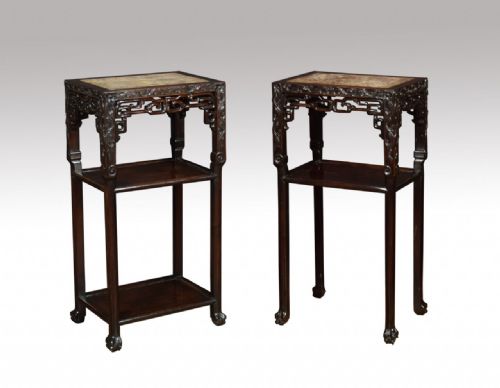

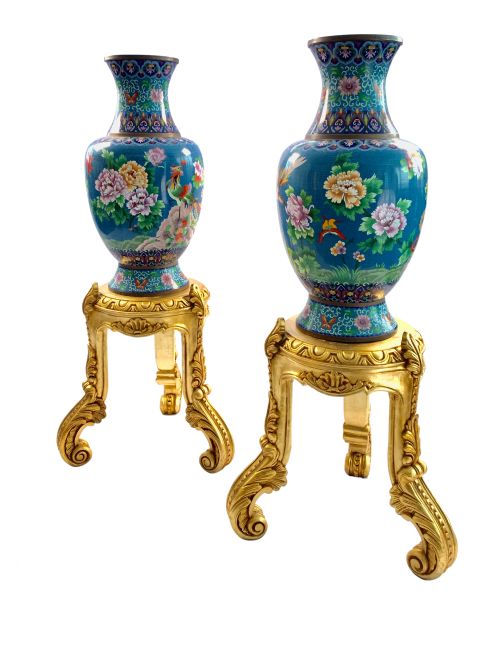


Pair Chinese Urn Stands
Pair Chinese urn stands are sturdy display pieces designed to elevate heavy vases and vessels, offering practical support and traditional craftsmanship.
Pair Chinese Urn Stands
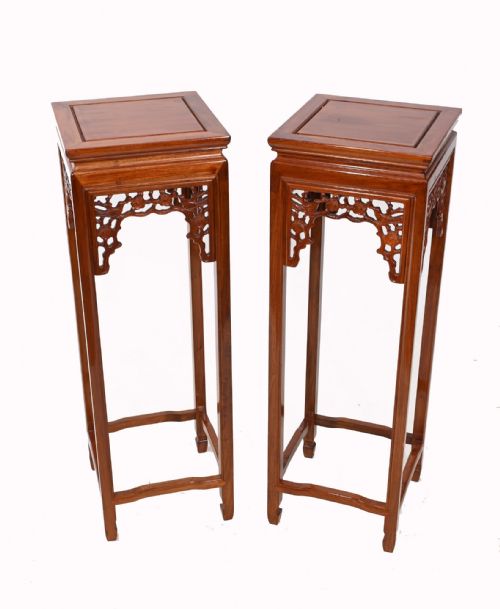
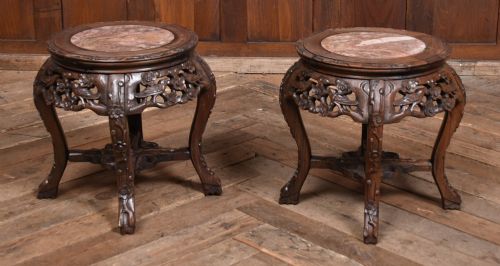
Pair Chinese urn stands are functional display furniture designed to support vases, urns, and jardinières within domestic interiors. When exploring pair Chinese urn stands, buyers encounter low tables, tall pedestals, and multi-tiered supports originating from the nineteenth and early twentieth centuries.
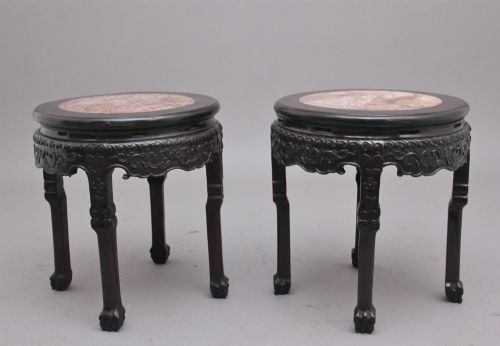
The selections span periods including the Victorian era, the Qing Dynasty, and the Republic Period. These items function as plant stands, occasional tables, or side tables, frequently presenting shaped tops suited for ornamental vessels.
Materials and construction
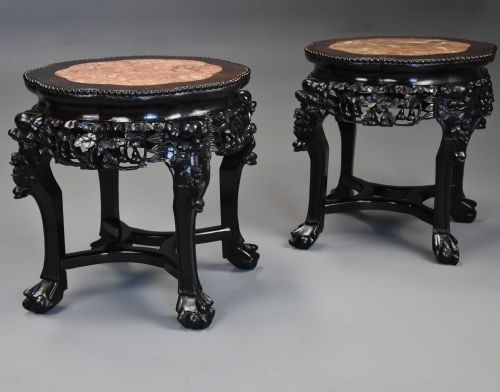
Construction relies heavily on dense exotic timbers such as hardwood, rosewood, hongmu, padouk, and huali. Artisans carve these sturdy woods into elaborate frames, sometimes incorporating ebonised finishes or lacquer work.
Many examples integrate inset rouge marble tops or porcelain elements into the wooden framework. Certain pieces also feature delicate mother-of-pearl inlay or enamel detailing to enrich the surface texture.
Pair Chinese Urn Stands Retail Price Guide 2026
Typical asking prices for pair chinese urn stands among the pieces listed under this phrase on Sellingantiques today, from the lower quarter to the upper quarter. They describe what is for sale here now, not the wider market.
Assessing craftsmanship
Superior execution is visible in the depth and crispness of the wood carving, where floral and geometric motifs remain sharp and well-defined. The selection of timber, particularly dense hardwoods like hongmu and padouk, dictates the structural integrity and weight of each stand.
Integration of inset marble or stone tops requires precise joinery to ensure a flush, secure fit within the wooden frame. Examples featuring intact mother-of-pearl inlay or well-preserved lacquer demand greater technical skill during manufacture.
The Pair Chinese Urn Stands Glossary
- Hongmu
- A dense, heavy Chinese hardwood prized for its deep colour and durability in furniture construction. It provides a robust framework capable of supporting heavy porcelain vessels.
- Padouk
- An exotic timber valued for its strength and rich reddish-brown tones. Artisans utilise this material to craft durable structural supports and tables.
- Jardiniere
- A large ornamental pot or container designed to hold plants or flowers. These vessels frequently rest upon the stands found within these collections.
- Cloisonné
- An enamelwork technique where metal wire outlines compartments on a base object, which are then filled with coloured paste. This method appears on decorative vases associated with these furnishings.
- Chinoiserie
- European decorative style reflecting Chinese artistic influences. This aesthetic appears on specific lacquer and vase items recorded in the inventory.
Pair Chinese Urn Stands: Frequently Asked Questions
What were pair Chinese urn stands used for?
These furnishings were originally built to elevate large ceramic vessels, temple jars, and heavy planters off the floor. Raising the containers protected delicate flooring and brought decorative objects closer to eye level.
Over time, owners also utilised them as independent side tables or display surfaces for decorative arts inside domestic spaces.
How do I identify Qing Dynasty stands?
Qing Dynasty items typically exhibit dense tropical hardwoods, traditional hand-carved motifs, and precise joinery techniques. They frequently incorporate inset marble tops or subtle structural shaping characteristic of late nineteenth-century production.
Examining the underside and joint construction reveals traditional woodworking methods rather than modern mechanical fastening.
Are marble top stands fragile?
The inset marble panels are heavy and structurally stable, fitted securely within routed wooden channels. While the stone itself is durable, care must be taken during relocation to avoid sharp impacts against the corners.
Routine cleaning requires simple dusting and gentle wiping to preserve both the polished stone and the surrounding timber frame.
How do I style these stands at home?
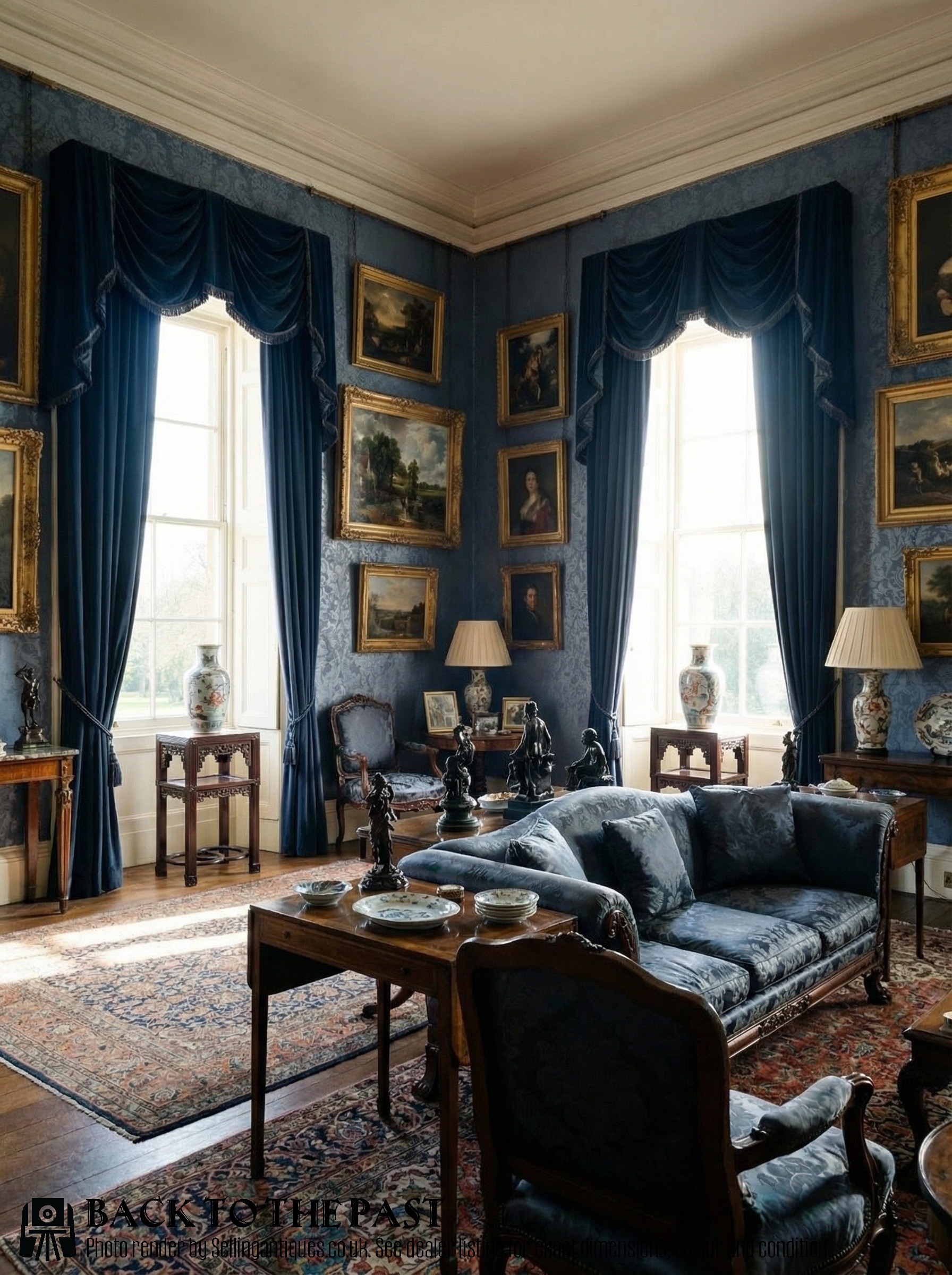
These stands suit traditional and contemporary interiors alike when paired with ceramic vases, lamps, or potted plants. Their compact footprints allow them to fit easily into corners, hallways, or beside seating arrangements.
Using matched pairs together helps create symmetrical balance within a room, particularly when displaying complementary decorative objects.