
Pair Carved Gold Mirrors
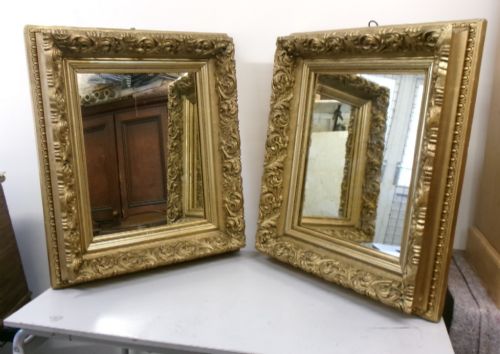
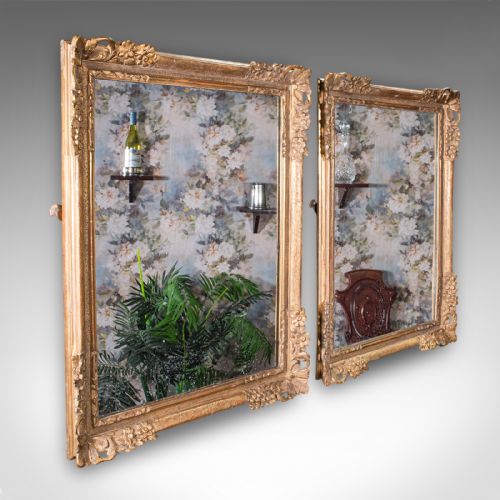
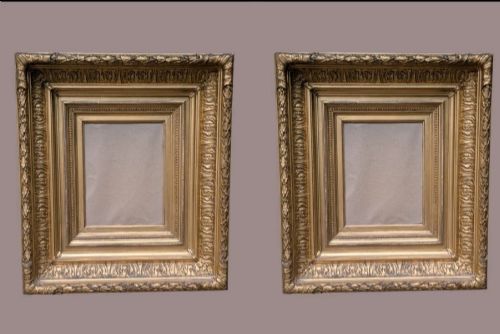
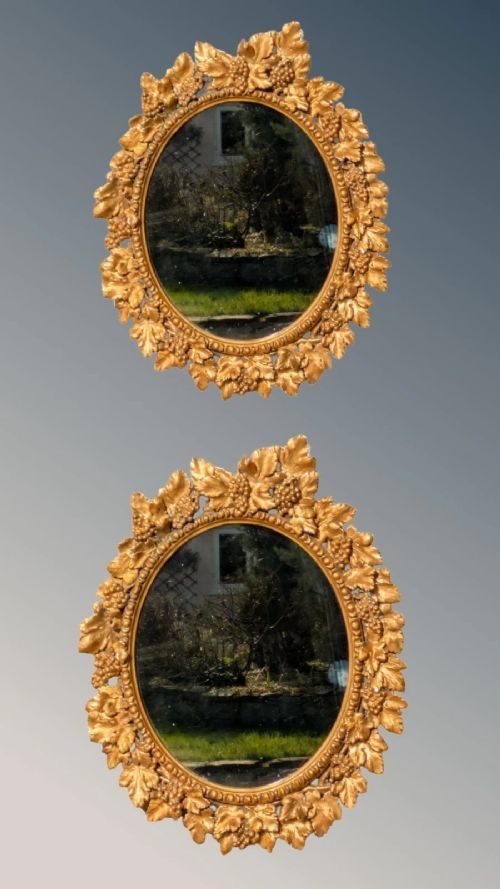
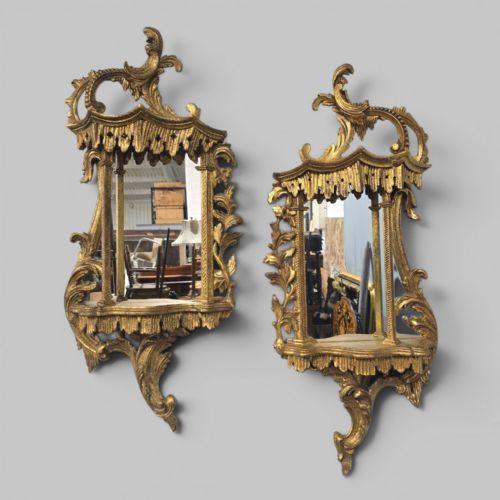
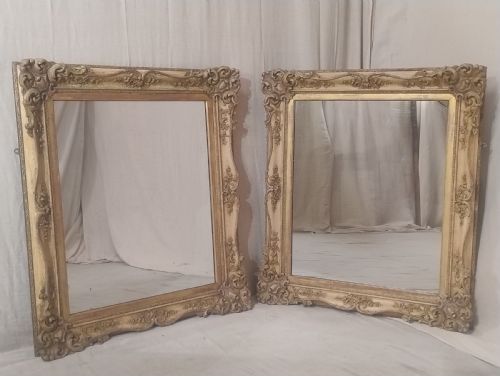
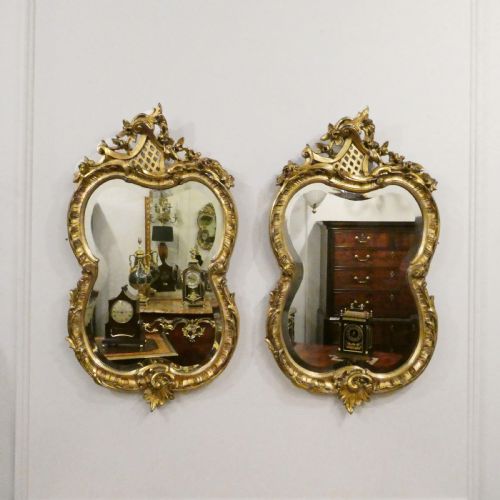
Pair carved gold mirrors bring symmetry and reflective warmth to a room, ranging from grand Venetian overmantels to intricate French Rococo wall pieces.
Pair Carved Gold Mirrors
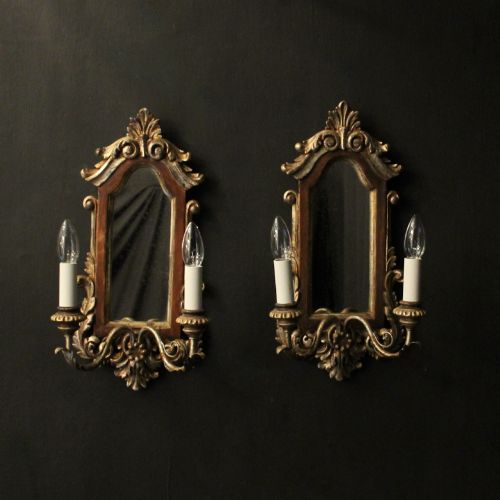
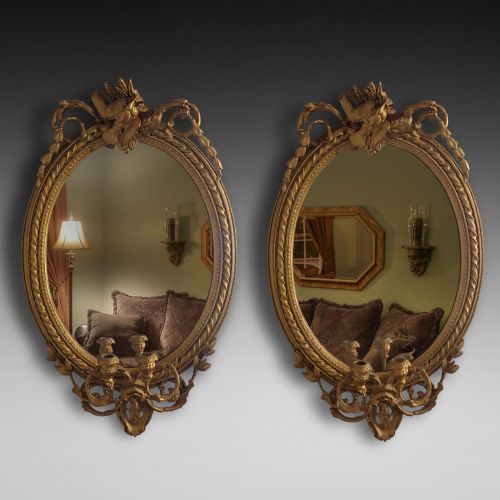
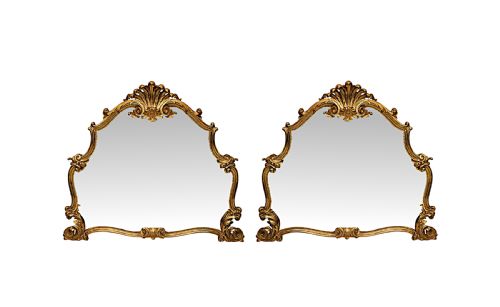
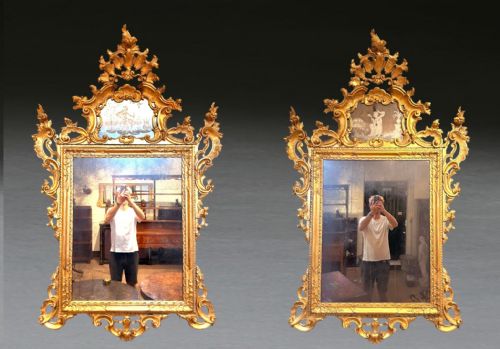
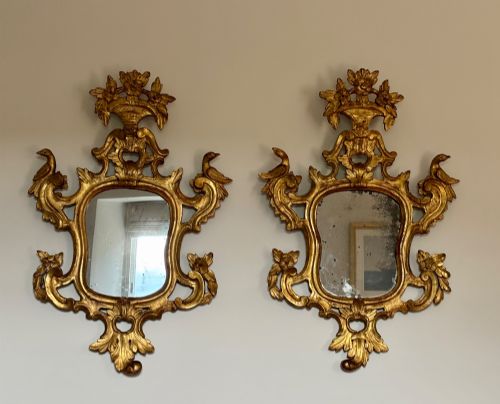
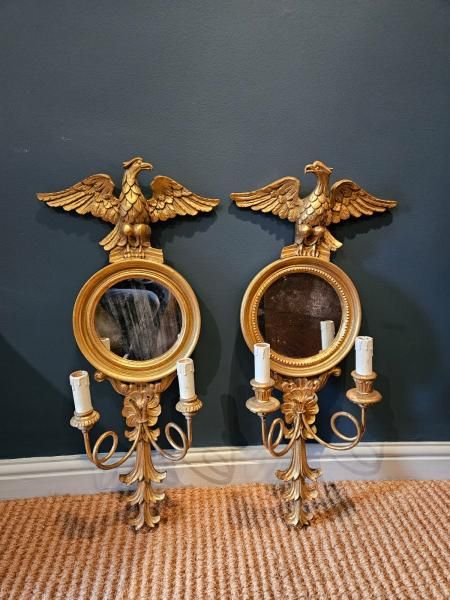
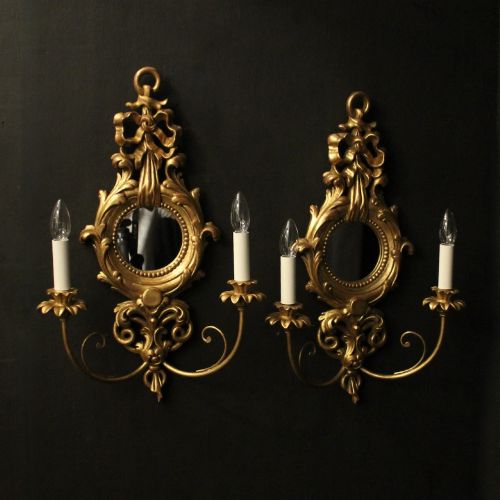
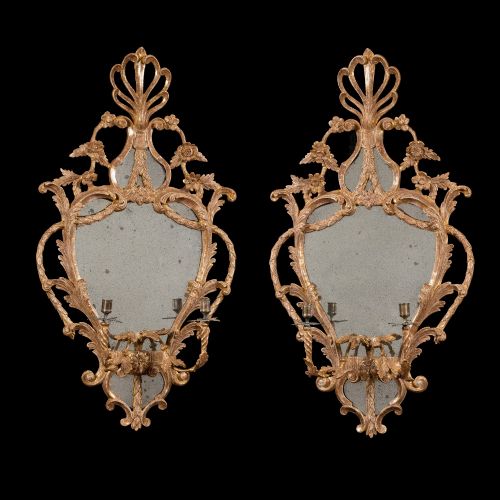
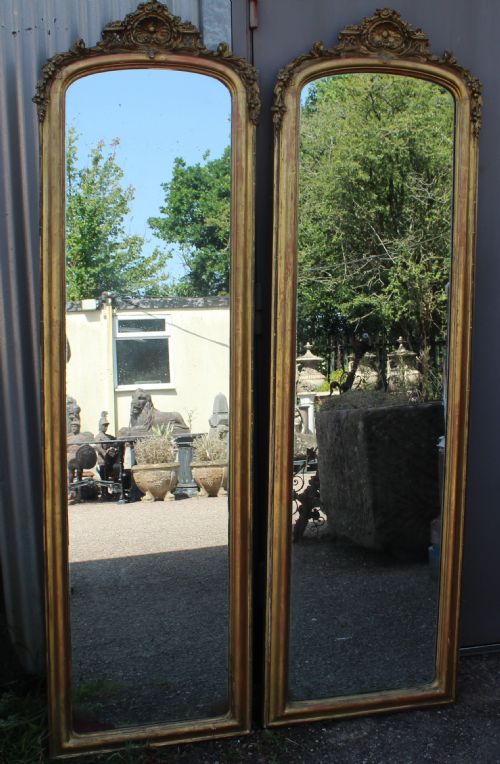
When searching for pair carved gold mirrors, buyers encounter a diverse selection of matching wall hangings spanning the eighteenth, nineteenth, and early twentieth centuries. These objects typically manifest as pier mirrors, girandoles with candle arms, or decorative overmantel pieces designed to balance a formal interior scheme.
Materials and construction methods
The foundation of these objects rests upon carved wood or gesso built over a timber core, shaped into elaborate foliage, scrolls, and architectural mouldings. Artisans applied gold leaf or water gilding directly onto the prepared surfaces, sometimes combining parcel gilt highlights with painted elements or walnut veneers.
Original mirror glass frequently shows subtle foxing and irregularities characteristic of older manufacturing techniques, fitted securely behind deep rebate frames designed to project from the wall.
Several girandoles still carry the phantom weight of old candle wax tucked deep within their gilded acanthus leaves.
Distinctions in craftsmanship
Quality in these items is determined by the depth and crispness of the carving, where deep, undercut foliage and confident scrollwork indicate skilled hand execution rather than a uniform moulded finish. The handling of the gilding itself separates standard pieces from superior examples, with water gilding showing a richer, burnished brilliance compared to flat bronze paint.
The integrity of the matching pair matters greatly; pieces that retain their original synchronized frames, matching glass plates, and integrated candle arms or sconces demonstrate a higher level of historical survival.
Strahan of Dublin
The Pair Carved Gold Mirrors Glossary
- Giltwood
- Timber covered with gold leaf or metal leaf applied over a prepared gesso ground. This finish provides the characteristic metallic sheen seen on antique frames.
- Girandole
- A decorative wall mirror fitted with one or more arms for holding candles. These branched fixtures reflect candlelight to illuminate surrounding spaces.
- Pier glass
- A tall mirror designed specifically to hang on the narrow section of wall between two windows. They often coordinate with matching console tables beneath.
- Gesso
- A plaster mixture applied to wood frames to create a smooth surface for carving details and applying gilding. It allows for intricate relief ornamentation.
- Water gilding
- A traditional technique where gold leaf is laid over wet size and subsequently burnished to a high gloss with an agate stone. This method creates deep reflective contrasts.
Pair Carved Gold Mirrors: Frequently Asked Questions
Where should I hang pair carved gold mirrors?
These matching items suit placement above a mantelpiece, flanking a large window, or mounted on either side of a principal piece of furniture to create visual balance.
Their reflective properties also help bounce natural light into darker corners of a reception room or hallway.
How do I distinguish eighteenth-century frames from later revivals?
Earlier pieces exhibit hand-carved details directly into solid timber with distinct tool marks and aged gesso layers that show minor shrinkage cracks.
Nineteenth-century revival styles, such as Rococo or Chippendale copies, often employ heavier composition ornaments and more uniform machine-finished backing structures.
What is the difference between a mirror and a girandole?
While standard mirrors serve purely for reflection and decoration, girandoles specifically incorporate integrated candle sconces attached to the frame.
These branching arms allowed historical interiors to multiply the effect of flickering candlelight across the room.