
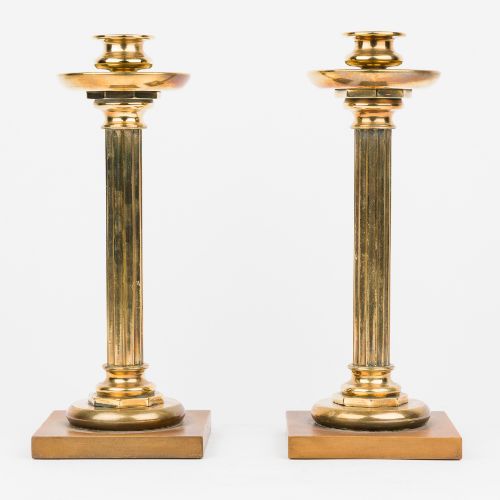
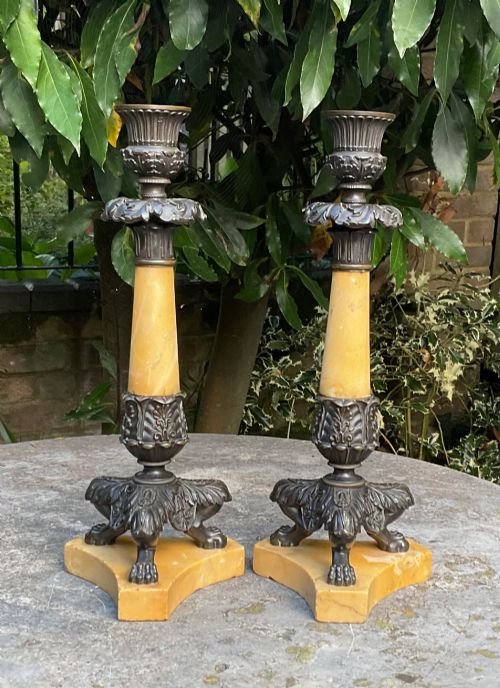

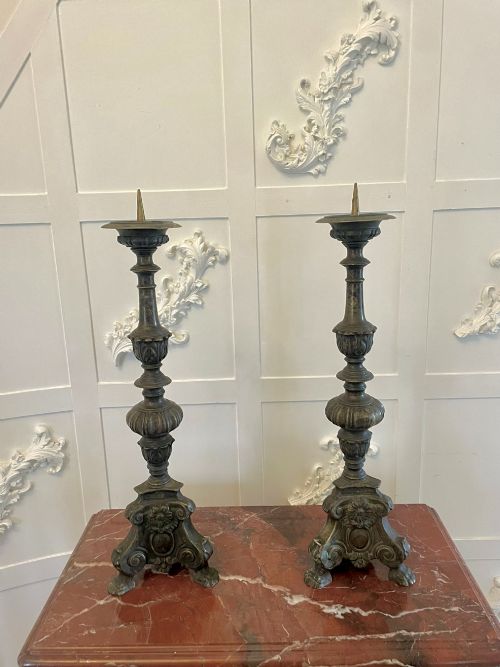
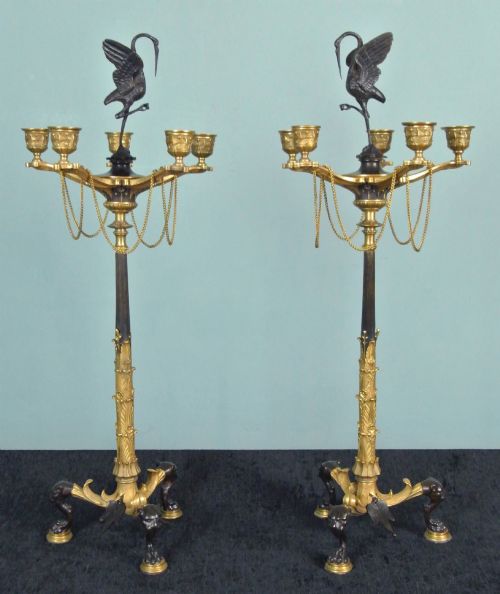
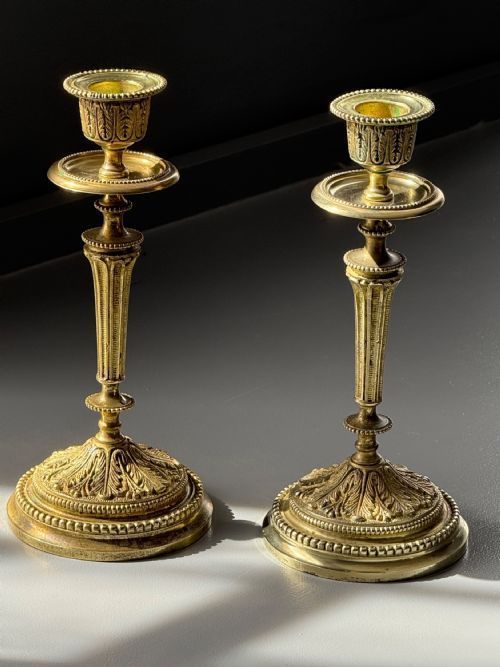
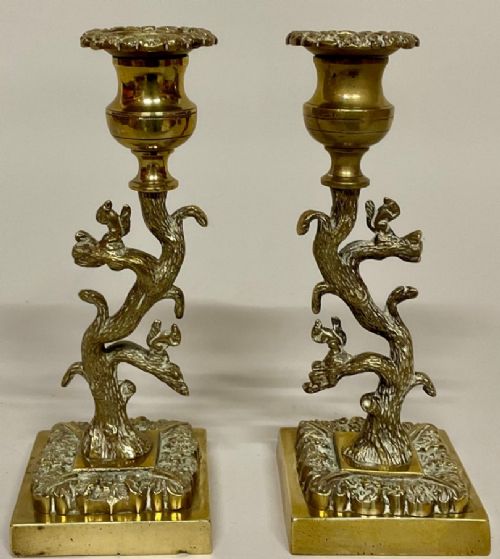
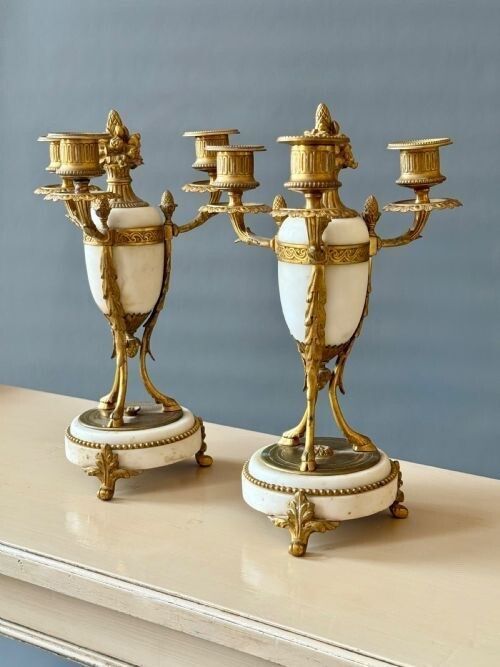
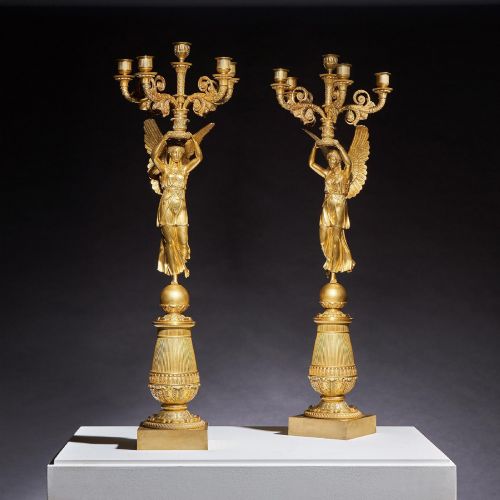
Pair Bronze Candle Stands
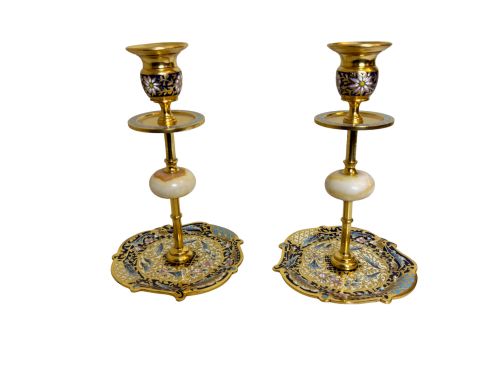
Pair bronze candle stands bring functional illumination and sculptural weight to a room, drawing on Regency, French Empire, and Victorian traditions.
Pair Bronze Candle Stands
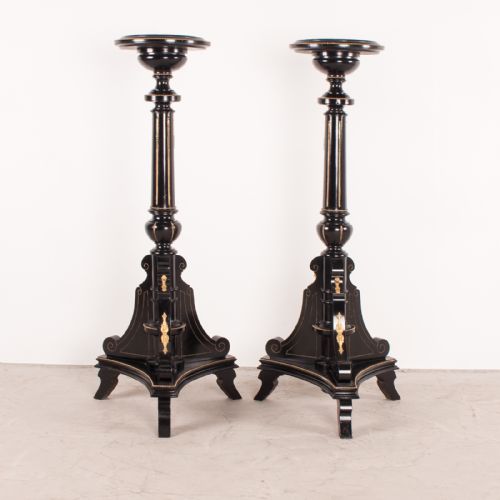
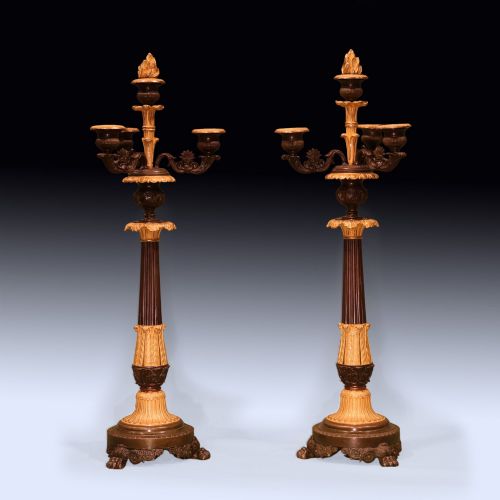
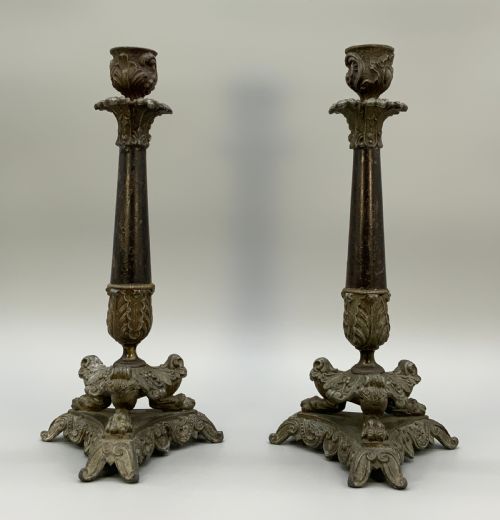
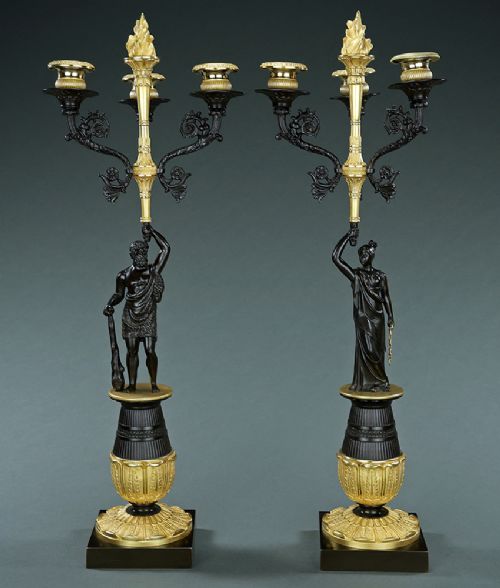
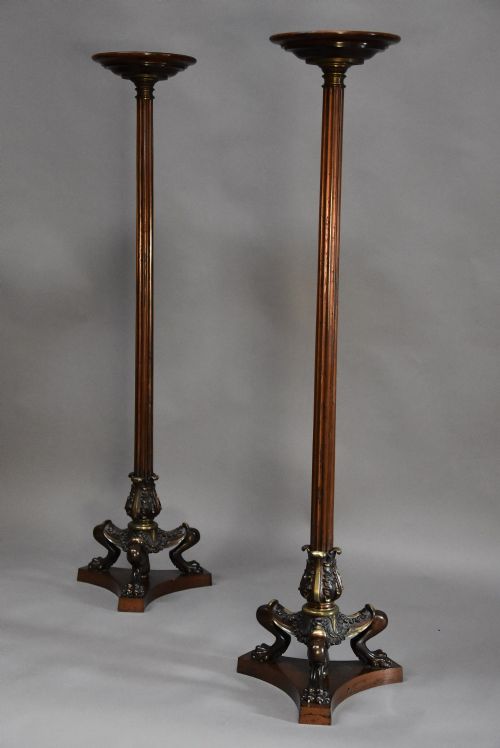
These items encompass candlesticks, multi-arm candelabra, and tall torcheres designed to hold candles securely while serving as decorative objects of weight and presence. A buyer searching for pair bronze candle stands will encounter pieces ranging from simple domestic brass and bronze holders to elaborate figural works styled in the French Empire, Louis XVI, and Regency manners.
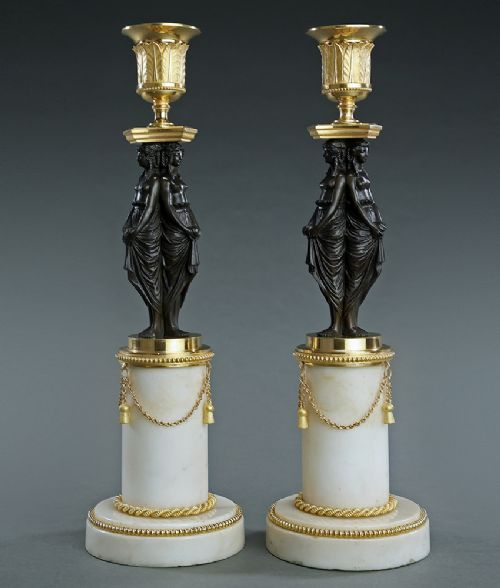
The selection on this page leans heavily toward nineteenth-century French and English manufacture, alongside Victorian and Edwardian examples. Forms vary from slender neoclassical columns to complex figural groupings, caryatids, and architectural pedestals cast in metal.
Makers and designers from past centuries, such as Barbedienne, Thomire, and Rabiat, established patterns that continued through the nineteenth century into Art Deco and Art Nouveau interpretations. Buyers find both single-light sticks and multi-branch candelabra incorporating marble, onyx, and gilt elements.
Materials and methods
Foundry work relies on bronze, brass, and cast metal, often combined with patinated surfaces and fire-gilt ormolu to create contrast between dark metal and bright highlights. Founders utilised lost-wax and sand-casting techniques to achieve sharp detail in leaves, figures, and architectural motifs before hand-chasing the metal surface.
Many items incorporate secondary materials like white marble, onyx, or mahogany to form stable bases and columns that anchor the heavy metal components. Seamed construction, pinned joints, and threaded metal rods hold complex multi-arm candelabra together.
Listings feature bronze and ormolu pieces spanning from the Regency period through to Art Deco designs.
Assessing quality
The weight of the metal and the integrity of the base materials, such as solid marble or heavy patinated bronze, separate standard production items from workshop pieces created by known makers or prominent foundries.
Pierre Philippe Thomire·Abel Landry·Rabiat
The Pair Bronze Candle Stands Glossary
- Ormolu
- Gilded bronze produced by applying a mercury and gold amalgam to the metal surface and heating it until the mercury vaporised. This finish yields a durable golden sheen characteristic of French decorative arts.
- Candelabra
- A branched candlestick designed to hold multiple candles simultaneously on separate arms stemming from a central shaft. They often feature removable sconces for cleaning.
- Pricket
- A sharp metal spike set in the centre of a drip pan to secure a candle, common on older ecclesiastical and revival candlesticks. These contrast with socket-style sconces.
- Torchere
- A tall stand or floor-standing candlestick intended to elevate a light source or decorative object above floor level. They frequently appear in pairs during the nineteenth century.
- Patination
- The surface coloration and texture acquired naturally through age or applied artificially by chemical treatment on bronze and metal. This finish protects the underlying alloy and defines the visual tone.
Pair Bronze Candle Stands: Frequently Asked Questions
How do I clean bronze candle stands?
Dust the metal gently with a soft, dry brush to remove particulate matter without disturbing the patina or gilt surfaces. Avoid commercial metal polishes that strip away historical patination and damage ormolu.
For stubborn grime, use a slightly damp cloth with mild soap, drying the metal immediately afterwards with a soft cloth to prevent moisture spots.
Were these stands used for dining tables?
Shorter candlesticks and smaller candelabra served primarily on dining tables, sideboards, and mantelpieces to provide intimate illumination during evening hours. Heavier multi-arm pieces and tall torcheres stood on console tables, floors, or pedestals to light larger rooms.
Their substantial weight prevented accidental tipping when moved between rooms or during candle replacement.
How can I tell French Empire from Regency style?
French Empire pieces often incorporate classical military motifs, sphinxes, caryatids, and rich ormolu highlights inspired by ancient Rome and Egypt. Regency stands tend to draw on English interpretations of classical antiquity, sometimes featuring simplified bronze forms alongside mahogany or marble.
Both styles date largely to the early nineteenth century but reflect different regional aesthetics and cabinet-making traditions.
Can modern candles fit antique sockets?
Antique sockets and drip pans frequently measure differently from standard modern candle diameters due to historical sizing variations. Using candle fitted adapters or gently paring down the base of a taper ensures a secure fit without stressing the metal sconce.
Checking the depth of the cup prevents wax from spilling onto the bronze or marble below.