
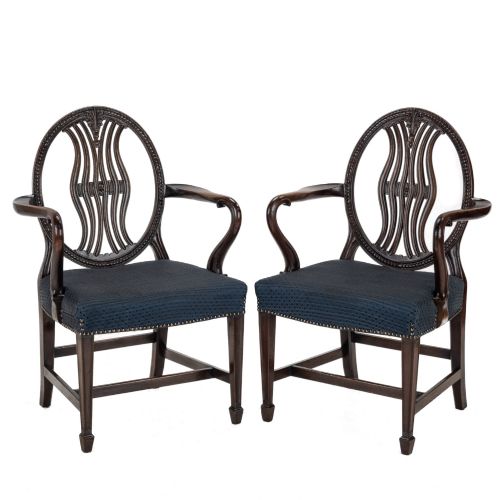


Pair Blue Armchairs
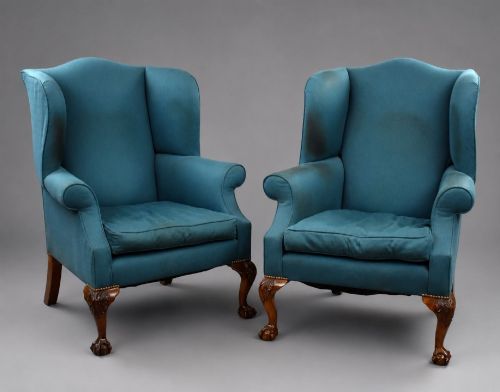
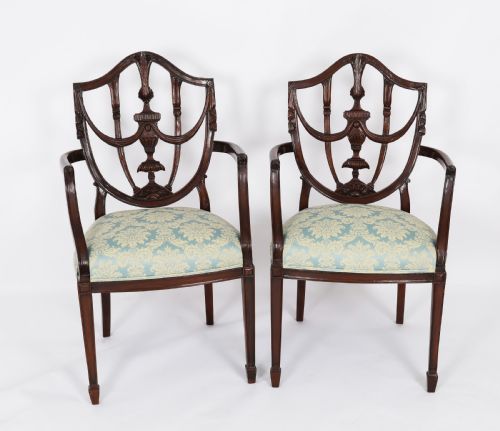
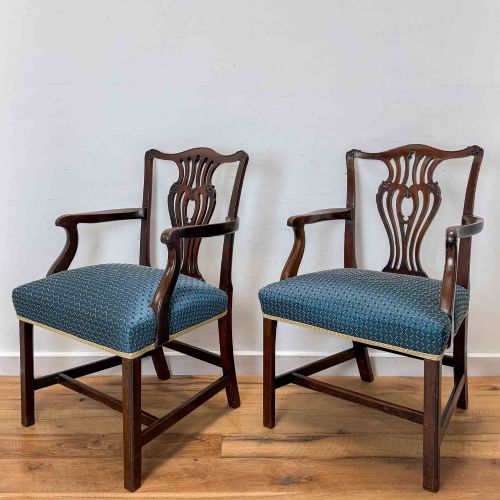
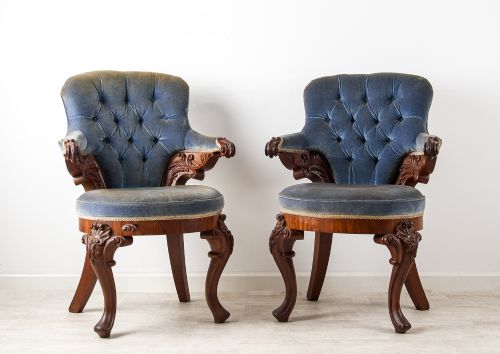
Pair blue armchairs bring matched seating and colour together in one purchase, offering everything from French painted frames to Edwardian walnut designs.
Pair Blue Armchairs
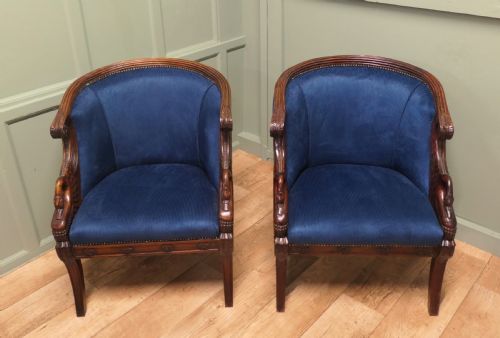
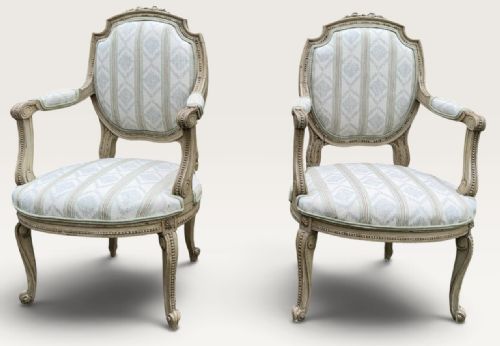
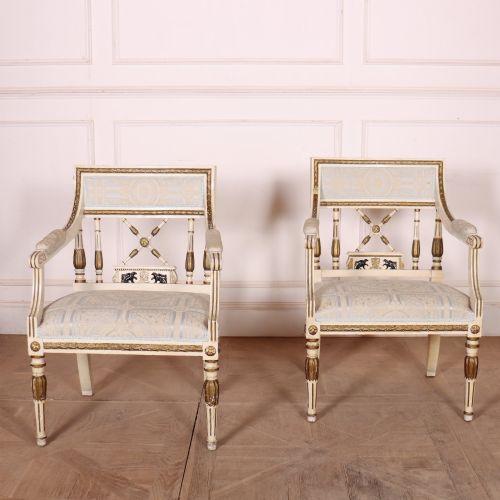
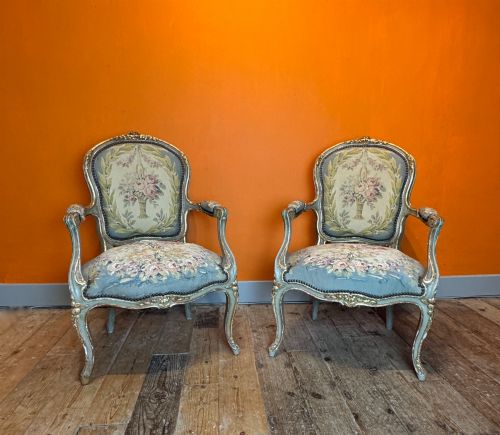
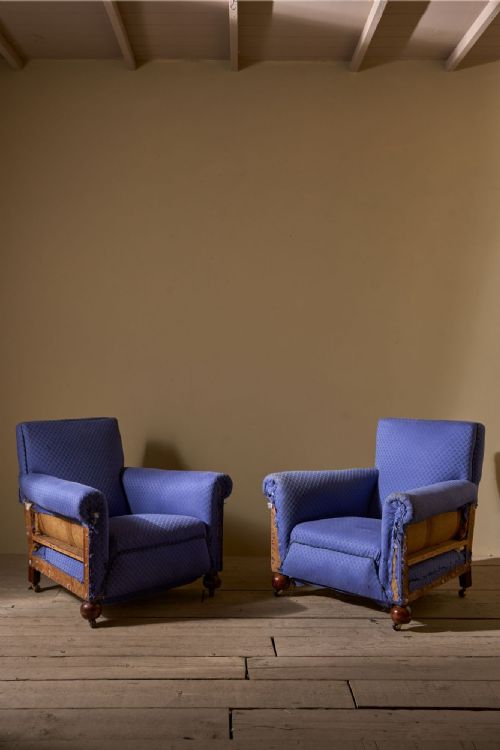
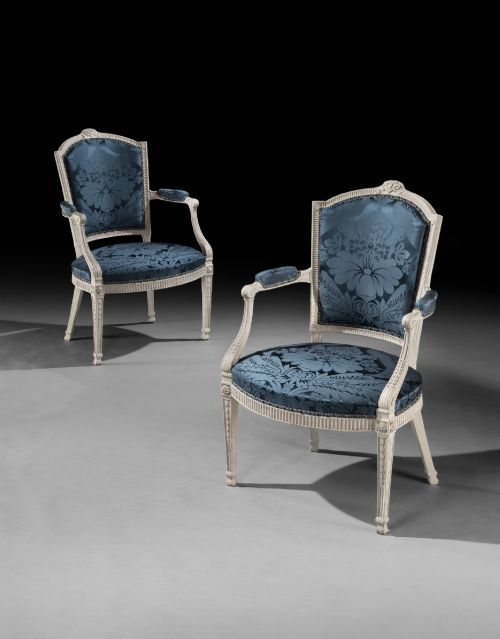
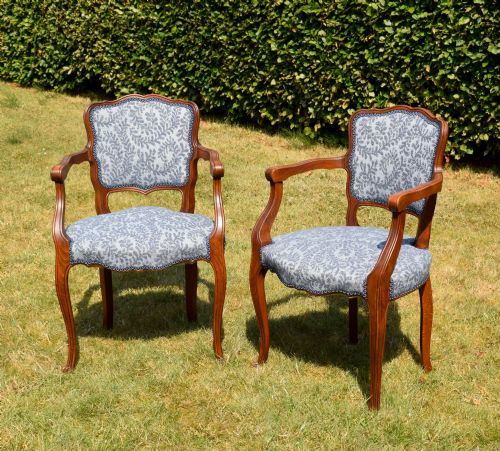
When buyers search for pair blue armchairs, they look at matched seating options spanning the 18th century, Victorian era, Edwardian period and early 20th century. The selection ranges from carved mahogany frames and oak library seats to French painted fauteuils, bergere chairs and upholstered club chairs.
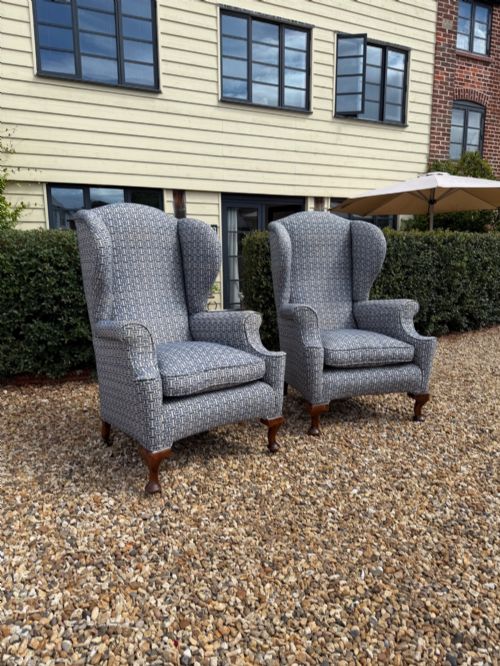
The most common examples on this page are Edwardian and Victorian upholstered chairs alongside French revival styles and sturdy mahogany frames. Buyers find pieces dressed in various fabrics, from velvet and silk to original ticking and modern upholstery.
These seats serve multiple rooms, functioning as fireside companions, bedroom chairs, salon suites or library reading seats. Matching pairs provide symmetry for a room layout, saving the task of hunting for a second identical chair.
How they were made
Frames rely on traditional timbers such as mahogany, walnut, beech and oak, joined with sturdy cabinet-making techniques to endure decades of use. Carved details, parcel gilding, or painted finishes often decorate the wooden structures of French and Italian pieces.
Upholstery involves fabric, velvet, silk, and supportive webbing or springs to create deep-seated comfort. Many examples retain their original textiles or feature traditional stuffing materials beneath recent reupholstering work.
Listings feature French, English, Swedish, and Italian chairs spanning the 18th, 19th, and early 20th centuries.
What varies in quality
The distinction between ordinary and superior pieces rests on the crispness of the wood carving and the integrity of the frame. Hand-carved walnut and mahogany frames from established makers show deeper relief and superior joinery compared to later revival pieces.
Condition of the upholstery and the frame finish dictate the level of preservation. Original painted surfaces or untouched gilding elevate a piece, while professional restoration preserves the historical integrity of older frames.
Howard and Sons·Henry Thomas Peters·William Morris
The Pair Blue Armchairs Glossary
- Fauteuil
- An open-armed French armchair with an exposed wooden frame, typically dating from the 18th or 19th centuries. These chairs combine carved woodwork with upholstered seats and backrests.
- Bergere
- An enclosed upholstered armchair with wooden sides and a built-in upholstered back. Cane panels or solid upholstery often fill the frame sides.
- Gainsborough
- A wide, upholstered armchair with open padded arms, originating in the mid-18th century. These pieces usually feature mahogany frames with carved cabriole legs.
- Tub armchair
- A comfortable chair where the back curves continuously into the arms to form a circular enclosure. Edwardian and Arts and Crafts makers frequently used this enclosed shape.
Pair Blue Armchairs: Frequently Asked Questions
How do I clean antique upholstery fabric?
Vacuum the fabric gently using a soft brush attachment to remove surface dust without damaging delicate threads. Professional textile cleaners should handle deeper stains on vintage velvet or silk.
Avoid using household detergents on older textiles, as moisture can weaken fragile internal padding or warp wooden frames. Spot cleaning requires testing a hidden patch of fabric first.
Can I mix these chairs with modern decor?
Pair blue armchairs add historical character and distinct colour to contemporary living spaces. Placing an 18th-century painted frame or an Edwardian walnut tub chair beside clean-lined modern furniture creates an intentional contrast.
The matching blue upholstery ties the traditional forms into a modern room palette while maintaining a focal point.
How do I tell an 18th-century chair from a revival piece?
Examine the timber underneath for tool marks, oxidation, and construction methods consistent with earlier hand-working techniques. Revival pieces from the Victorian or Edwardian eras often use machine-cut components and tighter, uniform joins.
Wear patterns on the feet and seat rails also indicate genuine age compared to decorative ageing on later copies.
What is the difference between a salon chair and a library chair?
Salon chairs are lighter, more decorative seating options designed for formal reception rooms and entertaining guests. They frequently feature delicate carved frames, silk upholstery, or open backs.
Library chairs are sturdier, heavier seats built for reading and extended comfort, often constructed from solid mahogany or oak with deep padding.