

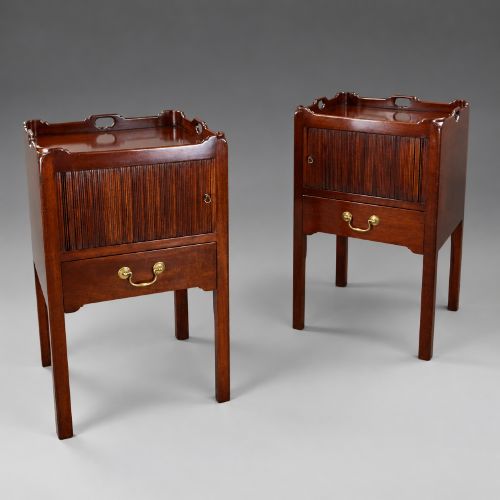
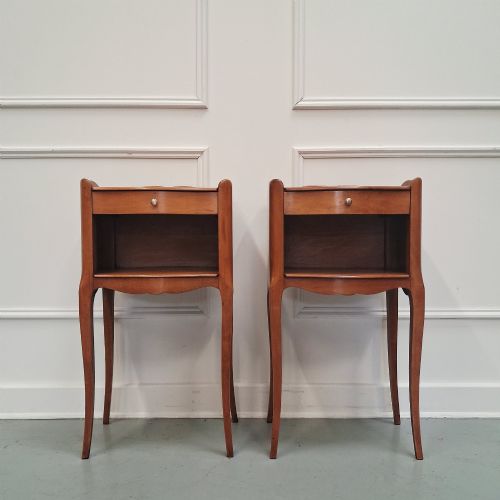
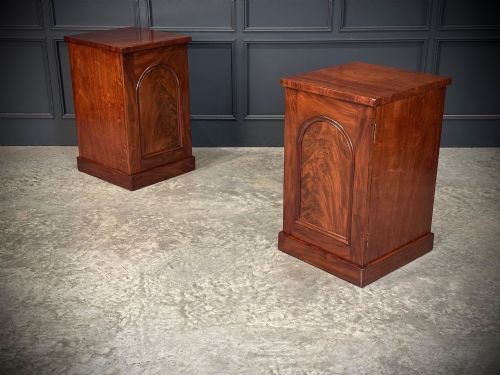
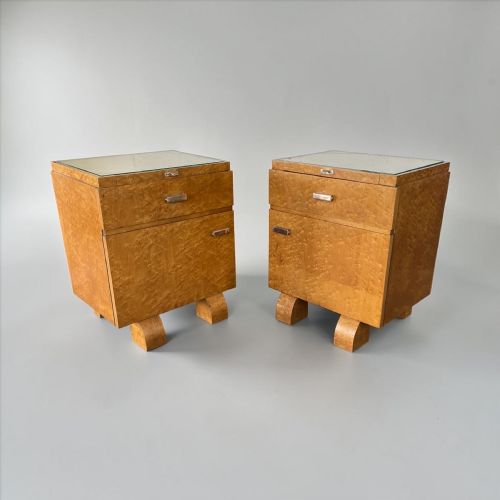
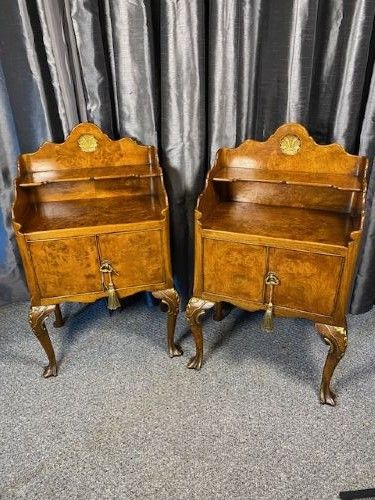
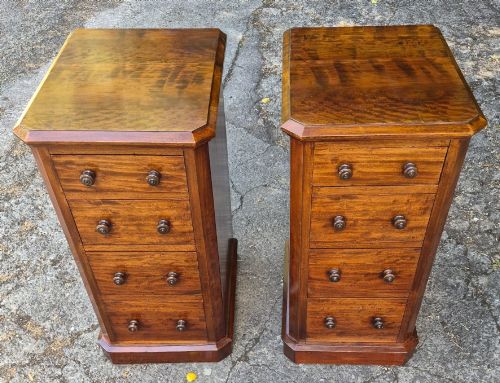
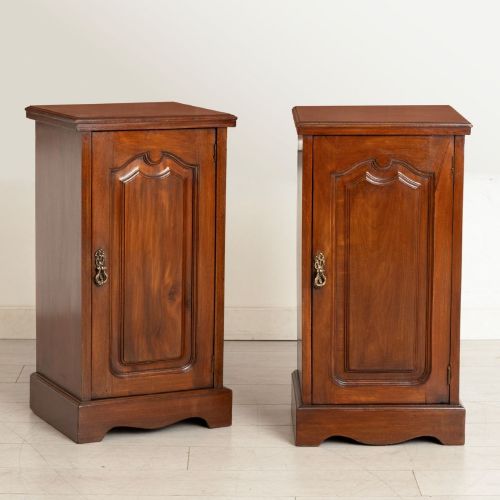
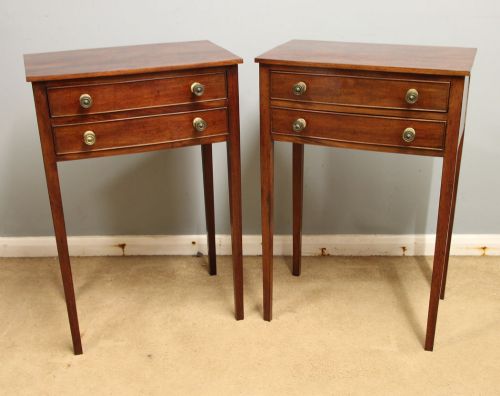
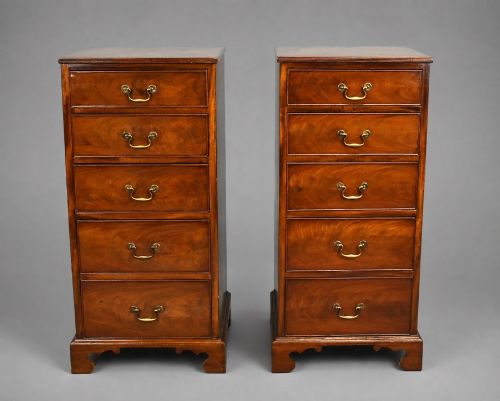
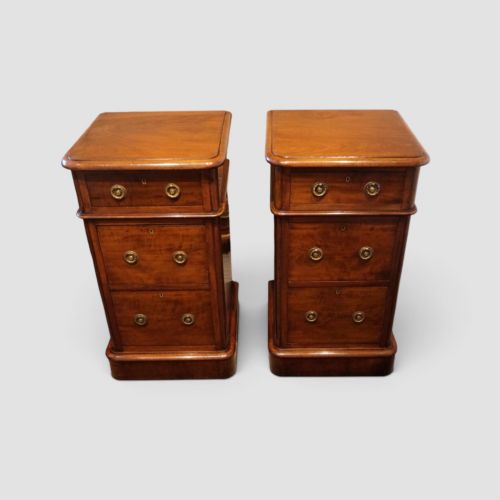
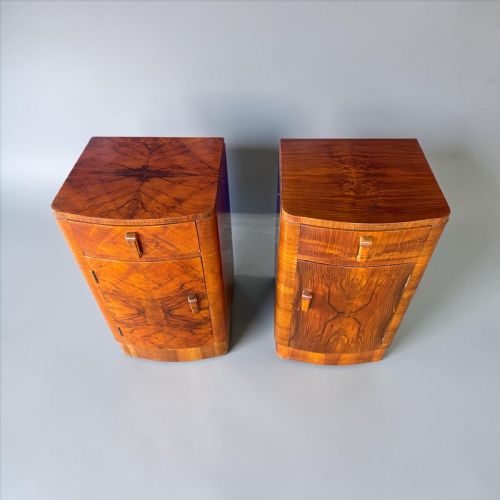
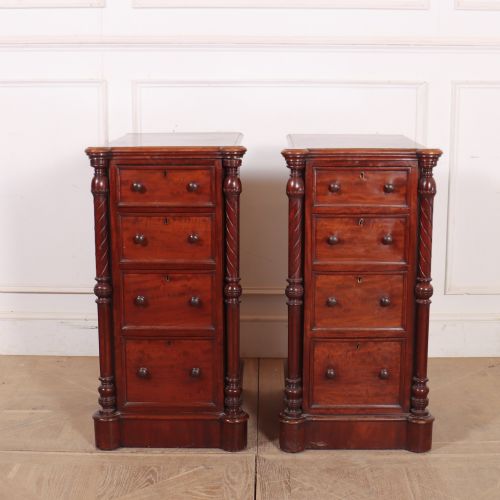
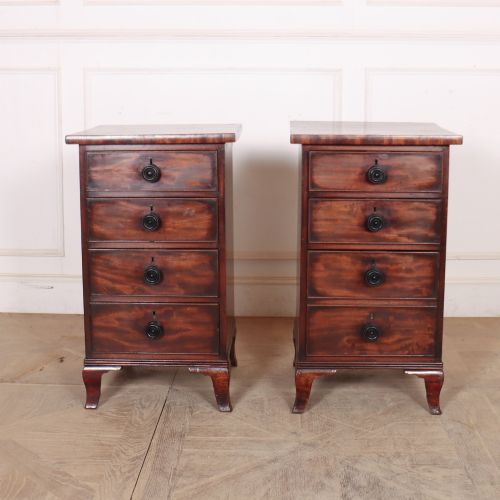
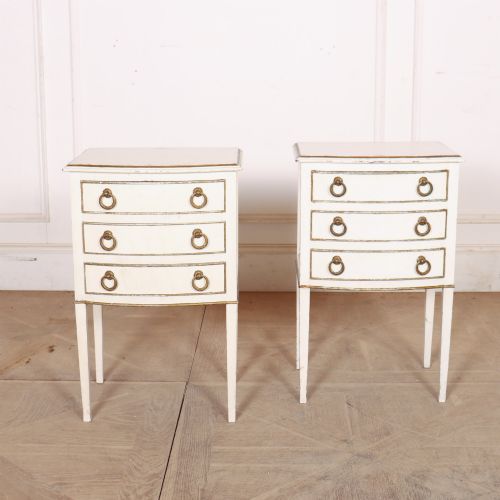
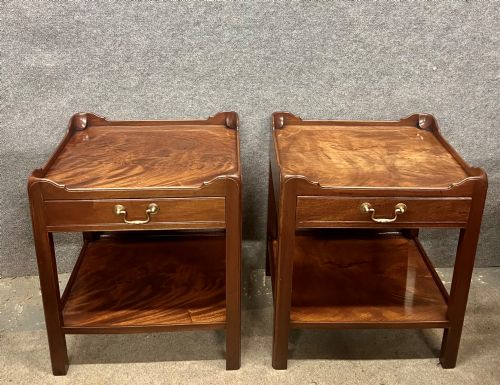
Pair Bedroom Nightstands
Pair bedroom nightstands are matching bedside pieces providing surface space and enclosed storage next to the bed.
Pair Bedroom Nightstands
Pair bedroom nightstands supply coordinated surfaces and storage flanking a bed. When you search for pair bedroom nightstands, you encounter matching configurations designed to sit symmetrically on either side of a bed. These forms include bedside tables, bedside cabinets, bedside chests, lamp tables, and small chests of drawers.
The pieces span various periods from the nineteenth century through the early twentieth century, taking the form of Victorian, Edwardian, and Art Deco designs. Mahogany remains the most common primary wood, alongside walnut, burr walnut, satinwood, oak, teak, cherry wood, and marble tops. You will also find regional variations including French provincial and Scandinavian interpretations.
Cabinets typically feature cupboard doors enclosing small storage spaces, whilst chests provide multiple stacked drawers. Some examples adopt specific revival aesthetics such as Georgian style, Queen Anne style, and Sheraton revival. Proportions vary from compact low tables to taller multi-drawer chests adapted for modern bed heights.
How they were made
Construction relies heavily on traditional timber framing, utilising solid woods and decorative veneers over secondary foundations. Mahogany and walnut serve as primary structural timbers, often enhanced by figured burr walnut or contrasting satinwood inlay. Selected tables integrate marble inset tops for a durable, moisture-resistant surface.
Hardware details involve brass handles, hinges, and occasional trim that complement the timber tones. Cabinet doors and drawer boxes utilise traditional joinery techniques appropriate to their respective periods, spanning Victorian mass production to Art Deco geometric veneering. Surface finishes range from polished French polish to waxed mahogany and bleached oak treatments.
Some Victorian nightstands hide a discreet internal shelf specifically sized for holding a chamber pot out of sight.
What varies in quality
Quality depends upon the selection of timber and the precision of the matching between the two items. Matched pairs assembled from different origins exhibit subtle differences in grain pattern, height, or timber tone, whereas unified pairs share identical manufacture from the outset. The choice of figured veneers, such as flame mahogany or burr walnut, elevates the visual presence of the design.
Structural integrity reflects the joinery standards of the period, from hand-dovetailed drawer construction to solid brass fittings. Secondary details like inlaid stringing, crossbanding, and marble top thickness distinguish standard utility items from finer cabinet work. Adaptation over time, such as chests altered to standardise height, alters the original proportions and influences overall character.
The Pair Bedroom Nightstands Glossary
- Bedside cabinet
- A small enclosed cupboard designed to stand beside a bed with a door hiding interior storage space.
- Flame mahogany
- A timber cut producing a distinctive feather or flame-like grain pattern used on high-grade cabinet surfaces.
- Burr walnut
- A highly figured wood grain obtained from walnut tree growths, valued for rich patterns on tabletops and drawer fronts.
- Inlay
- Decorative wood or brass pieces set flush into the surface of the primary timber to form geometric or floral patterns.
- Chevet
- A French term for a small bedside table or nightstand, commonly associated with continental styles.
Pair Bedroom Nightstands: Frequently Asked Questions
How do I match nightstands with my bed?
Consider the height of your mattress relative to the tabletop surface. Matching the timber tone or period style helps maintain visual balance in the bedroom.
Proportions matter when placing tables alongside large bed frames. Tall chests suit higher beds, whilst compact open tables prevent cramped arrangements.
What is the difference between tables and cabinets?
Bedside tables offer open surface space or a single shelf beneath, whilst bedside cabinets feature enclosed doors concealing storage compartments.
Cabinets keep personal items hidden from view, whereas open tables create a lighter aesthetic beside the bed.
Are these pieces true matching pairs?
Many listings present unified pairs built together from the same workshop. Others represent matched pairs assembled later based on similar dimensions and timber.
Examining grain patterns and construction details reveals whether the items originated together as a matched set.
How do I identify Art Deco nightstands?
Art Deco pieces display streamlined geometric forms, symmetric veneering, and contrasting woods like satinwood and burr walnut. They originate predominantly from the 1930 period.
These designs often omit traditional carved ornamentation in favour of sleek surfaces and clean architectural lines.
What maintenance do antique wood nightstands need?
Regular dusting with a dry cloth prevents dirt build-up on polished timber surfaces. Applying periodic wax preserves the finish without harming the wood.
Protecting marble and wood tops from moisture prevents staining and ring marks from drinking glasses.