

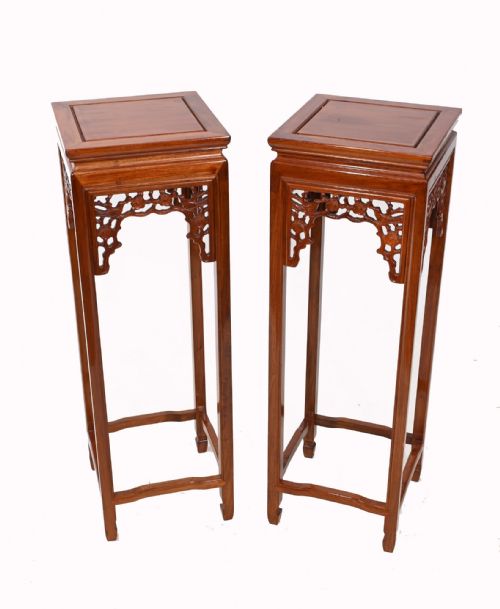


Square Wooden Pedestal Tables
Square wooden pedestal tables bring functional surfaces and sculptural form together in compact spaces.
Square Wooden Pedestal Tables
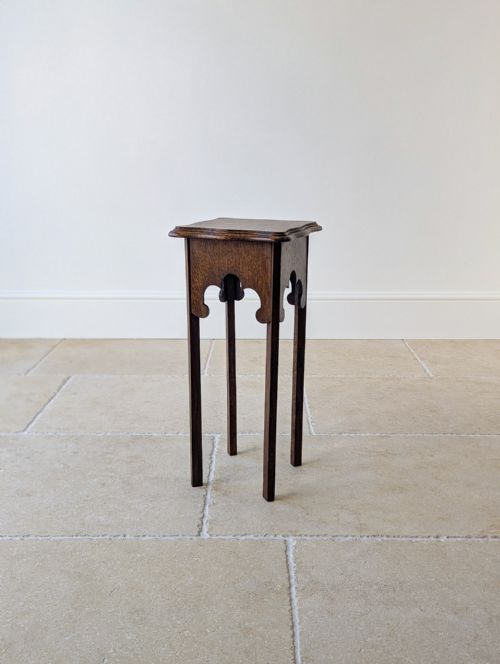
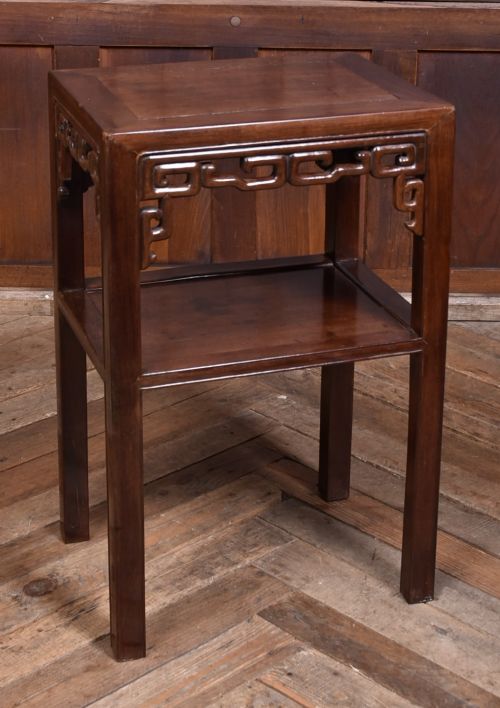
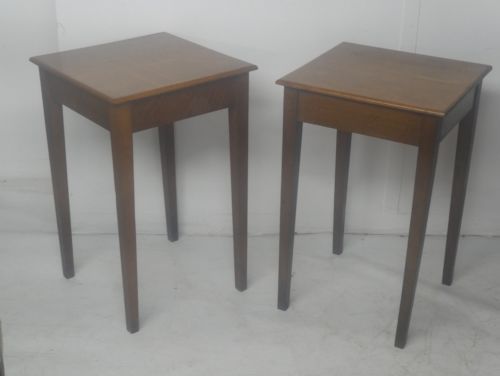
Square wooden pedestal tables appear across multiple periods, ranging from the Georgian and Regency eras through the Victorian period, Edwardian years, and early twentieth century. These pieces function primarily as plant stands, jardiniere stands, lamp tables, wine tables, and occasional side tables within domestic interiors.
How they were made
Cabinet makers utilised dense hardwoods like mahogany and oak, alongside figured timbers such as rosewood and satinwood, to construct these supports. Construction often involves turned central columns standing on tripod or multi-footed bases.
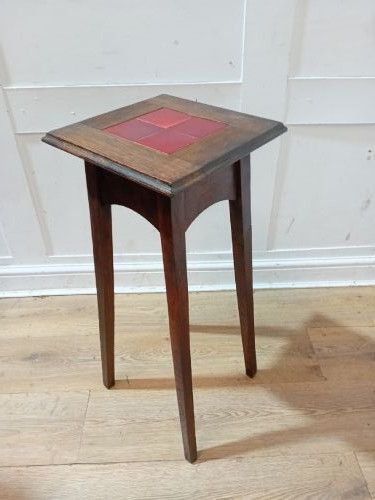
Surface ornamentation ranges from simple polished timber grains to inlaid details and painted hardwood surfaces. Certain models incorporate ceramic tiles or marble inserts into the top to hold plants and vessels safely.
Listings feature woods spanning mahogany, oak, rosewood, satinwood, hardwood, and alder root, alongside ceramic and marble inserts.
What varies in quality
Quality rests upon the selection of timber and the stability of the central pedestal construction. Pieces utilising well-figured mahogany, oak, or exotic hardwoods exhibit greater visual depth than plain utility variants.
Refinement in the turning of the column and the proportion of the supporting feet dictate the overall balance. Subtle details such as inlaid stringing or integrated ceramic elements distinguish finer workshop productions from simpler domestic items.
Baillie Scott
The Square Wooden Pedestal Tables Glossary
- Tripod table
- A small occasional table supported by a central pillar resting on three feet. This construction allows the top to remain stable on uneven floors.
- Tilt-top table
- A table designed with a mechanism that pivots the top vertical when not in use. This feature allowed the furniture to stand flat against a wall to save floor space.
- Jardiniere stand
- A tall pedestal table specifically built to display potted plants and floral arrangements. These stands frequently feature water-resistant surfaces such as ceramic tiles or marble.
- Occasional table
- A light, movable small table used for various temporary purposes around a room. They appear in numerous forms throughout the nineteenth and early twentieth centuries.
- Inlay
- A decorative technique where contrasting materials are inserted into recessed cavities on the wood surface. Edwardian examples often employ this method for linear borders.
Square Wooden Pedestal Tables: Frequently Asked Questions
What were square pedestal tables used for?
These pieces served multiple domestic functions, acting as lamp tables, wine tables, or side supports for books and small objects. Many specific variants served as plant stands or jardiniere holders.
Their compact footprints allowed them to fit easily into corners or beside seating without crowding the room.
Where should I place a pedestal table at home?
Square pedestal tables suit small corners, entryways, or spaces beside armchairs where a full-sized table would prove too large. Plant stands work well near natural light sources.
Their compact central columns ensure they occupy minimal floor area while offering a practical surface for lighting or decorative items.
What is the difference between a lamp table and a plant stand?
Lamp tables usually feature solid wooden tops designed to hold lighting fixtures and reading materials within reach of seating. Plant stands often incorporate inset surfaces made of marble or ceramic tiles.
These moisture-resistant inserts protect the surrounding wooden frame from dampness associated with potted plants and floral displays.