

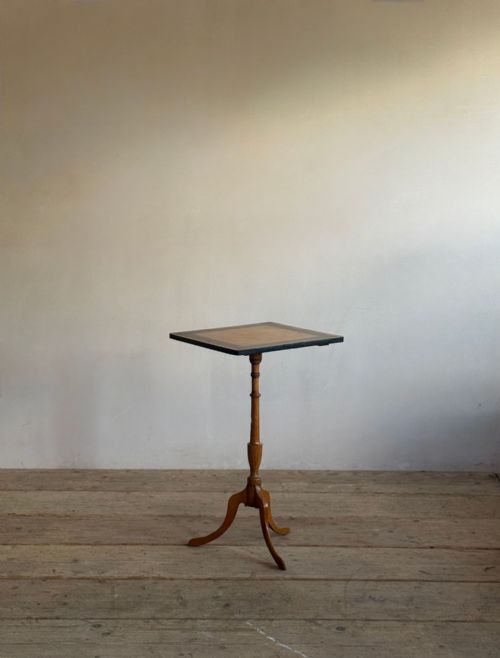


Small Square Top Table
These small square top table examples span centuries of domestic ingenuity, offering compact surfaces that slip easily beside a chair or into a quiet corner.
Small Square Top Table
A small square top table serves as a versatile side or occasional surface, appearing across the Georgian, Victorian, and Edwardian periods. These tables take various forms, functioning as lamp tables, plant stands, and games tables within domestic spaces.
The pieces on this page emerge from distinct design movements, including Regency, Victorian, and Arts and Crafts traditions. Makers utilised sturdy timbers and specialised surfaces to create furniture suited for both formal parlours and rural homes.
How they were made
Cabinetmakers constructed these tables using a range of woods such as mahogany, oak, fruitwood, burr yew, rosewood, and satinwood. Selection of timber dictated the strength and grain pattern of the top, whether supported by a central pillar or four legs.
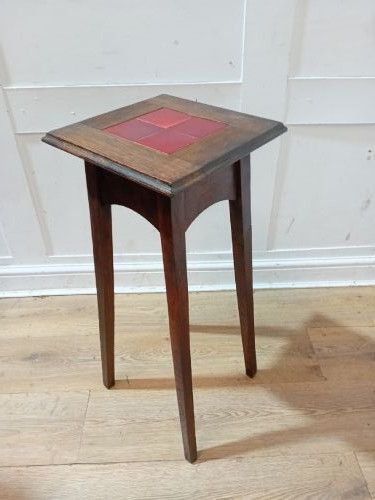
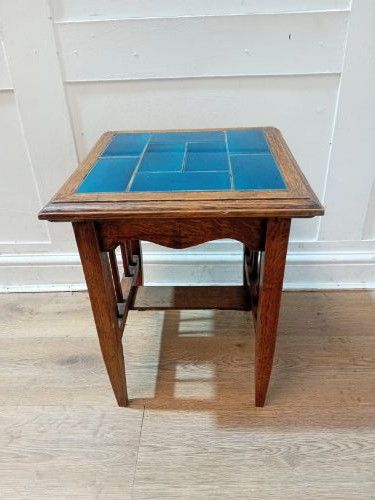
Surface ornamentation involved varied techniques, including penwork decoration and the incorporation of ceramic tiles. These decorative methods transformed simple occasional furniture into distinctive focal points.
Materials utilised across the available pieces include mahogany, oak, ceramic tile, brass, fruitwood, burr yew, rosewood, satinwood, and pine.
What varies in quality
Excellence in these tables lies in the selection of figured timbers and the crispness of the joinery. A well-balanced tripod base or sturdy leg assembly ensures stability without bulk.
Refinement appears in decorative flourishes, such as delicate penwork or integrated ceramic tiles. Simpler kitchen or utility pieces rely purely on robust construction rather than decorative detail.
Baillie Scott
The Small Square Top Table Glossary
- Tripod table
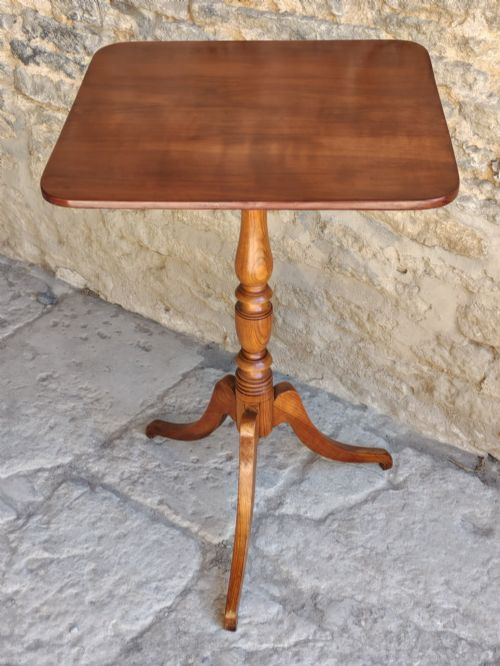
- A small table supported by a central pillar resting on three legs. This construction allows the piece to stand firmly on uneven floors.
- Occasional table
- A portable, small table designed for specific, temporary uses in a room. Such pieces move easily from firesides to bedrooms.
- Penwork
- A decorative technique using ink to draw intricate patterns onto a wooden surface. Artisans often lacquered the design to protect the fine lines.
- Jardiniere stand
- A tall table designed specifically to hold a plant container or flower pot. These stands protect domestic flooring while displaying greenery.
- Dropleaf centre table
- A table featuring hinged flaps that lower to save space or raise to expand the surface area. They sit in the middle of a room rather than against a wall.
Small Square Top Table: Frequently Asked Questions
Where should I place a small square top table?
These tables find natural homes beside armchairs or sofas where they hold lamps, books, or drinks. Their modest proportions allow them to fit into narrow hallways or unused corners without crowding the room.
In larger spaces, they act as plant stands or display surfaces for decorative objects. Their portability means you can easily shift them to suit changing needs.
How do I care for antique wooden tables?
Keep wooden surfaces away from direct heat sources and strong sunlight to prevent the timber from drying out and splitting. Regular dusting with a soft, dry cloth preserves the polish.
Apply a quality wax occasionally to nourish the wood and maintain its natural sheen. Avoid placing damp glasses directly on the surface to protect the finish.
What is the difference between a side table and a lamp table?
Side tables generally offer a broader surface meant for general utility and placement against walls or beside seating. They accommodate a wide range of everyday items.
Lamp tables are typically built with the specific task of supporting lighting in mind. Their proportions balance the weight of a heavy base and shade securely.
How can I tell a Georgian table from a Victorian one?
Georgian examples often display restrained elegance with mahogany or fruitwood and slender tripod supports. Their lines prioritize classical proportion and understated grace.
Victorian pieces tend to be heavier, utilising denser timbers like rosewood or pine. They frequently incorporate bolder decoration, reflecting the diverse revival styles of the era.