
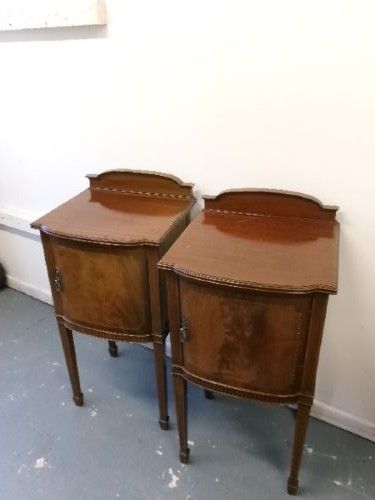
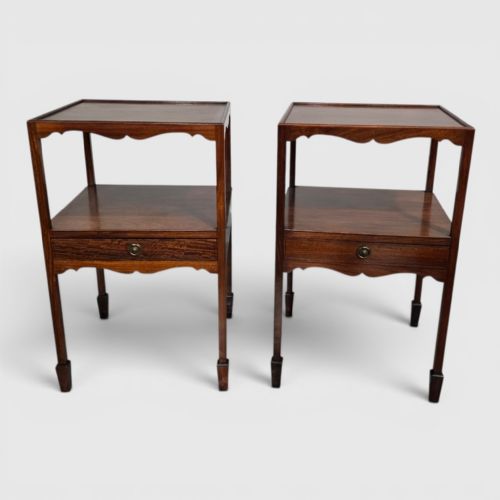

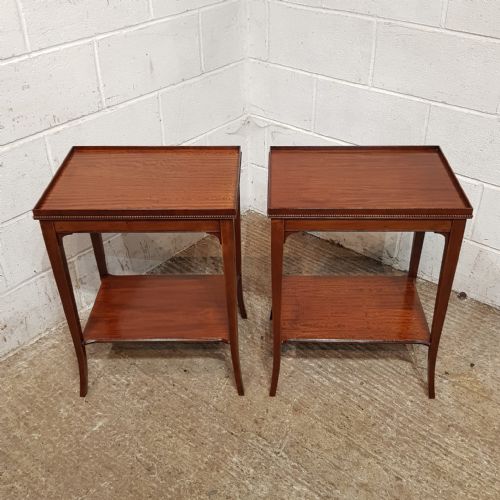
Pair Bedroom Cabinets Mahogany
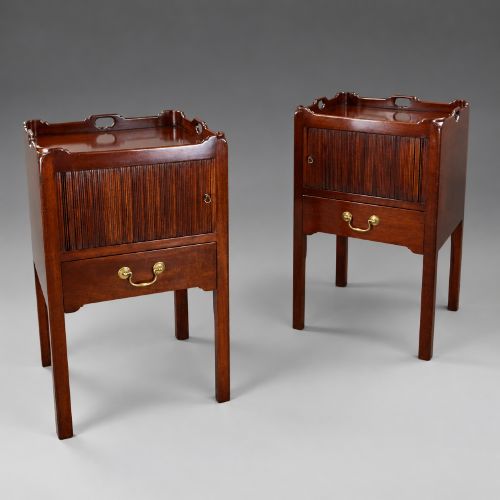
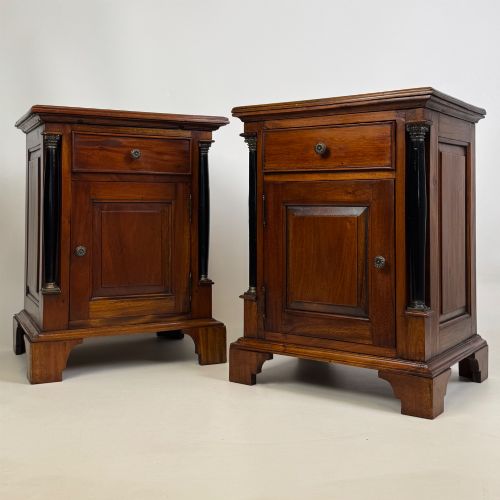
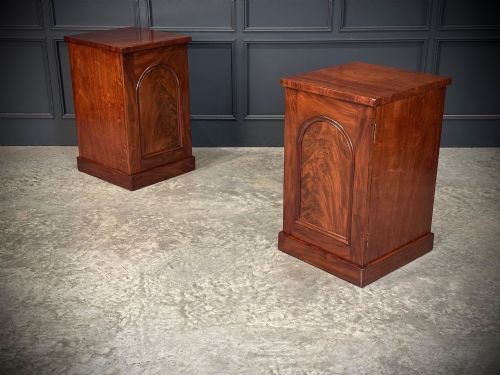
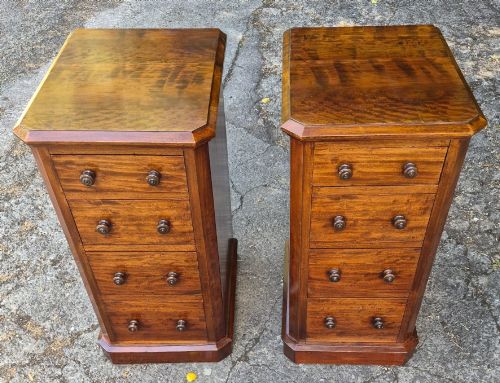
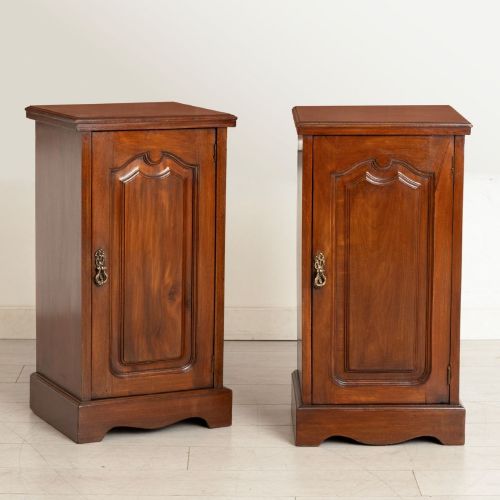
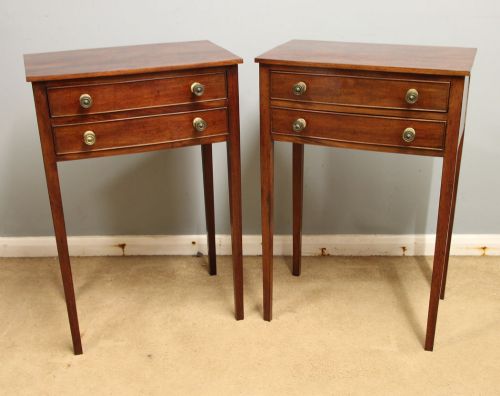
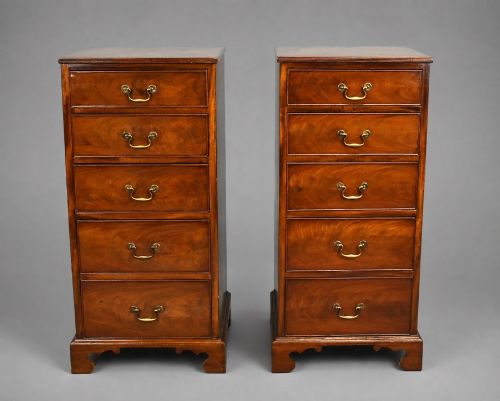
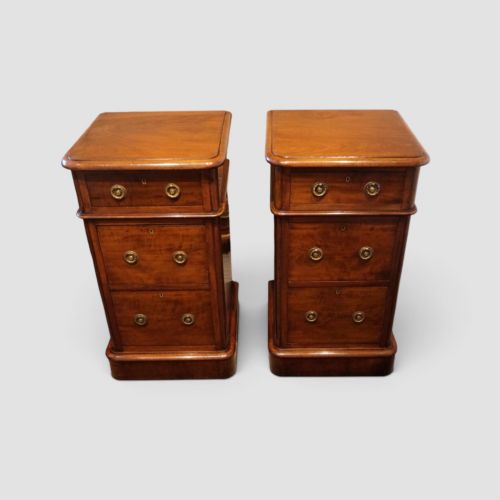
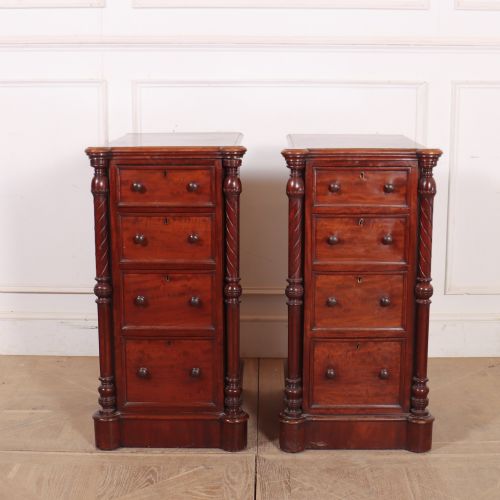
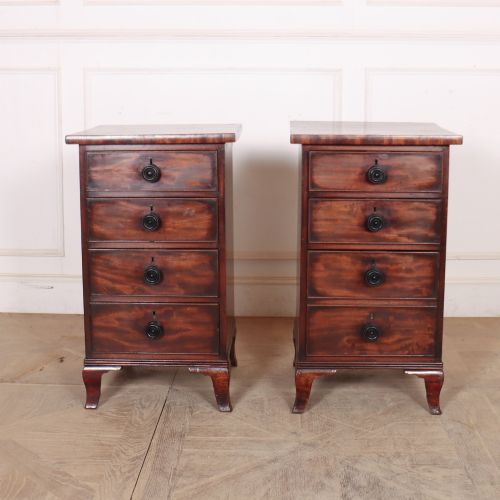
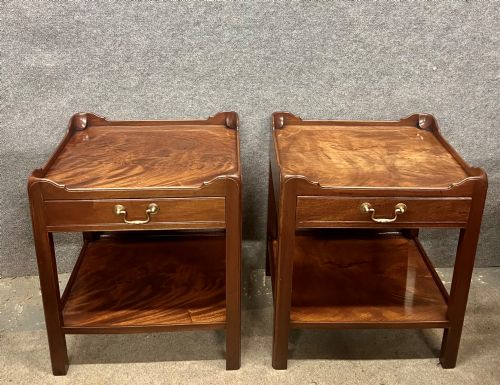
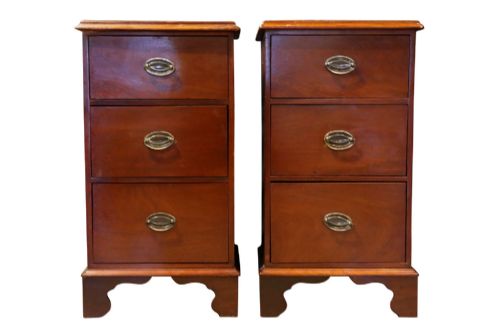
These pair bedroom cabinets mahogany are matching bedside storage pieces selected for symmetry beside a bed, offering practical surface space and enclosed storage.
Pair Bedroom Cabinets Mahogany
When searching for pair bedroom cabinets mahogany, buyers encounter matched sets designed to flank a bed symmetrically. The selection spans the nineteenth century, Victorian era, Edwardian period, and twentieth-century revivals.
Forms vary between bedside cupboards with panelled doors, small chests of drawers, and open bedside tables. Many examples originate from English and French workshops, utilising traditional cabinet-making proportions suited to period bedrooms.
How they were made
Cabinet-makers utilised solid mahogany and flame mahogany veneers applied to structural timbers, often accented with contrasting inlay, brass handles, or marble tops. Joinery methods relied on dovetailed drawer construction and mortise and tenon frames.
Surfaces received traditional polishing techniques to bring out the depth of the wood grain, while specific regional pieces incorporated ebonised wood details or satinwood banding.
What varies in quality
Superior examples display carefully matched flame mahogany veneer patterns across both doors and drawer fronts to maintain visual symmetry. The crispness of carved details and the integration of original brass hardware distinguish finer pieces.
Proportion and structural integrity define the grade of construction, separating standard production models from exceptional workshop output.
Gillows
The Pair Bedroom Cabinets Mahogany Glossary
- Flame mahogany
- A veneer cut from the fork of the mahogany tree, producing a distinctive flickering flame pattern. It is prized for decorative cabinet fronts.
- Satinwood
- A pale, hard wood utilised for contrasting stringing and inlay work on Edwardian and revival furniture. It provides a bright visual border against darker mahogany.
- Pedestal cabinet
- A tall, narrow cupboard designed to stand beside a bed. These enclosed units keep nighttime essentials concealed behind a single door.
- Dovetailed drawer
- A joint used to connect drawer sides to the front using interlocking wedge shapes. This construction method indicates traditional hand craftsmanship.
- George III
- The stylistic period spanning the mid to late eighteenth century, known for restrained classical proportions. Later revivals often replicate these balanced architectural lines.
Pair Bedroom Cabinets Mahogany: Frequently Asked Questions
What is the difference between a bedside chest and a bedside cabinet?
Bedside chests feature multiple pull-out drawers stacked vertically for open organisation of items. Bedside cabinets enclose the storage space behind one or more hinged doors.
Both forms serve the same function beside a bed but offer different internal layouts depending on the specific model.
How do I identify a matched pair from an assembled pair?
Matched pairs share identical timber grain patterns, dimensions, hardware, and construction details that indicate they were built together. Assembled pairs bring together two similar individual tables that share a general style.
Close inspection of the mahogany veneer and internal carcase reveals whether the pieces originated from the same workshop batch.
What period do most mahogany bedside cabinets date from?
The majority of surviving examples date from the Victorian and Edwardian eras, alongside later Georgian revival pieces from the twentieth century. Earlier pieces from the eighteenth century appear less frequently.
Construction techniques and secondary woods help confirm the manufacturing era of each set.
How should I care for antique mahogany surfaces?
Maintain the polished timber by dusting regularly with a soft, dry cloth and avoiding direct sunlight to prevent fading. Occasional application of quality beeswax preserves the moisture and lustre of the wood.
Keep these cabinets away from direct heat sources to prevent timber shrinkage or veneer lifting.