

Mahogany Bedside Drawers
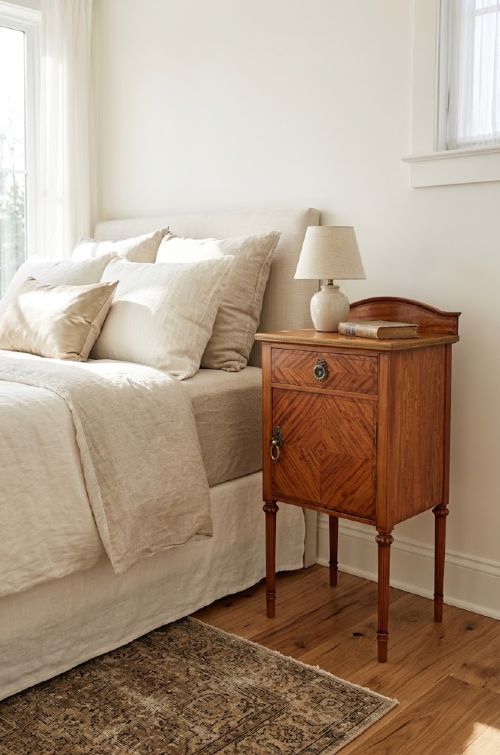
These mahogany bedside drawers combine domestic utility with rich timber grain, offering practical bedside storage shaped by Georgian, Victorian, and Edwardian cabinetmakers.
Mahogany Bedside Drawers
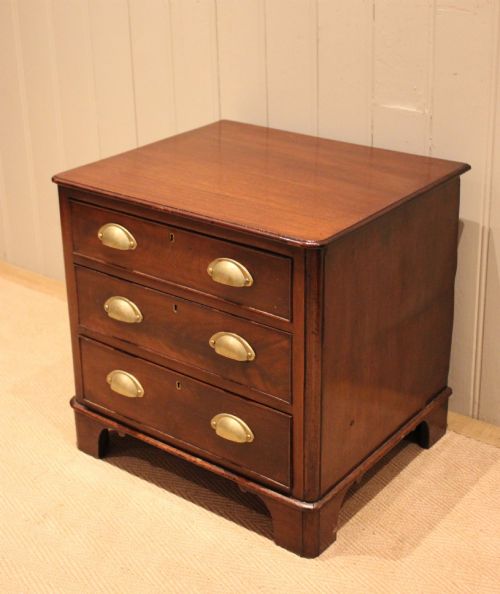
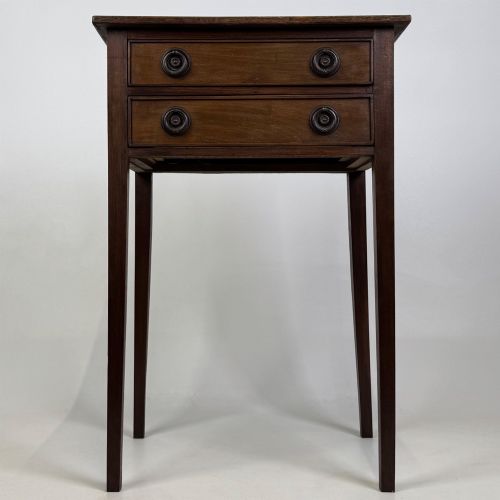
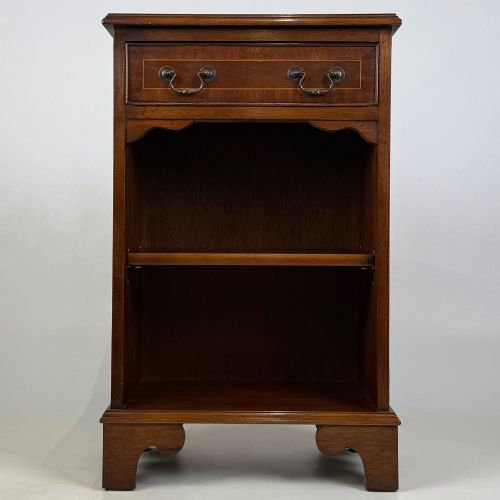
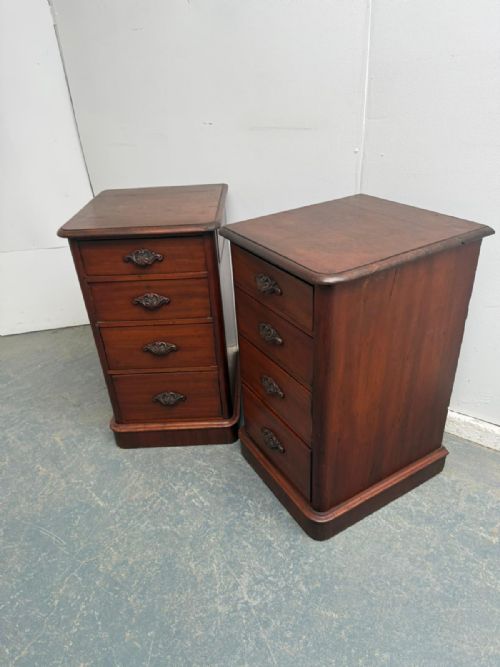
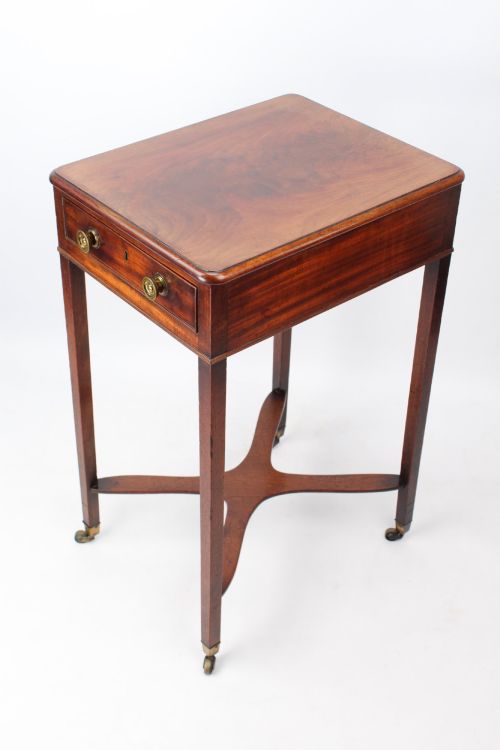
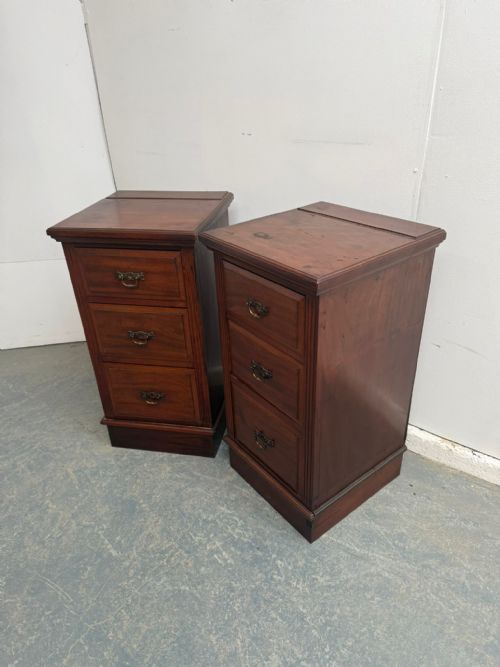
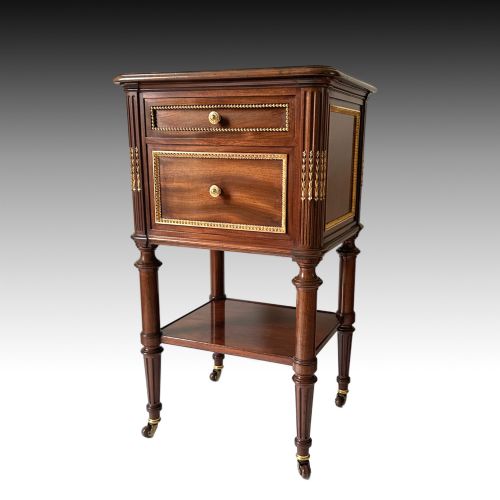
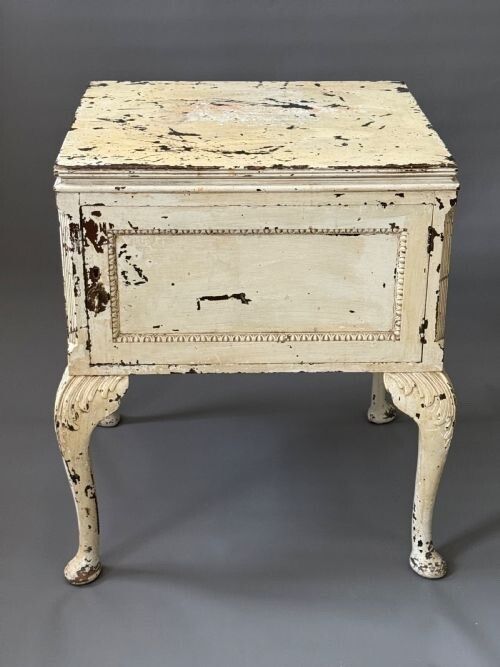
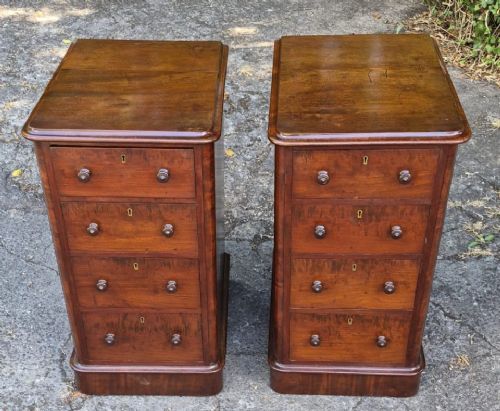
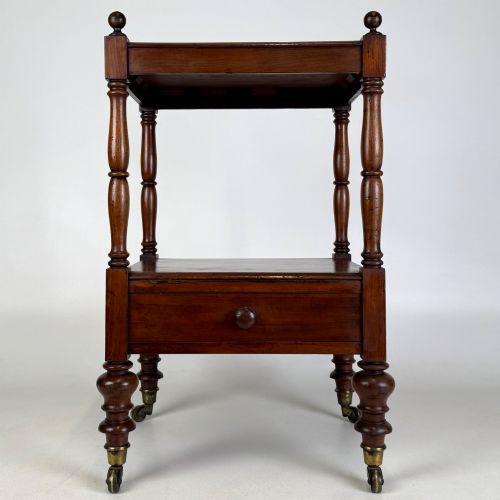
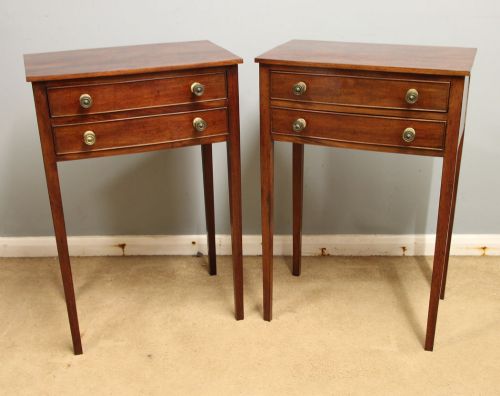
When you search for mahogany bedside drawers, you encounter compact chests, small cupboards, and lamp tables designed to sit beside a bed. The most common examples met on this page date from the Victorian and Edwardian eras, alongside Georgian and Regency period pieces.
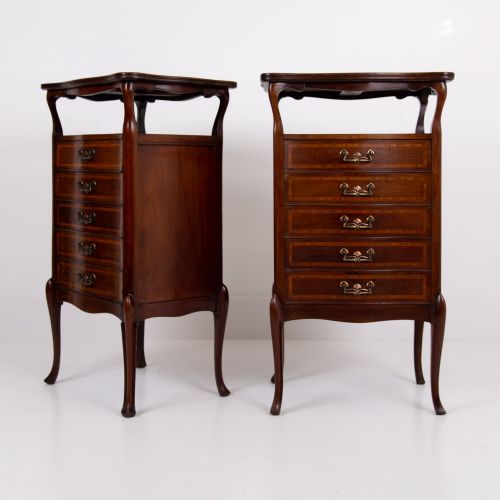
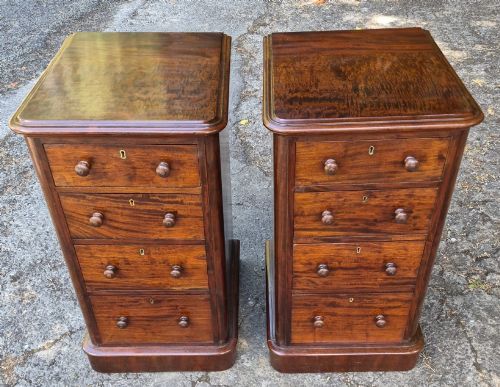
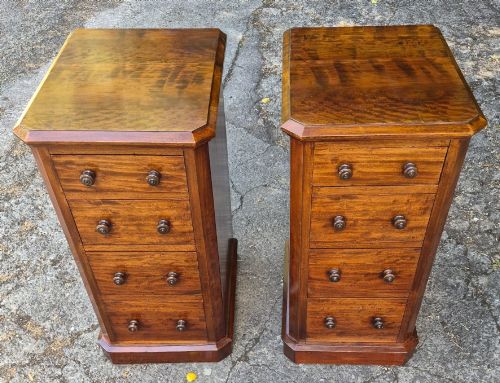
These items serve as functional storage for small chambers, appearing in various formats such as three-drawer chests, bow-front lockers, and door-enclosed cabinets. Many survive as matched pairs, though single tables and cabinets also appear frequently across the inventory.
Materials and Construction
Cabinetmakers utilised solid mahogany and figured mahogany veneers applied to secondary woods, often accentuating the surfaces with brass drawer pulls, handles, or occasional ormolu mounts. Satinwood and rosewood appear as contrasting inlay materials on specific Edwardian and Georgian pieces.
Joinery techniques involve traditional drawer construction with dovetailed joints, matched with panelled sides and occasionally leather-lined pull-out writing slides. Wax finishes protect the timber while highlighting the natural grain and deep brown colour of the wood.
Listings feature mahogany, satinwood, walnut, and rosewood combined with brass and leather elements across multiple historical periods.
Evaluating Execution
Quality rests upon the selection of timber figures, such as flame or figured mahogany veneers, and the precision of the cabinet construction. Pieces featuring hand-cut dovetails, original brass hardware, and well-balanced proportions command greater attention.
Later alterations or adaptations, such as chests reduced in height to suit bedside proportions, differ from items built in their original proportions during the Georgian or Victorian periods.
Warings Liverpool
The Mahogany Bedside Drawers Glossary
- Bow front
- A convex, curved cabinet front that projects outward from the centre, frequently seen on Victorian and Regency bedside chests. This curved shaping requires advanced woodworking skill.
- Wellington chest
- A tall, slender chest of drawers secured by a hinged locking side bar that fastens with a key. This form originates from the nineteenth century.
- Campaign
- Portable furniture designed for military officers, often featuring recessed brass handles and corner brackets. These pieces disassemble or transport easily.
- Satinwood
- A pale, lustrous exotic timber utilised for stringing, banding, and marquetry details on Edwardian and Georgian cabinets. It contrasts sharply with dark mahogany.
- Ormolu
- Gilt-bronze mounts applied for decorative effect on French and English cabinets. This metalwork accents the corners and feet of fine nineteenth-century pieces.
Mahogany Bedside Drawers: Frequently Asked Questions
What periods do these pieces span?
The inventory encompasses items from the eighteenth-century Georgian era through the Regency, Victorian, and Edwardian periods, extending into early twentieth-century revivals.
Victorian and Edwardian examples appear most frequently, while Georgian and Regency pieces represent earlier cabinetmaking traditions.
Are they sold as pairs?
Many listings comprise matched pairs of bedside chests or lamp tables, which suits the symmetrical arrangement of twin beds in a bedroom.
Single bedside cabinets and tables also feature regularly for spaces requiring only one piece of furniture.
How do I identify a Georgian piece?
Georgian and Georgian Revival items often display restrained classical proportions, bracket feet, and solid mahogany construction without heavy Victorian ornamentation.
Attention to drawer linings, timber age, and hardware helps distinguish eighteenth-century originals from later twentieth-century reproductions.
What timber finishes are common?
Polished mahogany dominates the selection, frequently finished with a traditional wax coating to preserve the deep reddish-brown tone of the wood.
Inlays of satinwood or rosewood, alongside brass handles, add contrast to the primary timber surfaces.