





Four Drawer Nightstands
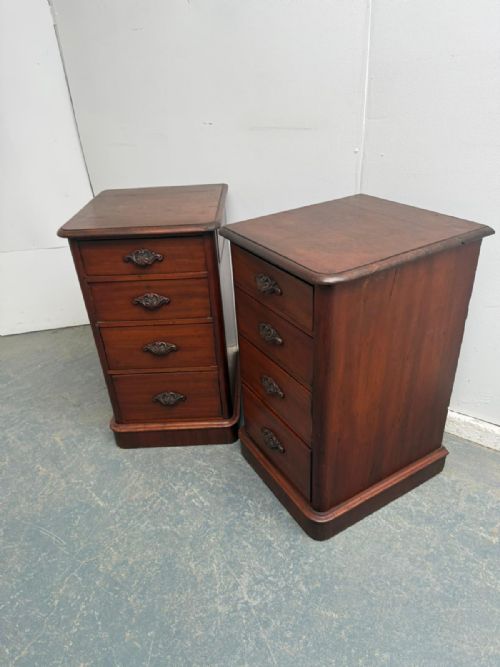
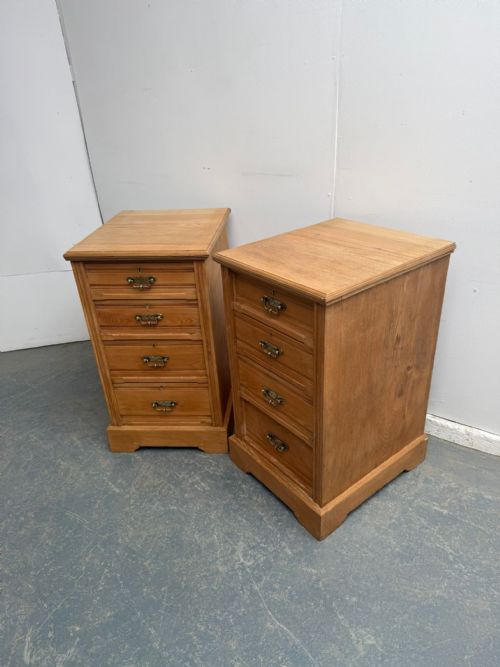
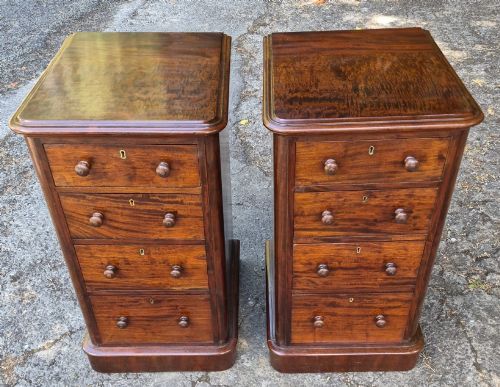
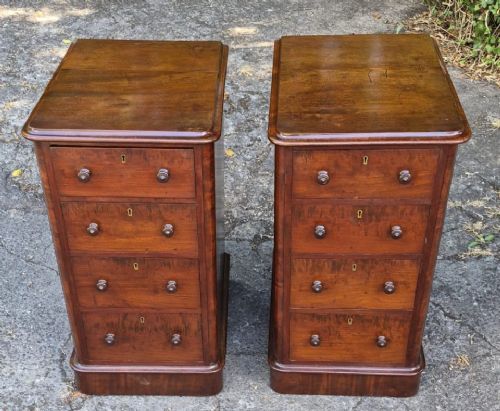
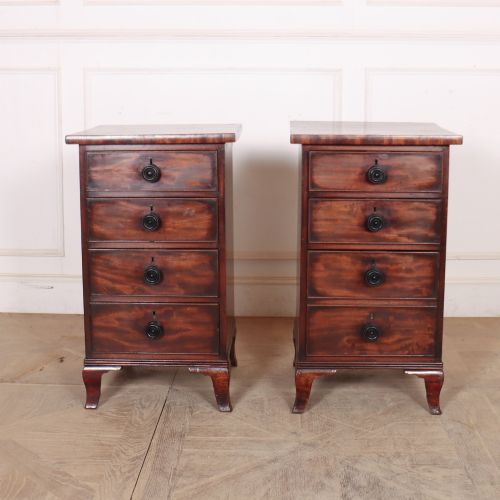
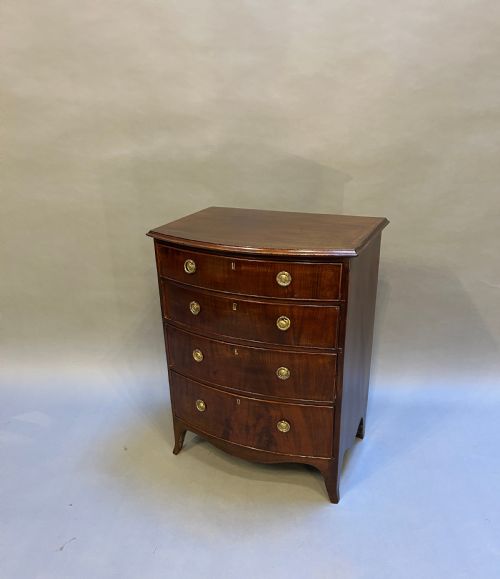
These four drawer nightstands are compact bedroom storage pieces, offering multiple tiers of drawers in woods such as mahogany and walnut for a practical bedside surface.
Four Drawer Nightstands
When you search for four drawer nightstands, you encounter compact bedside chests, small chests of drawers, and bedside lockers designed to fit beside a bed while providing vertical storage. These pieces date across the Victorian, Edwardian, and Georgian style periods, spanning the nineteenth and early twentieth centuries.
The most common versions on this page are Victorian mahogany and walnut bedside chests featuring four operating drawers. Makers from these eras constructed them as pairs or individual items to serve domestic bedrooms with generous compartmentalisation.
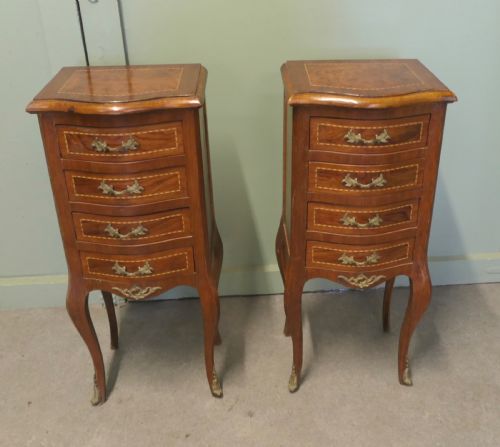
Alternative forms include French or Arts and Crafts variants utilising ash, teak, or ormolu mounts alongside the standard timber carcasses. Each variant adapts the basic multi-drawer pedestal concept to specific regional tastes and period aesthetics.
Assessing Quality and Build
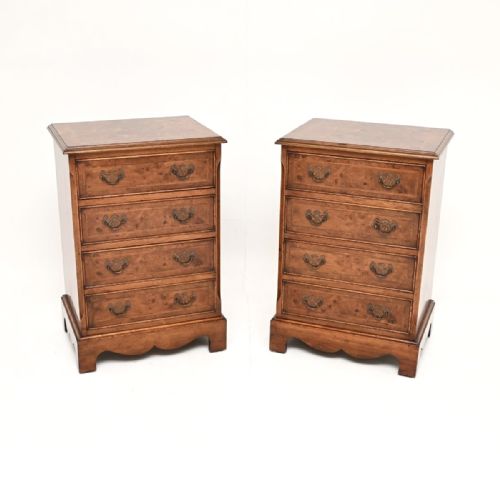
Quality in these bedside chests rests on the selection of timber veneers, such as figured walnut or flame mahogany, and the precision of the drawer construction. Better examples maintain smooth operation across all four drawers and retain original brass hardware.
Proportion and timber matching distinguish finer pieces from standard utility items. Adaptation or alteration, as seen in some late Victorian examples, influences the standing of an item within the range.
Some Victorian bedside lockers turn out to have had a previous career before entering the showroom, keeping their industrious past quietly tucked inside.
James Shoolbred
The Four Drawer Nightstands Glossary
- Bedside Locker
- A small cabinet or chest designed to stand beside a bed, frequently featuring a door or multiple drawers for personal storage.
- Burr Walnut
- A distinctively figured wood grain obtained from walnut tree growths, valued for its complex and ornamental patterns on furniture veneers.
- Flame Mahogany
- A veneer cut from the fork of a mahogany tree that produces a distinctive flickering flame-like pattern across the wood surface.
- Ormolu
- Gilded bronze mounts and decorative details applied to furniture, commonly found on French-influenced pieces from the nineteenth and early twentieth centuries.
- Wood Inlay
- The technique of inserting pieces of contrasting timber into a recessed surface to form decorative patterns.
Four Drawer Nightstands: Frequently Asked Questions
How do I style a four drawer nightstand?
These tall bedside chests require lamps with narrow bases or wall-mounted lighting to preserve surface utility. The multiple drawers allow for discrete organisation of nighttime essentials while keeping the top clear.
Balance the vertical proportion of the cabinet by pairing it with a bed frame of a matching period height. This creates a cohesive layout in traditional bedroom spaces.
Are these pieces sold as pairs?
Many listings for bedside chests and lockers appear as matched pairs originating from the Victorian and Edwardian periods. Finding two matching cabinets makes symmetrical placement on either side of a bed straightforward.
Individual pieces also appear, offering flexibility for smaller bedrooms or eclectic interior arrangements.
What wood types are most common?
Mahogany and walnut dominate the selection, appearing either as solid timber or enhanced with burr walnut and flame mahogany veneers. Ash, teak, and rosewood also occur in specific Arts and Crafts or late nineteenth-century examples.
Finishes range from waxed surfaces to French polished grains, highlighting the natural figure of the wood.
How do I identify the period?
Victorian and Edwardian pieces show characteristic construction methods, handle designs, and timber treatments unique to their respective decades of manufacture. Georgian style items often reflect earlier eighteenth-century proportions reinterpreted during later eras.
Examine the secondary woods inside the drawers and the style of the brass hardware to determine the approximate age.